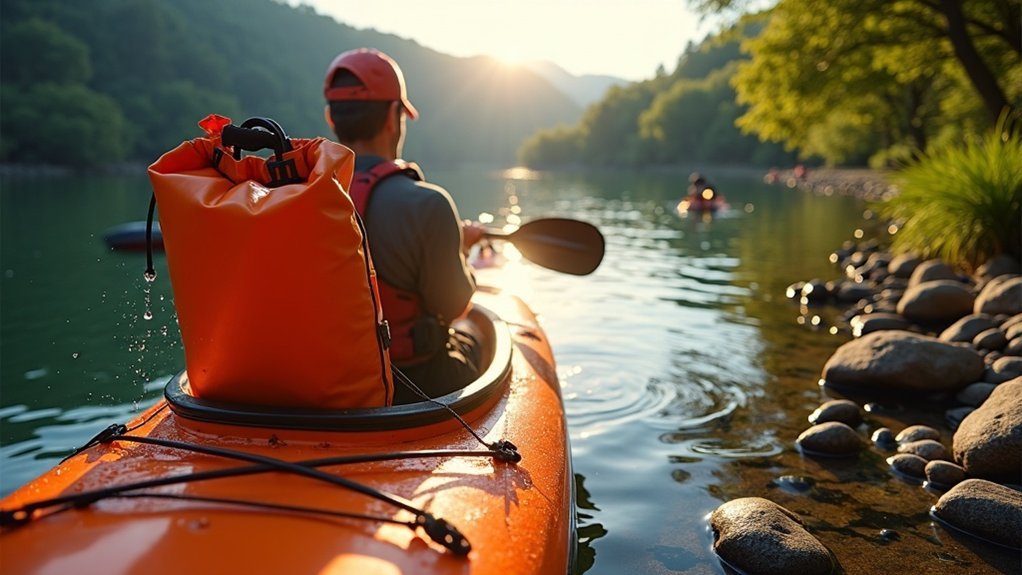
To use dry bags effectively for survival and prepping, start by selecting the appropriate size for your gear, ensuring you have enough space for essential supplies. Pack wisely by placing heavier items at the bottom for better stability. Roll the top of the bag at least three times to form a watertight seal, and securely attach it to your kayak, backpack, or bug-out bag to prevent loss during transit. Regularly inspect your dry bag for any signs of damage and clean it after each outing to maintain its integrity. Avoid overfilling to ensure the bag seals properly, and check for leaks before each use. Want to know what essential items to pack and how to maintain your dry bag for your survival needs? Keep reading to learn more.
Key Takeaways
- Choose a dry bag size that fits your essential survival gear and prepping supplies efficiently.
- Place heavier survival items at the bottom and use smaller waterproof bags for organization of critical gear.
- Roll the top of the bag at least three times to ensure a reliable watertight seal, crucial for protecting your supplies.
- Secure the dry bag to your kayak or backpack using robust carabiners or straps for added stability during your outdoor excursions.
- Regularly inspect and clean your dry bag to maintain its waterproof integrity and extend its durability, ensuring your survival gear remains protected.
What Is a Dry Bag?
A dry bag is an essential waterproof container designed to safeguard your gear during outdoor survival and prepping adventures.
A dry bag is a vital waterproof solution for protecting your gear during outdoor survival and prepping escapades.
Constructed from robust materials such as PVC, nylon, or vinyl, it’s engineered to endure challenging conditions. The roll-top closure forms an airtight seal, effectively preventing water damage and ensuring your supplies remain protected.
Dry bags are available in a range of sizes, from compact 5-liter pouches for personal items to larger 30-liter sacks or backpacks for more extensive gear needs. They’re invaluable for protecting your critical belongings during outdoor activities like kayaking, camping, or fishing, ensuring that your electronics, first aid kits, and clothing stay dry.
Investing in a dry bag is a smart choice for anyone focused on preparedness and survival, helping you keep your essential gear safe on every expedition.
How to Use a Dry Bag Properly
Using a dry bag properly can be crucial for keeping your survival gear safe and dry during outdoor expeditions. To ensure you’re prepared for any situation, follow these essential tips:
- Choose the right size dry bag based on your survival needs and the gear you plan to carry.
- Pack strategically: place heavier items at the bottom for stability, and store smaller waterproof bags for critical electronics or first aid supplies.
- Create a watertight seal by rolling the top at least three times and pressing out excess air to prevent water ingress.
- Secure your dry bag to your kayak or backpack with carabiners or straps for added protection against loss or damage during transit.
Properly utilizing a dry bag can significantly enhance your readiness for emergencies while enjoying the great outdoors.
What to Pack in a Dry Bag
When packing a dry bag for survival situations, it’s crucial to prioritize items that are vital for your safety and well-being that cannot get wet. Dry bags come in various sizes, so select one that aligns with your survival needs. Here’s a quick guide on what to pack:
| Activity | Essentials to Pack |
|---|---|
| Short Survival Trips | Emergency phone charger, cash, high-calorie snacks, compact towel |
| Camping/Hiking | Extra clothing layers, first-aid kit, multi-tool |
| Water-Based Survival | Wetsuit or drysuit, waterproof dry clothes, high-energy snacks |
| General Survival Gear | Hydration system, emergency whistle, signal mirror |
| Travel/Backpacking | Waterproof notebook, extra rope, fire-starting kit |
Utilize a dry bag to safeguard crucial gear from moisture by rolling the top tightly inside for a secure seal. Always be prepared for unexpected weather changes and prioritize your essential supplies.
Maintaining Your Dry Bag
To ensure your dry bag is always ready for your next survival adventure, it’s essential to maintain it meticulously. Regularly inspect for any signs of wear, such as fraying seams or punctures. Proper upkeep guarantees that your gear stays protected and your supplies remain waterproof.
Regular maintenance and inspection of your dry bag ensure your gear remains protected and waterproof for every adventure.
- After each outing, clean your dry bag with mild soap and water to remove dirt and salt that could compromise its integrity.
- Store your bag in a cool, dry environment, away from direct sunlight to prevent degradation.
- Before sealing the roll-top closure, check for any debris or moisture that could lead to leaks.
- Consider placing desiccant packets inside to absorb any residual moisture, ensuring your essentials stay dry and safe.
Common Mistakes to Avoid
Many survivalists and preppers make critical mistakes when using dry bags that can jeopardize their gear and safety during outdoor excursions.
To ensure your items remain protected, avoid overfilling the bag, as this can hinder a proper seal and compromise its waterproof effectiveness. Always roll the top at least three times to guarantee an airtight closure; insufficient rolling may allow water to infiltrate and damage your supplies.
Regularly inspect your dry bag for small holes or leaks, as these can lead to significant losses in a survival situation. Before heading out, test the seal by gently pressing the bag—if air escapes, reseal it.
And remember, don’t use dry bags as flotation devices; they aren’t designed for that and could put you at risk in emergency situations.
Choosing the Right Dry Bag
When selecting the ideal dry bag for survival and prepping, size and material are crucial considerations.
Choose a capacity that aligns with your specific needs; a 5L bag may suffice for short excursions, while a 20L bag is better suited for extended survival scenarios.
Furthermore, prioritize robust materials such as PVC or nylon to ensure your bag can endure the challenges of outdoor survival situations.
Size Considerations
Choosing the right size dry bag is crucial for ensuring your survival gear stays protected and organized during your prepping adventures.
Dry bags come in various sizes, each designed to safeguard your essential items. Here’s what to consider:
- For kayaking or waterborne survival situations, two 20-liter bags are ideal for optimal fit and weight distribution.
- For hiking in the wilderness, select a bag that’s at least 10 liters larger than your primary rucksack to accommodate additional supplies.
- Smaller bags are invaluable for organizing smaller gear and protecting sensitive electronics, such as communication devices or solar chargers.
- Keep in mind that overpacking can compromise the bag’s sealing efficiency and waterproof capabilities.
Always choose the right size to meet your specific needs. A multi-pack can offer versatility and enhance your organization, making it easier to access survival essentials when needed.
Material Durability
Selecting the right size dry bag is crucial in survival situations, but material durability is equally important for safeguarding your gear.
Dry bags constructed from robust materials like PVC, nylon, or tarpaulin provide varying degrees of waterproofing and durability essential for prepping scenarios. Thicker fabrics significantly enhance resistance to punctures and abrasions, making them ideal for rugged environments where reliability is key.
Look for reinforced seams and high-quality buckles, as these features contribute to overall durability and ensure a trustworthy seal in emergencies.
Consider your specific needs; lightweight materials may be appropriate for kayaking, while heavy-duty options are more suitable for camping and hiking in remote areas.
Always verify water resistance ratings to ensure your gear remains protected from moisture during your survival adventures.