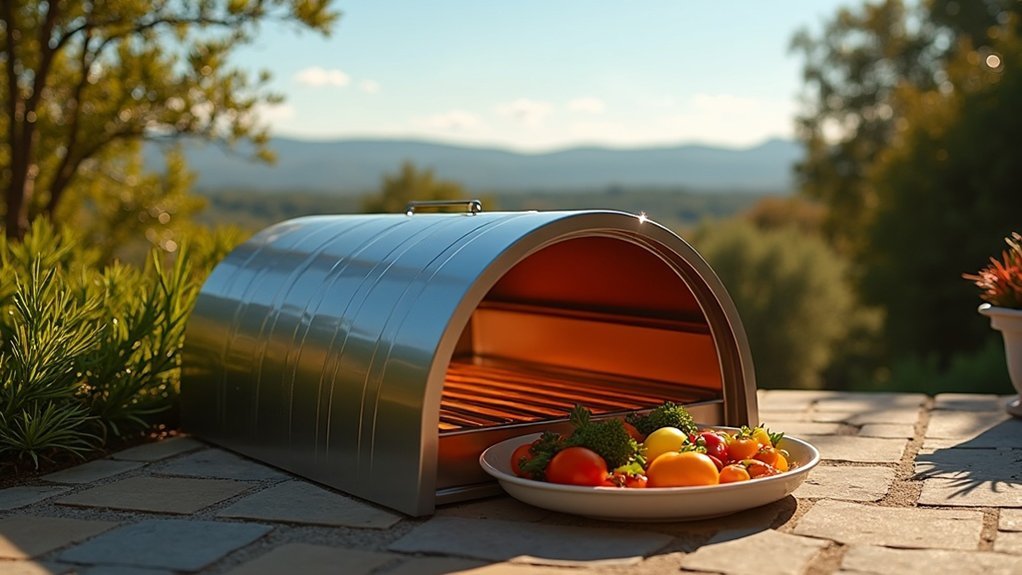
To effectively use a solar oven for survival situations, begin by removing any protective film from the reflectors and ensuring they are clean and free of debris. Position the oven in a sunny area to maximize solar exposure and allow it to preheat for about 25-30 minutes. Utilize dark-colored, tightly lidded pots to enhance heating efficiency. Remember to adjust the oven’s direction every half hour to track the sun’s movement, ensuring optimal cooking. A solar oven can be used to prepare a variety of survival foods, from frittatas to fruit preserves, making it a versatile tool for off-grid cooking. Next, we’ll delve into some practical recipes and essential maintenance tips to keep your solar oven in top condition for long-term use.
Key Takeaways
- Before using your solar oven, remove any protective film from the reflectors and ensure they are clean to maximize sunlight reflection.
- Preheat the solar oven by closing the glass door for 25-30 minutes to achieve the optimal cooking temperature, crucial for survival situations.
- Utilize dark-colored pots with tight-fitting lids to enhance heat absorption and improve cooking efficiency, helping you prepare meals effectively in the wild.
- Position the solar oven in a sunny, unobstructed area and adjust its angle every 30 minutes to follow the sun’s path, ensuring consistent heat for your cooking needs.
- Manage moisture in your dishes by reducing liquid and using lids that aren’t overly tight, allowing for even cooking and preventing sogginess in your meals, which is vital for maintaining food quality in long-term survival scenarios.
Understanding the Basics of Solar Ovens
Understanding the basics of solar ovens is crucial for survivalists and preppers looking to harness the sun’s power for cooking during emergencies or off-grid situations.
These ovens convert sunlight into heat through reflection and absorption, reaching impressive temperatures of up to 400°F on clear days. With proper alignment, you can achieve 300°-375°F, making them effective for baking, roasting, and dehydrating food.
Solar ovens harness sunlight to reach temperatures up to 400°F, perfect for baking, roasting, and dehydrating food.
The Greenhouse Effect allows for excellent heat retention, ensuring your meals cook evenly, which is vital when resources may be limited. However, be mindful of food safety; cooking times can vary, especially on cloudy days when temperatures drop.
Explore different types like box cookers, parabolic cookers, and panel cookers to find the best fit for your prepping needs and ensure you’re always prepared for any situation.
Preparing Your Solar Oven for Cooking
Before you begin cooking with your solar oven, it’s crucial to ensure it’s properly prepared for optimal performance, especially in a survival or prepping scenario. Start by removing any protective film from the reflectors to maximize reflectivity. Allow your solar oven to heat up for 25-30 minutes with the glass door closed to achieve ideal cooking temperatures. Ensure the interior and glass door are clean; you can do this by steaming with soapy water for 90-120 minutes, which is critical for maintaining efficiency. Verify that the gasket forms an airtight seal to prevent heat loss. Position your oven in a sunny, unobstructed location to harness maximum solar energy. Utilize the E-Z Sun-track indicators for precise alignment, ensuring you’re getting the most out of the sunlight available.
| Step | Action |
|---|---|
| Clean Reflectors | Remove dirt for optimal reflectivity |
| Heat Oven | 25-30 minutes with the door closed |
| Check Gasket | Verify an airtight seal |
| Positioning | Locate an unobstructed sunny spot |
| Monitor Temperature | Aim for high temperatures in the cooking chamber |
Cooking Techniques and Tips
Once you’ve prepared your solar oven for cooking, it’s essential to focus on techniques that will maximize your results, especially in a survival or prepping context. Follow these tips:
- Position your solar oven in sunny, unobstructed areas and adjust it every 30 minutes to maintain temperatures between 300°F to 375°F, which is crucial for effective cooking.
- Use dark-colored pots with tight-fitting lids to enhance heat absorption and minimize steam loss, ensuring your meals are cooked thoroughly and efficiently.
- Preheat your solar oven to ideally reach 300°F in about 20 minutes, as this can significantly impact cooking times and food safety.
- Manage moisture carefully by reducing the amount of liquid in your dishes and avoiding overly tight lid locks to prevent condensation, which can dilute flavors and alter cooking times.
Implementing these techniques won’t only enhance your cooking process but also ensure you can prepare delicious meals even in critical situations!
Recipes to Try in Your Solar Oven
Solar ovens offer a valuable resource for survivalist cooking, allowing you to prepare a range of nutritious meals utilizing the sun’s energy. In a survival situation, you can use a solar oven to bake hearty dishes like frittatas, lasagna, or bread, as it can reach temperatures between 300°F and 350°F on hot summer days.
Solar ovens harness the sun’s energy, perfect for baking nutritious meals like frittatas and lasagna in survival situations.
For a sweet treat, consider making blueberry muffins or cheesecake, which can provide a morale boost. When cooking proteins such as turkey, using a baking bag helps retain moisture, crucial for flavor and nutrition.
If you’re looking to preserve food, set your oven between 110°F and 155°F for dehydrating fruits and vegetables, making them last longer in your food stores. Hard-boiled eggs? They’ll be ready in about 35 minutes for one, even on cloudy days.
Embrace solar cooking as part of your preparedness strategy!
Maintenance and Care for Your Solar Oven
After enjoying delicious meals from your solar oven, it’s crucial to keep it in optimal condition for your future survival cooking needs. Here’s how to maintain your solar oven effectively:
- Before the first use, ensure you remove the protective film from the reflectors to maximize heat reflection, which is essential for efficient cooking in outdoor scenarios.
- After each cooking session, clean the interior and glass door with a dishrag or garden hose to maintain visibility and heat retention, ensuring you can rely on it when it matters most.
- Every 3-4 years, apply linseed oil to the wooden bezel to prevent drying or cracking, thus extending the lifespan of your equipment in any survival situation.
- Store your solar oven in a dry location, keeping the reflectors polished and free from oxidation to enhance performance and maintain an airtight seal, ensuring it’s ready when you need it for your prepping endeavors.