To store and use bleach safely in a survival or prepping context, always keep it in its original, labeled container and store it in a cool, dry place away from direct sunlight to maintain its effectiveness. Use personal protective equipment like gloves and goggles when handling bleach, and ensure proper ventilation to avoid inhalation of fumes. Clean surfaces before applying bleach to maximize its disinfecting properties, and never mix it with other cleaners, as this can create dangerous reactions. Be prepared by knowing the immediate safety measures to take if exposed. Understanding how to handle bleach effectively and safely is crucial for protecting yourself and others in emergency situations.
Key Takeaways
- Store bleach in a cool, dry location with temperatures between 50°F to 70°F, away from direct sunlight, to ensure its long-term effectiveness in emergency situations.
- Always consult the label and Safety Data Sheets for detailed usage instructions and essential safety precautions to maximize its utility in survival scenarios.
- Equip yourself with protective gear, including gloves and goggles, to safeguard against skin and eye irritation when handling bleach, especially during critical tasks.
- Ensure adequate ventilation when applying bleach to reduce the risk of inhaling harmful vapors, which is crucial in confined or makeshift environments.
- Avoid mixing bleach with ammonia or vinegar, as this can produce toxic gases that pose serious health risks, undermining your preparedness efforts.
What Is Household/Chlorine Bleach?
Household bleach, a vital tool for survivalists and preppers, is a diluted solution of sodium hypochlorite, typically containing concentrations between 3% and 9%. Its powerful disinfectant properties make it indispensable for disinfecting surfaces, whitening fabrics, and maintaining sanitation in emergency situations.
The ability of household bleach to effectively kill bacteria, fungi, and viruses is crucial for infection control, especially in a crisis. Unlike industrial bleach, which can have concentrations exceeding 30% sodium hypochlorite and isn’t suitable for home use, household bleach is formulated for safe consumer use, making it a practical choice for preparedness kits.
However, it’s important to handle and store bleach properly due to its corrosive nature, which can pose health risks if not managed correctly. Always ensure that you store bleach securely in a cool, dry place, away from heat sources and incompatible substances, to ensure safety and effectiveness in your survival preparations.
Why Should Caution Be Taken When Working With Bleach?
When working with bleach, exercising caution is crucial for survivalists and preppers due to its corrosive properties and potential health risks.
Bleach can cause skin and eye irritation or burns, making protective gear essential for safe handling. In enclosed spaces, inhaling bleach vapors can damage your throat and lungs, emphasizing the importance of ensuring good ventilation.
Additionally, combining bleach with other cleaning agents, such as ammonia or vinegar, can produce toxic gases that pose serious health threats. Adhering to manufacturer instructions and Safety Data Sheets (SDS) is vital for safe usage.
Why Is Bleach Useful?
Bleach is a valuable tool for survivalists and preppers because it effectively disinfects surfaces, eliminates harmful pathogens, and can enhance the appearance of fabrics.
In a survival situation, its powerful cleaning capabilities can be crucial for tasks such as sanitizing kitchen tools, treating water, and whitening laundry.
Understanding how to safely and effectively use bleach can help you maintain a clean and safe environment, which is essential for health and hygiene in any preparedness plan.
Disinfection and Sanitization Benefits
Effective disinfection and sanitization are crucial for maintaining a healthy environment, especially in survival situations where exposure to pathogens can be heightened.
Bleach offers several benefits for cleaning and preparedness:
- Kills a wide range of pathogens, including bacteria, fungi, and viruses, making it an essential tool in a prepper’s arsenal.
- Sodium hypochlorite works by breaking down the cell walls of microorganisms upon contact, ensuring thorough disinfection.
- Proven effectiveness against viruses like SARS-CoV-2 when used in a diluted solution of 0.5%, providing peace of mind during health crises.
- Enhances hygiene in critical areas such as kitchens and bathrooms, which is vital for reducing the spread of illness in confined living spaces.
Utilizing bleach for disinfection not only ensures cleanliness but also promotes safety in your home or survival shelter.
Always handle it with care and adhere to safety guidelines to achieve effective results in your preparedness efforts.
Fabric Whitening and Brightening
While keeping your white fabrics bright may appear difficult, using bleach can significantly aid your efforts. Bleach has the power to break down tough stains and eliminate discoloration, helping to restore your fabrics to their original brightness.
For safe fabric whitening, it’s crucial to dilute one part bleach with nine parts water. Always inspect garment labels to ensure compatibility, as bleach can damage colored fabrics.
Regular use not only enhances brightness but also promotes cleanliness and hygiene, which are vital in survival situations. Proper storage of bleach is essential, as its shelf life can impact its effectiveness.
With careful application, bleach can become a valuable asset in your laundry routine, ensuring your clothing remains in optimal condition for any preparedness scenario.
Versatile Cleaning Applications
When it comes to versatile cleaning applications in a survivalist or prepping context, few substances rival bleach for its ability to tackle a wide array of challenges. Here’s why you should consider incorporating bleach into your preparedness toolkit:
- Disinfects surfaces by killing bacteria, fungi, and viruses, which is crucial for maintaining hygiene in emergency situations.
- Whitens fabrics and removes tough stains, making it useful for cleaning gear and clothing.
- Effectively removes mold and mildew, which can be vital in ensuring safe living conditions in survival scenarios.
- Sanitizes kitchens and bathrooms, helping to reduce the risk of illness in confined living spaces.
To guarantee safety and effectiveness, store bleach at a cool, stable temperature in your emergency supplies.
When used correctly, bleach can enhance sanitation in your home or survival setup, contributing to a healthier environment and reducing the risk of illness transmission.
Always follow dilution guidelines for safe use, especially in crisis situations where proper sanitation is paramount.
Steps to Work Safely With Bleach
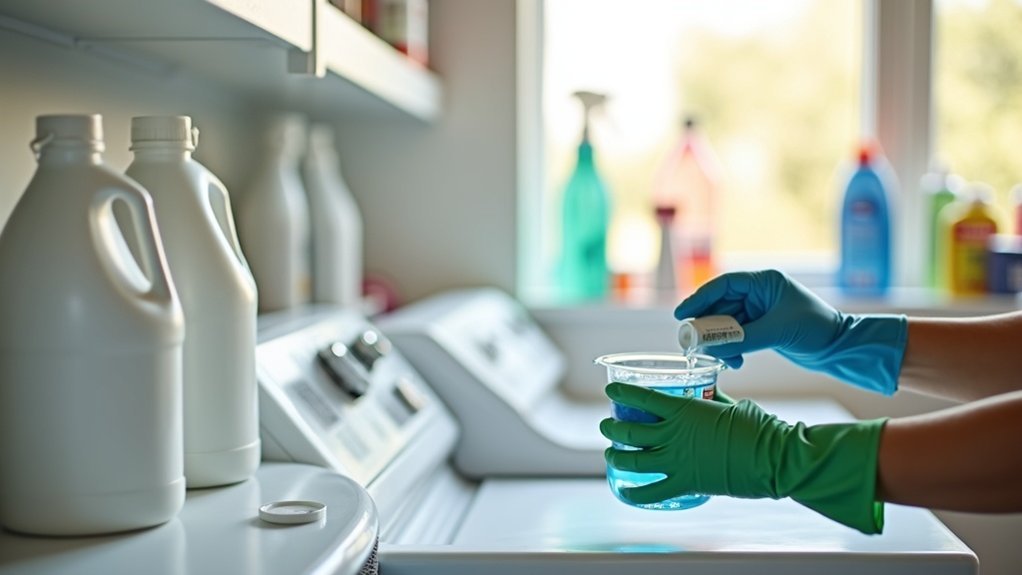
Before you start working with bleach in a survival or prepping context, it’s crucial to understand and follow essential safety steps to protect yourself and your environment. Always read the label and Safety Data Sheets to ensure proper use. Use personal protective equipment (PPE) like gloves and goggles to safeguard against chemical exposure. Ensure good ventilation by opening windows or using fans to minimize inhalation of fumes. Clean surfaces with soap and water before applying bleach to enhance its effectiveness in sanitization. Never mix bleach with other cleaners, especially acids or ammonia, as this can release toxic gases that may pose serious risks to you, your family, and pets.
| Safety Step | Description |
|---|---|
| Read Instructions | Follow the manufacturer’s guidance for safe use. |
| Wear PPE | Utilize gloves and goggles for adequate protection. |
| Ventilate | Open windows or use fans to maintain air quality. |
| Clean Surfaces | Wash with soap and water prior to bleach application. |
| Avoid Mixing | Do not combine bleach with other cleaning products. |
What to Do in Case of Bleach Exposure
Bleach exposure can lead to serious health issues, so knowing how to respond is essential for survival preparedness. If you or someone else is exposed, follow these steps:
Bleach exposure poses serious health risks; knowing the proper response is crucial for emergency preparedness.
- Eye Exposure: Immediately rinse the eyes with water for 15-20 minutes; seek medical help right away to prevent long-term damage.
- Skin Contact: Remove any contaminated clothing and rinse the skin thoroughly with water to minimize absorption.
- Inhalation: Move to an area with fresh air; seek medical assistance if breathing difficulties continue, as this can escalate quickly.
- Ingestion: Don’t induce vomiting; contact poison control or medical professionals for guidance.
As part of your prepping plan, always wear protective clothing when administering first aid for bleach exposure.
Additionally, store bleach in a secure, locked cabinet to prevent accidental exposure, especially if you have children or pets.
Being prepared can make all the difference in an emergency.
Ideal Storage Conditions for Bleach
When storing bleach for survival and prepping purposes, it’s essential to keep it in a cool, dry environment with temperatures ranging from 50°F to 70°F to ensure its effectiveness.
A well-ventilated area is crucial to minimize the risk of chlorine vapor accumulation, which can be hazardous. Always avoid exposure to direct sunlight and heat sources, as these can degrade the bleach over time.
Additionally, retaining the original container is vital for maintaining proper labeling and preventing any dangerous chemical reactions that could occur if the bleach is transferred to an inappropriate vessel.
Proper storage of bleach can be a valuable asset in emergency preparedness.
Optimal Temperature Range
To ensure that bleach remains effective for your survival and prepping needs, it’s essential to store it within an optimal temperature range of 50°F to 70°F (10°C to 21°C). Adhering to these guidelines will help maintain its stability and efficacy in emergency situations:
- Keep bleach away from direct sunlight to prevent chemical breakdown, which is crucial for long-term storage.
- Store it in a cool, dry place to avoid moisture that could degrade the product, ensuring you have reliable disinfectant on hand when needed.
- Avoid locations with fluctuating temperatures, as they can negatively impact bleach’s effectiveness, particularly in a survival scenario where every resource counts.
- Maintain a stable storage environment to prolong its shelf life, allowing you to be better prepared for any unforeseen circumstances.
Ventilation for Safety
Proper ventilation is crucial for safely storing bleach, particularly for those focused on survivalism and prepping. It helps minimize the accumulation of irritating chlorine vapors, which can be harmful in enclosed spaces.
Ensure you store bleach in a well-ventilated area, ideally within a temperature range of 50°F to 70°F, to preserve its effectiveness for emergencies. Avoid areas with fluctuating temperatures, as they can compromise both safety and the strength of the bleach.
The storage environment should be dry; moisture can degrade the container and react with the bleach, potentially compromising your preparedness supplies.
Always place bleach containers on stable surfaces and keep them away from direct sunlight, which can also degrade the sodium hypochlorite concentration.
Adhering to these guidelines will ensure that you maintain both safety and efficacy in your emergency supplies.
Avoid Sunlight Exposure
Keeping bleach away from direct sunlight is essential for maintaining its effectiveness and safety, especially for survivalists and preppers.
Here are some key points to take into account:
- Store bleach in a cool, dry place, ideally between 50°F to 70°F, to ensure it remains effective during emergencies.
- Avoid heat sources and fluctuating temperatures, as these can destabilize its chemical composition and reduce its utility in survival situations.
- Use opaque or dark containers to minimize light exposure and prevent deterioration, ensuring you have reliable disinfectant when you need it most.
- Regularly check your storage area for signs of sunlight exposure or temperature extremes to maintain your supplies in optimal condition for any eventuality.
Proper Packaging and Labeling of Bleach
When storing bleach for survival and prepping purposes, always keep it in its original container to ensure you have access to essential safety labels and instructions.
Use high-density polyethylene (HDPE) containers, as they’re designed to withstand bleach’s corrosive properties and minimize leaks, which is crucial for long-term storage.
Utilize high-density polyethylene (HDPE) containers for safe and effective long-term bleach storage.
If you open a bottle, clearly label it with the date, as opened bleach should ideally be used within three months for safety.
Avoid transferring bleach to glass jars or sprayers, as these can break and lead to hazardous spills, compromising your preparedness efforts.
Additionally, ensure that containers are distinctly marked to differentiate bleach from other cleaning products, preventing accidental mixing or misuse of diluted bleach solutions.
Proper storage and labeling are vital for maintaining the effectiveness of bleach in your emergency supplies.