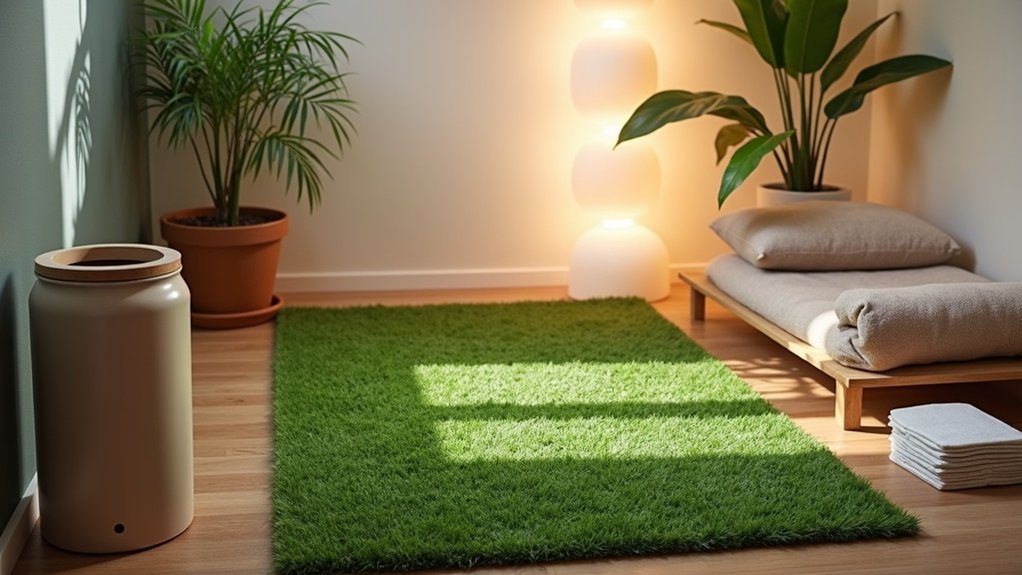
To set up a pet toileting area indoors in a survivalist context, first, select a quiet, low-traffic area that ensures your pet’s privacy while keeping potential distractions to a minimum. Opt for durable flooring, such as tile, which is easy to clean and maintain in an emergency. Define the area using a sturdy tray or potty mat, which can help contain messes. Consider using thick pee pads or a Doggy Bathroom system for straightforward clean-up, especially useful when resources may be limited.
Establish a routine by guiding your pet to the designated area after meals or playtime to reinforce its use. Hygiene is crucial, particularly in a survival situation, so implement simple strategies to keep the area fresh and clean, such as using natural disinfectants or biodegradable cleaning products. Discover more tips to optimize your indoor potty setup while preparing for any scenario!
Key Takeaways
- Select a discreet, low-traffic area in your home that is easily accessible for your pet and has durable flooring, such as tile, to facilitate quick cleanup and maintain privacy.
- Utilize thick pee pads or a specialized Doggy Bathroom system to effectively contain waste, ensuring your indoor environment remains hygienic.
- Clearly define the toileting space with a durable tray or an organized pet mat to keep the area tidy and functional.
- Establish a consistent routine by leading your pet to the designated area after meals or playtime, reinforcing their understanding of where to go.
- Ensure optimal hygiene by promptly replacing used materials and cleaning surfaces regularly with pet-safe solutions to promote a healthy living space.
Summary
Setting up an indoor pet toileting area can be a valuable asset in your survivalist preparations, particularly during emergencies or adverse weather conditions.
Select a quiet, low-traffic area in your home for the indoor dog potty to ensure your pet has privacy and easy access. Choose durable, low-maintenance flooring, such as tile, to facilitate clean-up during challenging times.
Designate a quiet, low-traffic space with durable flooring for your indoor dog potty to ensure privacy and easy clean-up.
Consider using thick pee pads or a Doggy Bathroom system to effectively contain waste and minimize odors. Regular maintenance is crucial; promptly replace saturated pads and clean the area daily with pet-safe solutions to maintain hygiene.
Consistency in training your dog is key, so establish a routine and utilize positive reinforcement to encourage good habits.
Having a reliable indoor potty area will enhance your preparedness and simplify pet care during unforeseen situations.
Quick Takeaways
Creating an indoor potty area can enhance your survival preparedness for your pet. Choose a quiet, secure location to establish a comfortable environment, ensuring it’s easily accessible in case of emergencies.
Invest in durable, high-quality materials to effectively manage waste and odors, which is crucial for maintaining hygiene and preventing health issues.
Benefits of Indoor Potty
While managing a pet’s toileting needs may seem challenging, establishing an indoor potty area can significantly benefit your survivalist lifestyle.
For busy individuals focused on preparedness, a designated dog potty area ensures your furry companion can relieve themselves regardless of the weather. This setup is particularly advantageous for those living in apartments or for those who may face unforeseen circumstances that limit outdoor access.
An effective indoor potty system not only encourages positive habits but also helps to minimize accidents, which is crucial for maintaining a clean and organized living space in any survival situation.
Furthermore, implementing this system aids in odor control, ensuring your home remains fresh and habitable. By creating a secure environment for your pet, you promote their well-being and build their confidence during indoor potty training, which is essential for a cohesive household in times of uncertainty.
Selecting Ideal Location
Choosing the right location for your indoor pet toileting area is essential for both you and your furry friend, especially in a survivalist context where hygiene and resource management are critical. A well-chosen spot can minimize distractions, promote good habits, and help maintain a clean living environment.
- Select a quiet, low-traffic area for privacy, which can also serve as a secure zone during emergencies.
- Utilize the “triangle method” to separate eating, sleeping, and potty areas to ensure that all aspects of your pet’s life are organized and hygienic.
- Consider corners or laundry rooms that are easy-to-clean, as these spaces can often be repurposed for multiple survival needs.
- Use easy-to-clean flooring like tile or vinyl for hygiene, as these materials can withstand wear and are simple to maintain in a prepping environment.
Why Create an Indoor Potty Area for Dogs
Creating an indoor potty area for your dog can be an essential aspect of preparedness for pet owners. It provides a reliable solution for dog potty needs, especially during emergencies or when outdoor access is limited.
This setup is particularly advantageous for small dogs, seniors, or those living in high-density urban settings, as it minimizes the need for frequent outdoor breaks and helps prevent accidents indoors. Establishing a designated potty space can reinforce positive training habits, fostering a sense of security in your pet and reducing potential behavioral issues.
Creating a dedicated indoor potty area benefits small dogs, seniors, and urban dwellers by easing outdoor potty needs and promoting positive behavior.
Utilizing high-quality materials, such as durable, quick-drying pee pads or indoor grass systems, can effectively manage waste and odors, ensuring a clean and hygienic environment.
Ultimately, creating an indoor potty area supports your dog’s well-being while aligning with a proactive survivalist mindset.
Choosing the Right Spot for Puppy Pads
Finding the right spot for puppy pads is crucial for ensuring your dog feels comfortable and secure during potty time, much like establishing a designated area for essential supplies in survival situations.
Consider these tips to help you choose wisely:
- Select a quiet, low-traffic area for privacy, similar to how you’d choose a hidden spot for your emergency stash.
- Use the “triangle method” for designating eating, sleeping, and potty spaces, akin to organizing your prepping supplies for efficiency.
- Choose corners or laundry rooms that are easy to clean and accessible to your dog, just as you’d prioritize accessibility in your survival gear.
- Opt for easy-to-clean flooring like tile or vinyl to maintain hygiene, paralleling the importance of cleanliness in a survival environment.
Essentials for a Clean, Comfortable Potty Solution
To create a clean and comfortable potty solution for your pet in a survival scenario, start with high-quality pee pads that are highly absorbent and effective at controlling odors.
Incorporating odor control solutions, such as pet-safe sprays, can help maintain a fresh environment, especially during extended periods without access to traditional sanitation.
These essentials not only ensure cleanliness but also provide a sense of normalcy for your pets, making it easier for them to adapt to indoor living in a prepping situation.
Quality Pee Pads
When it comes to preparing for emergencies and ensuring your pet’s needs are met, investing in quality pee pads is essential for maintaining cleanliness and reducing odors in your survival space.
Well-chosen pads not only absorb a significant amount of liquid but also help prevent messes, making your pet feel secure during uncertain times. Pair them with a sturdy tray for added stability in your preparedness setup.
- Look for quick-drying materials to minimize cleanup in high-stress situations.
- Choose pads with a natural texture to encourage use during stressful events.
- Replace pads regularly when saturated to maintain hygiene and comfort.
- Use pet-safe cleaning solutions to ensure a safe environment for both you and your pet.
Your pet will appreciate the thoughtful preparation in your survival plan!
Odor Control Solutions
Creating a designated potty area for your pet is an important step in your preparedness plan, especially for those focusing on self-sufficiency and survivalism.
To effectively manage odors in this space, invest in high-quality, thick pee pads for dogs that can absorb significant amounts of liquid—ideally up to 1000 mL. This not only aids in odor control but also ensures cleanliness during times of limited resources.
Consider utilizing a secure system like the Doggy Bathroom to keep pads in place and prevent any messes, which is crucial when you may not have immediate access to cleaning supplies.
Regularly replacing saturated pads is essential for maintaining a hygienic environment, and it’s wise to adopt a routine of cleaning trays and mats daily with pet-safe solutions—this is especially important in a survival situation where every ounce of space and resource matters.
For natural odor control, you can sprinkle baking soda under mats to absorb smells, and keep pet-safe wipes or odor-neutralizing sprays on hand for quick clean-ups.
Also, make it a habit to rinse artificial grass or dog litter box inserts weekly to keep your pet area fresh and pleasant, thereby contributing to the overall hygiene of your living space in any situation.
Preparing for these small details can greatly enhance your quality of life during challenging times.
How to Setup a Dog Potty Area: Step-by-Step
Creating a designated potty area for your dog indoors can enhance both your dog’s comfort and your convenience, especially in survival situations where resources may be limited.
Here’s how to set it up step-by-step:
- Choose a quiet, low-traffic area that’s easily accessible and has flooring that can withstand potential messes.
- Define the space using a sturdy tray or a functional pet mat that can be cleaned and reused.
- Secure thick pee pads for reliable absorption, which can be crucial for maintaining hygiene in a survival setting.
- Encourage your dog to explore the area by guiding them there after meals or playtime, helping them understand where it’s appropriate to relieve themselves.
Keep It Hygienic and Odor-Free
To ensure your survival and preparedness area remains hygienic and odor-free, regular maintenance is crucial. Replace any used materials promptly to prevent contamination and wipe down surfaces daily with safe cleaning solutions. Rinse out storage containers or sanitation supplies weekly to eliminate bacteria. For natural odor control, sprinkle baking soda in storage areas, effectively neutralizing smells. Keep your prep area organized and clutter-free to encourage efficient use.
| Task | Frequency |
|---|---|
| Replace used materials | As needed |
| Wipe down surfaces | Daily |
| Rinse containers | Weekly |
| Add baking soda | Monthly |
Dog Indoor Potty Area: Part of Daily Life
Creating an indoor potty area for your dog can be an essential part of preparing for unforeseen circumstances, ensuring both you and your furry friend can manage effectively even during challenging times.
Establishing an indoor potty area for your dog is vital for managing unexpected situations effectively.
This designated space can help maintain hygiene and reduce the chances of accidents, which is crucial when resources may be limited. By establishing a reliable routine and maintaining the area, you can ensure your dog remains comfortable and well-trained.
- Opt for durable pee pads or artificial grass that can withstand extended use.
- Establish a consistent schedule for potty breaks, reinforcing routine amidst uncertainty.
- Regularly clean the area with pet-safe solutions to maintain hygiene and health.
- Use positive reinforcement to reward your dog for utilizing the indoor potty area, ensuring they understand its importance.
In survival situations, having a well-trained pet can be as vital as having the right supplies.