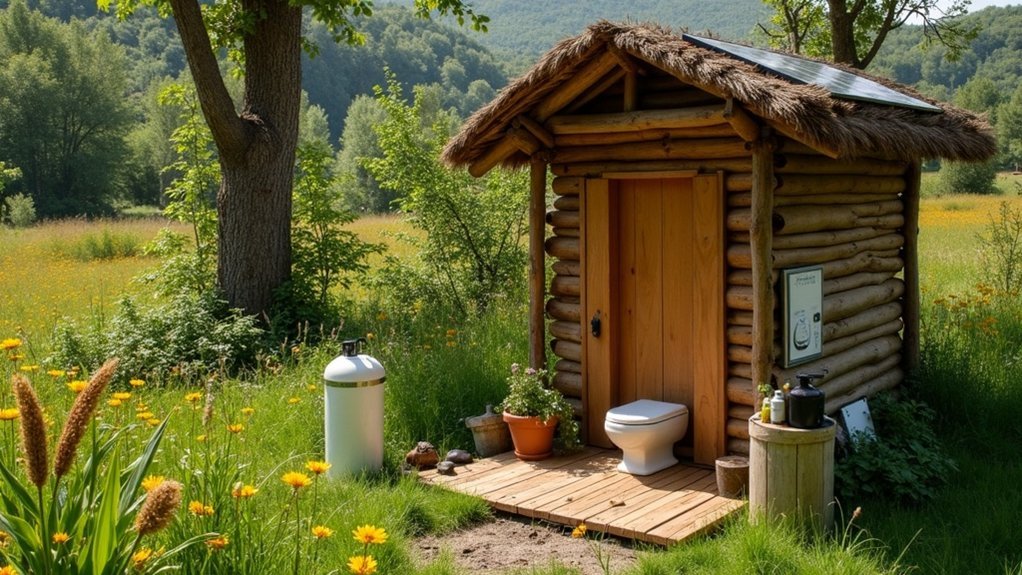
To set up off-grid sanitation effectively, begin with a reliable twin-bucket toilet system. Gather two sturdy 5-gallon buckets and a durable toilet seat adapter; designate one bucket for urine and the other for solid waste. Establish a consistent routine for emptying and cleaning to prevent any hygiene issues, and consider using biodegradable liners to enhance sustainability. Additionally, set up a hand-washing station nearby to ensure proper hygiene practices are maintained. Each of these steps is crucial for effective waste management in a survival situation, and there’s much more to learn about optimizing your off-grid setup for long-term preparedness.
Key Takeaways
- Choose an appropriate off-grid toilet solution such as composting toilets, incinerating toilets, or urine diversion systems that comply with local regulations while considering the climate of your survival location.
- Set up a twin-bucket toilet system with two clearly labeled 5-gallon buckets for urine and solid waste, ensuring that you have a regular emptying and cleaning routine to maintain hygiene.
- Maintain strict hygiene practices by covering waste with carbon materials like sawdust or wood chips, and always use gloves when handling waste to ensure safe disposal.
- Establish hand-washing stations near sanitation areas, ensuring that they are easily accessible for all users, particularly for the elderly, children, and those with compromised immune systems.
- Develop a comprehensive emergency sanitation plan that includes safe waste disposal methods and user-friendly systems that all household members can understand and operate in the event of an emergency.
Understanding Off-Grid Sanitation
Off-grid sanitation is crucial for survivalists and preppers, especially in scenarios where centralized waste management systems are unavailable.
Various off-grid toilet solutions, such as composting toilets, incinerating toilets, and urine diversion systems, cater to different survival needs and conditions. Your choice will depend on local regulations, climate, and specific waste management requirements, all of which are essential for maintaining hygiene and environmental integrity.
Proper setup and maintenance are vital to prevent odors and ensure effective waste breakdown—some systems may require more upkeep than others.
Setting Up a Twin-Bucket Toilet System
To set up a twin-bucket toilet system for survival situations, you’ll need specific materials and a clear plan for operation and maintenance.
Begin by gathering two 5-gallon buckets, a toilet seat adapter, biodegradable liners, and essential supplies like a scoop for waste and disinfectant.
Establish a routine for emptying and cleaning the system to ensure hygiene in any scenario. Understanding both the setup and ongoing care will help you manage waste efficiently, allowing you to maintain a sanitary environment even in challenging conditions.
This preparation is crucial for long-term survival and health.
Materials Needed for Setup
Setting up a twin-bucket toilet system is essential for survival situations where traditional plumbing may not be available. This system allows you to manage waste effectively while maintaining hygiene, which is crucial for health during emergencies.
Gather the following materials to create your composting toilet setup:
- Two 5-gallon buckets (designate one for urine and one for solid waste)
- Heavy-duty 13-gallon black plastic garbage bags to line the buckets
- A comfortable toilet seat or a pool noodle for added comfort during use
- Carbon material such as sawdust or peat moss to cover waste and aid in composting
- Toilet paper and disposable gloves to ensure cleanliness and hygiene
Choose a discreet and private location for your toilet system, and consider erecting a privacy screen to enhance comfort and security during use.
This setup not only aids in waste management but also aligns with self-sufficiency principles critical for survivalists and preppers.
Operating the System
Once you’ve gathered the necessary materials and chosen a strategic location for your twin-bucket toilet system, it’s time to focus on how to operate it effectively in a survival situation.
Utilize the labeled buckets—one designated for urine and the other for solid waste. When the urine bucket reaches one-quarter full, empty it promptly, diluting the urine with water before safely pouring it on your composting area or garden to recycle nutrients and manage waste responsibly.
For the solid waste bucket, never fill it beyond half; always wear gloves when emptying, and double-bag the waste for added safety and hygiene.
This low-maintenance system requires minimal effort, ensuring you maintain cleanliness while reaping the benefits of self-sufficient living and preparedness.
Maintenance and Care Tips
Maintaining your twin-bucket toilet system is crucial for optimal waste management and hygiene, especially in an off-grid survival situation.
Follow these essential care tips to ensure a clean and effective sanitation system:
- Regularly cover the waste in the poo bucket with carbon material, such as sawdust, to help control odors and facilitate decomposition.
- Empty the pee bucket when it reaches one-quarter full. Be sure to dilute the urine with water before disposal to minimize environmental impact.
- Keep the poo bucket less than half-full before emptying. Always use gloves and double-bag the waste for safe handling and disposal.
- Store the system in a private area to enhance comfort and maintain hygiene, creating a more discreet and effective setup.
- Organize essential supplies—like toilet paper, gloves, and carbon material—so they’re readily accessible for efficient use during your outdoor activities.
Best Practices for Using the Twin-Bucket Toilet System
Using the twin-bucket toilet system effectively can significantly enhance your off-grid sanitation experience, which is crucial for survivalism and prepping.
Start by clearly labeling your two 5-gallon buckets—one designated for urine and the other for feces—to avoid any confusion during critical situations. Always line the feces bucket with a heavy-duty black garbage bag for durability and ease of disposal.
After each use, cover the feces with carbon material like sawdust or similar organic matter to control odors and improve hygiene, essential for maintaining a safe living environment.
Empty the urine bucket when it reaches one-quarter full and remember to dilute it before using it as fertilizer on your garden or lawn, as this can provide valuable nutrients.
The feces bucket should be emptied when it’s half-full to prevent overflow and maintain sanitary conditions.
Additionally, ensure that hand-washing stations are set up nearby to uphold proper hygiene practices before and after use, which is vital in any prepping scenario.
Responsible Waste Disposal Methods
While off-grid living is a key aspect of survivalism and prepping, responsible waste management is crucial for maintaining health and ensuring environmental integrity.
Off-grid living embraces survivalism, but effective waste management is vital for health and environmental sustainability.
Using effective disposal methods can significantly reduce your ecological footprint and enhance your self-sufficiency. Consider these options:
- Composting toilets for converting human waste into nutrient-rich compost, ideal for gardening.
- Twin-bucket systems to efficiently separate urine and feces, maximizing waste management efficiency.
- Greywater systems for recycling water from sinks and showers, conserving precious resources.
- Septic systems for safe and effective human waste management, ensuring your site remains sanitary.
- Regular maintenance to prevent pollution, ensuring compliance with local regulations and enhancing your preparedness for emergencies.
Establishing a Hand-Washing Station
Establishing hand-washing stations is a critical component of promoting hygiene in off-grid survival situations, particularly near food preparation and sanitation areas.
Set up two designated stations: one adjacent to food prep and another by the emergency toilet. Each station should be equipped with a clean water jug, biodegradable soap, reusable towels, and a catch bucket for waste water.
Regularly sanitize spigot handles to minimize the risk of germ transmission. It’s vital to emphasize proper hand-washing protocols before, during, and after food preparation, after using the toilet, and when caring for sick individuals to significantly reduce the risk of illness.
Additionally, ensure that you maintain a stockpile of extra supplies in your disaster preparedness kit, so you’re always prepared for any emergency situation.
Special Considerations for Household Members
When establishing off-grid sanitation, it’s crucial to consider the varied needs of all household members, particularly in terms of age and mobility.
Ensure that your toilet system is designed to accommodate children, the elderly, and individuals with disabilities, facilitating ease of use and comfort.
Furthermore, emphasize health and hygiene by educating everyone on essential sanitation practices and effective waste management techniques, which are vital for maintaining a safe and sustainable living environment in a preparedness context.
Age and Mobility Needs
Selecting an off-grid toilet system is crucial for survivalists and preppers, especially when considering the age and mobility needs of all household members, including those with limited physical capabilities.
Here are key factors to keep in mind for your preparedness plan:
- Opt for accessible designs or raised toilet seats to ensure ease of use for all.
- Incorporate grab bars or handrails for safety, particularly in emergency situations.
- Evaluate the maintenance ease of the system to accommodate reduced mobility and ensure reliability.
- Choose ergonomic, user-friendly toilet systems to promote comfort during long-term use.
- Plan the toilet location strategically to minimize distance and obstacles, ensuring quick access in times of need.
Health and Hygiene Considerations
Addressing the specific health and hygiene needs of your household members is crucial for maintaining safety and health in an off-grid environment, especially when prepping for emergencies. Proper waste management and sanitation practices are essential, particularly for vulnerable individuals like children, the elderly, and pregnant women. Regular hand-washing, clear usage instructions for toilets, and maintaining cleanliness around sanitation facilities are vital survival skills. Here’s a quick reference table to help you prepare:
| Group | Health Considerations |
|---|---|
| Children | Frequent hand-washing to prevent illness |
| Elderly | Accessible sanitation facilities for safety |
| Pregnant Women | Additional hygiene measures to protect health |
| Immunocompromised | Enhanced sanitation practices to avoid infections |
| General Household | Regular waste disposal to maintain hygiene |
Being prepared and knowledgeable about these health and hygiene considerations can make a significant difference in survival situations.
User Comfort and Preferences
Understanding the varying comfort levels and preferences of your household members is crucial when selecting an off-grid toilet system, especially in a survivalist or prepping context.
Consider these factors to ensure user comfort and effective waste management:
- Odor control: Evaluate systems that effectively minimize unpleasant smells, which is vital in a survival setting.
- Maintenance: Determine the level of upkeep that each family member is willing to manage, as this can impact overall preparedness.
- Accessibility features: Ensure the toilet is suitable for elderly or disabled users, as accessibility is key in emergency situations.
- Capacity: Select a system that accommodates your household’s usage frequency, especially during extended periods without access to traditional facilities.
- Decision involvement: Engage everyone in discussions about options to foster acceptance and satisfaction, which is important for maintaining morale in challenging circumstances.
Preparing for Emergencies and Disasters
When facing a disaster, particularly in areas prone to earthquakes like the Oregon Coast, it’s crucial for survivalists to prioritize sanitation in their preparedness plans to ensure health and safety.
Begin by securing a dependable water supply, aiming to store at least 1 gallon per person per day for two weeks. Implement a twin-bucket toilet system for efficient human waste management, which helps reduce pathogens and overall costs.
Establish hand-washing stations close to food and toilet areas to reinforce hygiene practices. Furthermore, devise a comprehensive emergency sanitation plan that includes safe disposal methods, such as double-bagging waste and storing it away from food and water sources to avoid contamination.
Being proactive in these measures can significantly enhance your resilience during a crisis.