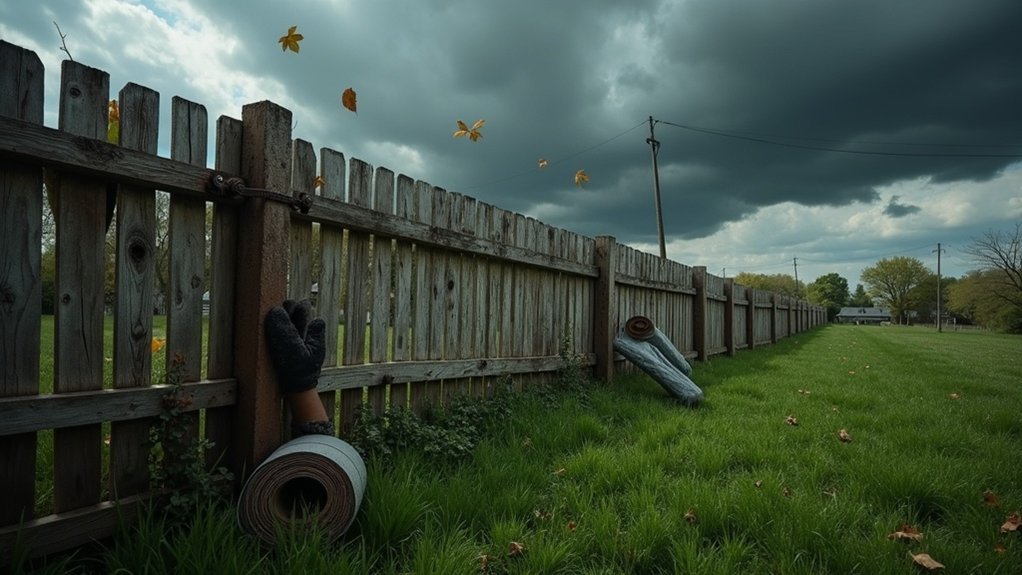
To secure your fencing before storms, begin by thoroughly inspecting the posts and hardware for any signs of weakness, such as rust or rot, which could compromise your defenses. Opt for wind-resistant materials, like reinforced vinyl or aluminum secured with concrete footings, to withstand harsh conditions. Install posts at least 24 inches deep and no more than 6 feet apart, ensuring proper drainage around them to prevent water accumulation that can weaken the structure. Fortify all connection points with heavy-duty hardware to enhance stability. Additionally, schedule regular maintenance checks to identify and rectify potential issues before they escalate. By following these essential tips, you’ll bolster your fencing and be better prepared to face stormy weather effectively, ensuring your safety and security in any situation.
Key Takeaways
- Conduct a thorough inspection and reinforce fence posts to ensure proper anchoring; they should be buried at least 24 inches deep in clay soils for maximum stability during storms.
- Replace any rusted or weakened hardware, and opt for galvanized fasteners to improve resilience against harsh storm conditions.
- Choose wind-resistant materials such as vinyl reinforced with steel or wrought iron with deep concrete footings to enhance the strength of your fencing.
- Space fence posts no more than 6 feet apart, and install corner posts at 45-degree angles with bracing for added support and stability in severe weather.
- Perform regular maintenance checks to tighten loose hardware, replace worn components, and clear away overhanging branches to reduce the risk of storm damage and ensure your fencing remains a reliable barrier.
Assessing Your Current Fence’s Storm Readiness
Before a storm approaches, it’s crucial to assess your fence’s storm readiness to safeguard your property and enhance your overall preparedness.
Start by inspecting the condition of your fence posts; ensure they’re set at least one-third of their height deep, ideally 24 inches for clay soils, to withstand harsh weather conditions.
Inspect your fence posts to ensure they’re properly anchored at least 24 inches deep for optimal storm resilience.
Look for any signs of vulnerability such as rotting wood, rusted metal, or loose posts, as these weaknesses can lead to significant storm damage.
Additionally, make sure that posts are spaced no more than 6 feet apart to effectively resist heavy winds.
Lastly, evaluate all hardware for rust and replace any weakened components to maintain structural integrity.
Document your findings for future reference to ensure your fence remains a reliable barrier in times of crisis.
Choosing Wind-Resistant Fence Materials
When selecting materials for your survival fence, it’s crucial to prioritize wind resistance to ensure it can withstand severe storms and protect your property.
Consider using vinyl fencing with steel reinforcement, which can endure wind loads up to 110 mph with minimal maintenance, making it a reliable choice for those preparing for extreme weather.
Wrought iron or aluminum fencing, particularly when installed with concrete footings at least 24 inches deep, provides exceptional durability and security.
Composite materials are also a smart option, as they resist harsh weather conditions without warping, ensuring long-lasting protection.
For chain link fencing, make sure to utilize 3-inch diameter posts and proper tensioning for stability, as these features will enhance your fence’s ability to withstand strong winds.
Strategic Post Installation Techniques
To ensure your fence remains resilient against storm forces, strategic post installation is crucial for any survivalist or prepper. Install posts at least one-third of their height deep, with a minimum of 24 inches in clay soil to withstand harsh conditions. Use concrete footings that rise 2-4 inches above ground level to prevent rot and deterioration. Incorporating gravel for drainage is essential to minimize erosion risks, allowing water to flow away from the posts. Space your posts no more than 6 feet apart to maintain strength and stability. For added security against high winds, install corner posts at 45-degree angles with bracing. In flood-prone areas, using galvanized metal post brackets will provide extra reinforcement, ensuring your perimeter remains intact even in adverse weather.
| Technique | Benefits |
|---|---|
| Deep post installation | Reduces the risk of structural failure, enhancing long-term durability |
| Concrete footings | Prevents water pooling and rot, ensuring the longevity of your fence |
| Gravel drainage | Minimizes water damage, protecting your investment against the elements |
Water Drainage Solutions to Prevent Damage
To protect your fence from storm damage while preparing for potential survival scenarios, implementing graded landscaping techniques is crucial; it helps direct water away from your posts, ensuring your perimeter remains intact.
Consider installing French drains in areas prone to pooling, as they effectively channel excess moisture away, preventing vulnerabilities in your defensive structures.
Additionally, using permeable base materials around post foundations will enhance drainage and reduce the risk of deterioration from saturated soil, keeping your barriers strong and reliable in adverse conditions.
Graded Landscaping Techniques
Implementing graded landscaping techniques is crucial for survivalists and preppers looking to enhance the resilience of their fencing systems, particularly in areas prone to severe weather.
Begin by creating a slope of at least 2% away from fence lines to effectively direct water flow, which helps prevent pooling that could compromise the integrity of your posts.
Utilizing permeable base materials is advisable as it improves soil conditions, allowing excess water to drain and reducing the risk of water damage during storms.
Additionally, maintain a 10-foot buffer from large trees by regularly trimming overhanging branches to mitigate the threat of falling debris.
French Drain Installation
When heavy rains threaten your survival homestead, a well-installed French drain can serve as a crucial defense against water pooling around your structures.
To install, dig a trench at least 6 inches wide, ensuring a 1% slope to efficiently direct water away from your property. Place perforated pipe covered with gravel in the trench, and use landscape fabric to prevent soil blockage while allowing water to flow freely.
Regular maintenance is essential; clear debris and check for blockages to safeguard your shelter from potential damage.
Permeable Base Materials
How can you effectively prevent water damage around your fence posts in a survival situation?
Utilizing permeable base materials is essential. These materials allow water to filter through, reducing the risk of standing water that can rot your posts during heavy rains.
Incorporate gravel backfill beneath the posts to enhance drainage and prevent moisture buildup, especially in flood-prone areas where water management is critical for survival.
Establish a minimum 2% slope away from the fence line to direct water away, which further safeguards soil integrity and prevents erosion.
Additionally, consider installing French drains to channel excess water, maintaining the structural integrity of your fencing while ensuring your perimeter remains secure against environmental challenges.
Hardware and Connection Points Reinforcement
To ensure your fence can withstand fierce storm winds and potential threats, it’s crucial to fortify gate connections and utilize high-quality fasteners.
Install heavy-duty hinges and conduct regular inspections to identify any signs of wear before they escalate into significant issues.
Opting for rust-resistant hardware is essential, as it will secure these vital connection points and enhance the overall durability and resilience of your fencing, providing an added layer of protection in your survivalist preparations.
Strengthening Gate Connections
Securing your gate connections is crucial for survival preparedness, especially as storms approach, since these components endure the brunt of harsh winds.
To ensure your gates remain intact and functional during extreme weather, follow these essential steps:
- Install heavy-duty hinges—ideally three per gate—to enhance stability against strong gusts and potential intruders.
- Use a drop rod or cane bolt to anchor the bottom of the gate, preventing it from swinging or rattling, which can alert unwanted attention.
- Regularly inspect and reinforce gate posts, as they can deteriorate faster under adverse conditions.
Utilize galvanized fasteners to secure connections and prevent rust and corrosion, ensuring your gate remains a reliable barrier for your homestead.
Fasteners and Hardware Quality
When it comes to reinforcing your fencing for survival situations, the quality of fasteners and hardware is essential for ensuring durability and resilience against severe weather.
Utilizing rust-resistant fasteners, such as hot-dipped galvanized nails, significantly enhances structural integrity and longevity, critical for maintaining your perimeter security.
For gates, it’s advisable to install at least three heavy-duty hinges to effectively distribute stress and prevent failure during high winds.
Additionally, using galvanized metal post brackets provides vital lateral support, especially in flood-prone areas where conditions can rapidly change.
Regular maintenance checks are crucial; make it a habit to tighten loose hardware and replace worn components to ensure your fencing remains strong when you need it most.
Documenting the condition of your fasteners can help you identify weak points and ensure that all connections are up to the necessary standards for storm resistance, giving you peace of mind in your prepping endeavors.
Inspecting Hinge Stability
Regular inspections of gate hinges are crucial for maintaining fence stability, especially when preparing for severe weather conditions.
Follow these steps to ensure your hinges are ready for any storm:
- Check for Wear: Inspect gate hinges for signs of rust or deterioration. These components are particularly susceptible to damage from high winds and extreme weather.
- Use Quality Hardware: Ensure that all screws and fasteners are constructed from rust-resistant materials, such as hot-dipped galvanized steel. This will help prevent structural failure during critical situations.
- Tighten Connection Points: Make sure all connections between gates and posts are secure. This will reduce movement and enhance stability, providing peace of mind as you prepare for potential emergencies.
Seasonal Maintenance and Inspection Recommendations
To ensure your fence remains a reliable barrier against natural threats, it’s crucial to perform regular inspections and maintenance year-round.
Conduct quarterly checks for loose boards, rusted hardware, and signs of rot or damage that could compromise its strength. Trim back overhanging branches and remove debris to reduce the risk of storm damage from falling limbs.
Secure all fasteners, especially on gates and hinges, as loose hardware can weaken your fence’s integrity during severe weather events. Keep a detailed log of maintenance activities for your records and potential insurance claims.
Additionally, plan for professional inspections before storm seasons to pinpoint any vulnerabilities and receive expert guidance on necessary reinforcements or repairs, ensuring your property remains fortified against potential threats.