To rig a negative pressure fan safely in a survival or prepping scenario, first ensure that everyone involved is familiar with safety protocols and the equipment setup. Position the fan 8-12 feet above the ground, facing outward to effectively create low pressure that can help ventilate a shelter or space. Secure the fan using a robust frame and routinely check for stability to withstand environmental conditions. Seal all openings tightly to minimize air leaks, ensuring your living space remains secure. Regularly monitor airflow, pressure, temperature, and humidity to maintain optimal conditions. Conduct frequent inspections of all components for integrity and performance. If you are looking to further enhance your setup for survival situations, there’s an abundance of critical information available to explore.
Key Takeaways
- Ensure all personnel involved in rigging the negative pressure fan are well-versed in survival protocols and emergency preparedness before commencing the setup.
- Position the fan 8-12 feet above the ground, directing airflow outward towards the exit point, to enhance air circulation in a survival scenario.
- Securely mount the fan using a robust support frame, ensuring it is stable to prevent accidents that could jeopardize safety during critical situations.
- Conduct regular inspections of seals and covers for air leaks to maintain efficiency and ensure optimal air quality within the environment, crucial for long-term survival.
- Utilize a manometer to monitor static pressure, aiming for a range of 0.05-0.10 inches water gauge, to achieve balanced airflow essential for maintaining a safe and healthy atmosphere.
Ensuring a Safe Environment for Operation
To ensure a safe environment for operating a negative pressure fan in a survival setting, it’s crucial to confirm that all personnel involved are knowledgeable about safety protocols and operational procedures.
Ensuring all personnel are well-versed in safety protocols is essential for safe negative pressure fan operation in survival scenarios.
During the installation of the negative pressure fan, make sure it’s securely positioned to prevent any vibrations or resonance noise that could attract unwanted attention.
Regularly inspect all equipment for damage, as compromised parts can pose significant safety risks in a preparedness scenario.
Maintain a clear area around the fan to avoid obstructions that could endanger personnel or hinder efficient operation.
Establish emergency procedures, including a quick shutdown plan in case of malfunctions, to ensure a swift response in critical situations.
Adhering to these maintenance tips will enhance operational safety and effectiveness, ensuring the fan operates reliably throughout its lifespan and contributes to your overall preparedness strategy.
Positioning the Fan for Maximum Effectiveness
To maximize the effectiveness of a negative pressure fan in your survival or prepping setup, position your fan 8-12 feet above the floor on the leeward side of your shelter to optimize airflow patterns.
Maintain a spacing of 20-30 feet between fans to ensure uniform air movement throughout the space. Install the fan in a central location or in an area that promotes smooth air circulation, avoiding spots with high temperatures or concentrated odors that could compromise your safety.
Consider the building’s orientation and prevailing wind patterns to enhance negative pressure ventilation, which is crucial for maintaining a breathable environment in emergency situations.
Always face the fan outward at the exit point to create a low-pressure area that efficiently pulls in fresh ambient air, keeping your shelter comfortable and safe.
Securing the Fan Properly
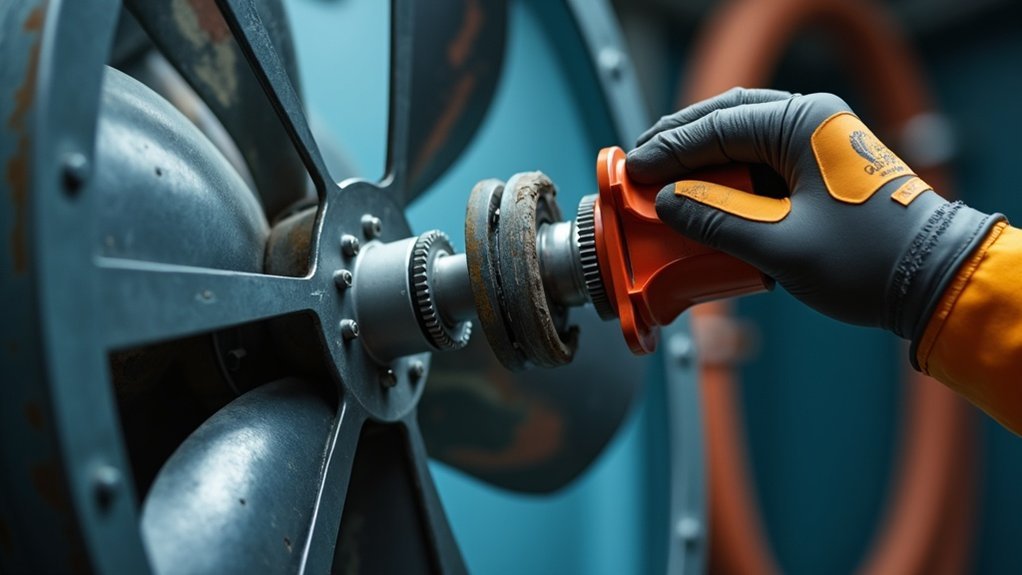
Securing your negative pressure fan properly is crucial for ensuring safe and effective operation, especially in survival and prepping situations where reliable ventilation is essential.
Follow these steps to guarantee stability in your ventilation systems:
- Install the fan upright and stable, avoiding angles greater than 30 degrees to ensure optimal airflow.
- Construct a support frame using durable angle steel, with a minimum specification of 4×4 inches, and apply anti-corrosion paint to withstand harsh conditions.
- Secure all mounting points firmly, ensuring that the fan can support its own weight and accommodate two maintenance personnel for emergencies.
- Regularly inspect the fan’s stability post-installation to identify any wear or instability that could compromise performance and safety in critical situations.
Covering Openings to Minimize Air Leaks
To minimize air leaks in your survival shelter, it’s crucial to select appropriate cover materials that fit securely around any fan openings or ventilation points.
Ensure tight seals by folding the cover edges properly, which will help reduce gaps that can compromise airflow efficiency and potentially expose you to environmental threats.
Regularly monitor these seals and make adjustments as necessary to maintain optimal performance in your shelter, ensuring you stay prepared for any situation.
Selecting Appropriate Cover Materials
Selecting appropriate cover materials is crucial for survivalism and prepping, particularly when sealing openings to minimize air leaks during negative pressure ventilation setups.
To ensure optimal performance, consider the following guidelines:
- Use durable, weather-resistant salvage covers to effectively seal off openings and prevent air infiltration.
- Ensure that the cover fits snugly around the edges, folding it securely around the perimeter to eliminate any gaps.
- Maximize the coverage area to enhance ventilation effectiveness while minimizing unintended air leaks, which can compromise your safety.
- Regularly inspect the seal of the cover for any signs of wear and tear, replacing any damaged materials immediately to maintain a secure barrier.
Furthermore, incorporate weather-stripping or adhesive tapes to reinforce the cover, providing an added layer of protection against air leaks that could jeopardize your survival efforts.
Ensuring Tight Seals
Ensuring tight seals around openings when utilizing a negative pressure fan is crucial for maximizing ventilation efficiency and preventing unwanted air leaks, especially in survival situations.
Use salvage covers to effectively seal these openings, guaranteeing maximum coverage and protection from the elements. Fold the cover tightly around edges to enhance the seal and eliminate gaps that could undermine your setup’s effectiveness.
Aim for a snug fit, as even minor openings can lead to significant air leakage, which can compromise airflow management in critical situations. Regularly inspect your sealing materials for wear and tear, replacing them as necessary to maintain optimal performance.
Proper sealing not only boosts ventilation efficiency but also keeps harmful contaminants from entering your space, ultimately enhancing indoor air quality and ensuring a safer environment during emergencies.
Monitoring Airflow Efficiency
Monitoring airflow efficiency is crucial for ensuring optimal performance when utilizing a negative pressure fan in survival and prepping scenarios.
To minimize air leaks around openings, adhere to the following steps:
- Ensure that the salvage cover fits securely around the edges to prevent any gaps that could compromise air quality.
- Employ sturdy materials such as weatherproofing tape to create durable, long-lasting seals that can withstand varying conditions.
- Conduct regular inspections for any gaps or imperfections in the seal after installation to maintain efficiency.
- Adjust the cover as necessary to fine-tune airflow during operation, which can be vital in emergency situations where air quality may impact health and safety.
Monitoring Air Supply and Pressure
To effectively monitor air supply and pressure in survival situations, it’s crucial to implement precise airflow measurement techniques and ensure that your pressure gauges are calibrated correctly.
Regularly checking these gauges will help maintain optimal performance and prevent airflow inefficiencies, which can be vital in emergency preparedness scenarios.
By focusing on these aspects, you can create a balanced negative pressure environment that meets your survival needs and operational standards.
Being proactive in these measures can make a significant difference in maintaining safe and breathable air in challenging conditions.
Airflow Measurement Techniques
Accurate airflow measurement is crucial for maintaining an efficient negative pressure fan system, especially in survival and prepping scenarios where air quality and ventilation can impact safety and comfort.
Here are key techniques to monitor airflow and air pressure effectively:
- Use a manometer to measure static pressure, aiming for a range of 0.05-0.10 inches water gauge to ensure your ventilation system is functioning properly.
- Implement an anemometer to assess air velocity at different points in your system, helping you identify areas that may need improvement or adjustment.
- Regularly measure airflow at both the inlet and outlet to maintain a 1:1 to 1:1.5 outlet-to-inlet ratio, which is vital for optimal air circulation in any prepper setup.
- Monitor temperature and humidity levels alongside airflow measurement for peak performance, as maintaining a stable environment is key to survival readiness.
Pressure Gauge Calibration
Calibrating the pressure gauge is crucial for ensuring reliable readings of static pressure in your negative pressure fan system, particularly for those preparing for emergencies or survival situations.
Regularly check the gauge against a manometer to verify it accurately reflects the ideal range of 0.05-0.10 inches of water gauge. Document each calibration meticulously, including the date and any adjustments made, as this information may be vital for future reference and compliance with your survival plans.
Be vigilant about monitoring air supply during operation; adjusting fan speed and inlet/outlet ratios can help maintain balanced airflow, which is essential for preventing static pressure issues that could compromise your preparedness.
Conduct these checks periodically, especially after any significant changes to your ventilation setup, to ensure ongoing accuracy and efficiency in managing pressure and temperature control, which are critical for maintaining a safe and functional environment in survival scenarios.
Safety Protocols During Operation
Guaranteeing safety during the operation of a negative pressure fan is critical for effective survivalism and prepping, as it helps prevent accidents and maintains efficiency in emergency situations.
Follow these protocols:
- Brief all personnel on the setup and emergency procedures to enhance safety awareness in potential crisis scenarios.
- Regularly inspect the fan and equipment to ensure optimal ventilation and functionality, especially during critical operations.
- Keep the area around the fan clear of obstructions to allow smooth airflow and prevent hazards that could compromise your preparedness.
- Always wear personal protective equipment (PPE), such as gloves and safety goggles, to mitigate risks and ensure personal safety while engaging in survival activities.
Adjusting the Setup for Optimal Performance
To achieve optimal performance from your negative pressure fan in a survival or prepping scenario, it’s essential to strategically position and adjust the setup based on your specific environmental conditions.
Place the fan 8-12 feet above the ground level on the leeward side of your shelter to enhance airflow throughout the space. Maintain a 1:1 to 1:1.5 outlet-to-inlet ratio, ensuring that the inlets are 2-4 times the combined area of the fans.
Adjust fan angles for better airflow and regularly monitor static pressure, aiming for a range of 0.05-0.10 inches water gauge. Additionally, be vigilant for air leaks and reseal any gaps, as even minor leaks can significantly diminish efficiency, which is crucial in a survival situation where air quality can impact health and comfort.