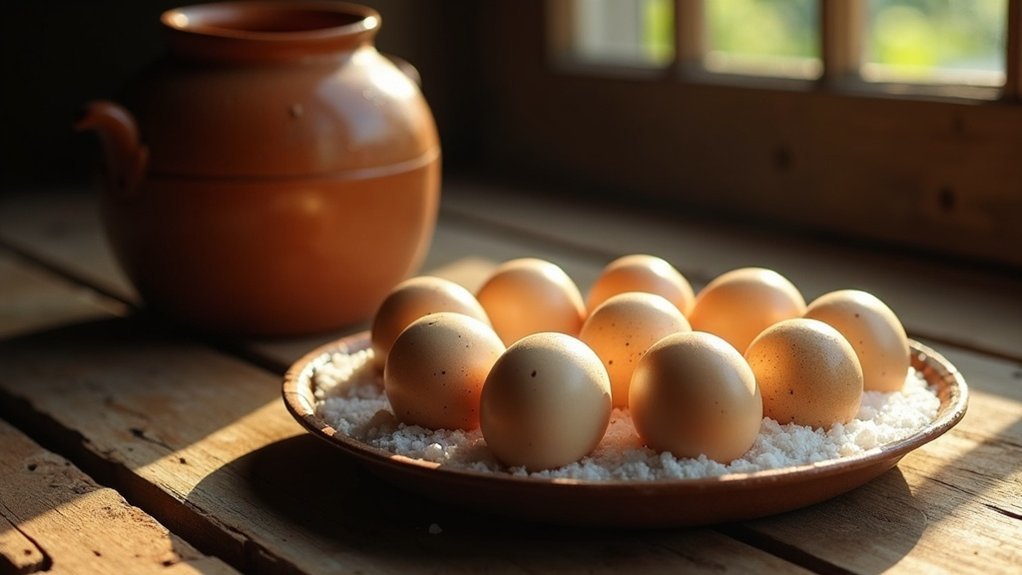
To preserve eggs without refrigeration, consider practical methods that are essential for survival and prepping. One effective technique is water glassing, where you submerge clean, unblemished eggs in a lime solution, allowing them to remain viable for up to 18 months. Another valuable option is freezing eggs: simply crack them into containers, seal them well, and store them in your freezer, which can keep them fresh for up to six months. Additionally, dehydrating or freeze drying eggs significantly extends their shelf life, making them a reliable food source during times of scarcity. Mastering these techniques can greatly enhance your food preservation skills and preparedness for any situation; be sure to explore each method for deeper insights.
Key Takeaways
- Utilize the water glassing method with a lime solution to effectively preserve fresh eggs for up to 18 months without the need for refrigeration, ensuring a reliable food source during emergencies.
- Dehydrate eggs at a consistent temperature of 135°F for 4-6 hours, then store them in airtight glass jars away from sunlight, providing a shelf life of up to one year for your survival pantry.
- Freeze uncooked eggs in muffin tins or ice cube trays, allowing for convenient portions that can be stored for up to six months. Be sure to label your containers with the date for easy tracking of your food resources.
- Consider freeze-drying eggs to achieve an impressive shelf life of up to 25 years, preserving their nutritional value and texture for long-term preparedness scenarios.
- Regularly inspect your preserved eggs for spoilage every 2-4 weeks to maintain optimal storage conditions and ensure the quality of your emergency food supply.
Uncooked Eggs or Cooked Eggs?
When deciding whether to preserve uncooked or cooked eggs for your survival storage, it’s crucial to consider your long-term storage needs and intended use in emergency situations.
Uncooked eggs can be frozen or freeze-dried, maintaining their nutritional value and providing versatility in meal preparation when resources are limited. While freezing eggs requires you to crack them into containers, freeze drying offers a remarkable shelf life of up to 25 years when vacuum sealed, making it an excellent option for long-term preparedness.
Uncooked eggs can be frozen or freeze-dried, offering long-term nutrition and meal versatility for emergencies.
On the other hand, cooked eggs, such as scrambled or hard-boiled, significantly reduce the risk of salmonella, which is essential when food safety is a concern.
Cooked eggs can last up to six months in the freezer, allowing for convenient ready-to-eat meals during emergencies.
Weigh these factors carefully to determine the best preservation method for your survival stockpile.
Methods of Preserving Eggs
Choosing the right method to preserve eggs can significantly enhance your food storage strategy, especially for survivalists and preppers.
Here are some effective techniques that can help you maintain a steady supply of protein in emergency situations:
- Water glassing eggs: Store clean, unwashed eggs in a hydrated lime solution to keep them fresh for up to 18 months, ensuring you have a reliable food source during shortages.
- Dehydrating eggs: Dry eggs at 135°F for 4-6 hours, yielding a shelf life of up to a year. Be mindful that the texture may change, but they remain a valuable addition to your long-term food supplies.
- Freeze drying: This method allows you to preserve eggs for an astonishing 25 years while maintaining their nutritional value and flavor, making it an excellent option for long-term survival food storage.
- Storing eggs in ash: Utilize the insulating properties of ash to keep eggs fresh throughout the winter months, an effective technique for those relying on natural resources.
- Salting egg yolks: Packing yolks in salt creates a flavorful preserved alternative that lasts up to a year, providing versatility in your food storage options.
Implementing these preservation methods can bolster your preparedness efforts and ensure you have essential food supplies when you need them most.
How to Freeze Eggs
When you’re ready to freeze eggs as part of your preparedness plan, start by cracking them into muffin tins, ice cube trays, or silicone molds for easy portioning.
It’s crucial to adhere to best practices, such as freezing within 24 hours of laying and labeling containers with the date.
This ensures you maintain quality and safety while maximizing your storage time, which is essential for long-term survival and food security in any emergency situation.
Freezing Techniques Overview
To effectively freeze eggs for long-term storage, start by cracking them into muffin tins, ice cube trays, or silicone molds, ensuring each compartment holds an amount equivalent to one small to medium egg.
Scramble the eggs to minimize contamination and enhance the texture, which is crucial for survival situations. Remember, frozen eggs can last up to six months, but for optimal quality, use them within three months to ensure they remain a reliable food source.
Consider vacuum sealing to further preserve quality and prevent freezer burn, which can compromise your stockpile. When it’s time to utilize your frozen eggs, thaw them in the refrigerator overnight or directly incorporate them into cooking for a quick and nutritious meal.
- Vibrant yellow yolks provide essential nutrients
- Silky egg whites enhance the texture of various dishes
- Ice crystal-free texture ensures quality preservation
- Convenient portion sizes for easy meal planning
- Fresh, ready-to-cook goodness for efficient food prep in any situation
Best Practices for Freezing
How can you ensure that your eggs retain their quality and flavor while preparing for long-term storage?
Start by cracking eggs into muffin tins, ice cube trays, or silicone molds for easy portioning. Scramble the eggs to minimize contamination risk and achieve a consistent texture upon thawing.
Avoid freezing whole eggs in their shells, as they may crack under pressure. Once frozen, store the egg portions in an airtight container, and consider vacuum sealing them for optimal long-term preservation.
Don’t forget to label your containers with the date to keep track of storage time; properly frozen eggs can maintain their ideal quality for up to six months, making them a valuable resource in your survival pantry.
Water Glassing Fresh Eggs
Water glassing fresh eggs is a valuable technique for survivalists and preppers, allowing you to extend their shelf life and store them for up to 18 months without refrigeration.
This method is particularly useful in emergency situations or when preparing for long-term food storage.
To achieve the best results, it’s crucial to select farm-fresh eggs, as their natural protective coating significantly enhances preservation.
In this section, you’ll discover the benefits of water glassing, the ideal types of eggs to utilize, and detailed step-by-step instructions to get started on fortifying your food supplies.
Benefits of Water Glassing
While many preservation methods may lack effectiveness, water glassing stands out as a crucial technique for survivalists looking to extend the shelf life of fresh eggs. This method can preserve your farm-fresh eggs for up to 18 months without the need for refrigeration, ensuring they remain a reliable food source in emergencies.
Additionally, it requires minimal equipment, making it a practical choice for preppers. Here are some key advantages:
- Utilizes a simple lime solution for effective egg preservation
- Creates a protective layer to guard against spoilage
- Perfect for managing seasonal surpluses of eggs
- Only requires clean, unwashed eggs for best results
- Regular checks ensure optimal preservation conditions
Incorporating water glassing into your food storage strategy can enhance your preparedness and self-sufficiency.
Ideal Egg Types
When selecting eggs for water glassing in a survival or prepping context, it’s crucial to prioritize freshness and cleanliness to ensure successful long-term preservation. Freshly laid, clean, undamaged chicken eggs are ideal, as they retain their protective bloom, which is vital for optimal storage. Farm-fresh eggs, typically unwashed, are preferable over store-bought varieties to ensure maximum longevity. While chicken eggs are the most common choice, you can also successfully water glass duck, quail, goose, guinea, and turkey eggs. To maintain quality and maximize your food storage capabilities, aim to water glass your eggs within 24 hours of laying.
| Egg Type | Suitability for Water Glassing |
|---|---|
| Chicken Eggs | Excellent |
| Duck Eggs | Good |
| Quail Eggs | Good |
| Goose Eggs | Moderate |
| Turkey Eggs | Moderate |
Step-by-Step Instructions
To successfully preserve fresh eggs using the water glassing technique, which is an essential skill for survivalists and preppers, follow these crucial steps to ensure long-lasting results.
- Use clean, unwashed eggs that are free of cracks to maintain their natural protective coating.
- Gather 1 ounce of food-grade hydrated lime, which is vital for creating an effective preservation solution.
- Measure 1 quart of cool water to mix with the lime.
- Have a food-grade storage container ready for egg preservation.
- Identify a cool, dark place for optimal storage conditions.
Start by mixing the hydrated lime with the cool water to create a lime water solution.
Carefully place the eggs in the container, ensuring they’re fully submerged by pouring the lime water over them.
Seal the container and label it with the date for reference.
Store it in a cool location and check every 2-4 weeks for signs of spoilage or evaporation.
This method will help you maintain a reliable food source during uncertain times.
Enjoy the benefits of your long-lasting egg preservation!
Dehydrating and Freeze Drying Eggs
Dehydrating and freeze drying eggs are two vital techniques for long-term food preservation that every prepper should know, each offering distinct advantages for your survival pantry.
When dehydrating eggs, it’s crucial to maintain a temperature of 135°F for 4-6 hours until they’re completely dry. Store the dehydrated eggs in an airtight glass jar, keeping them away from sunlight and heat, where they can remain viable for up to a year—an essential consideration for your long-term food supply.
Conversely, freeze drying not only retains the nutritional value but also the texture of eggs for an impressive shelf life of up to 25 years.
Using a dedicated freeze-drying unit along with vacuum sealing allows for indefinite storage of this vital protein source. When you need to rehydrate freeze-dried egg powder, simply mix it with water in a hot skillet, making it an excellent option for maintaining your food reserves in a survival situation.
Historical Preservation Techniques
While modern preservation methods have significantly evolved, traditional techniques for preserving eggs provide valuable insights into survival skills rooted in necessity and ingenuity.
Traditional egg preservation techniques reveal essential survival skills developed from necessity and resourcefulness.
In the context of survivalism and prepping, historical methods used by colonial families demonstrate effective ways to maintain food supplies using readily available materials, including:
- Water glassing with a lime solution to preserve eggs for up to a year
- Utilizing ash, salt, and oil to create effective barriers against spoilage
- Layering soft ashes to buffer against breakage during storage
- Applying melted lard or shortening as a protective coating
- Employing root cellars for cool, stable storage, ideal for long-term food storage
Documentation from historical texts such as “The Universal Cook” highlights these methods, illustrating how communities adapted to their environments and utilized local resources to ensure the longevity of their food supplies.
This is a critical aspect for anyone focused on preparedness and self-sufficiency.