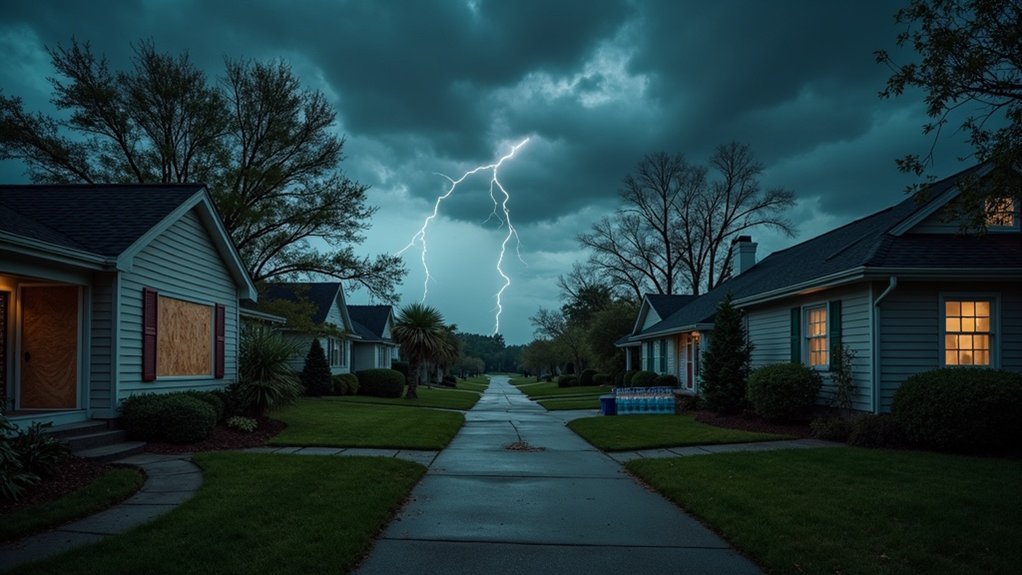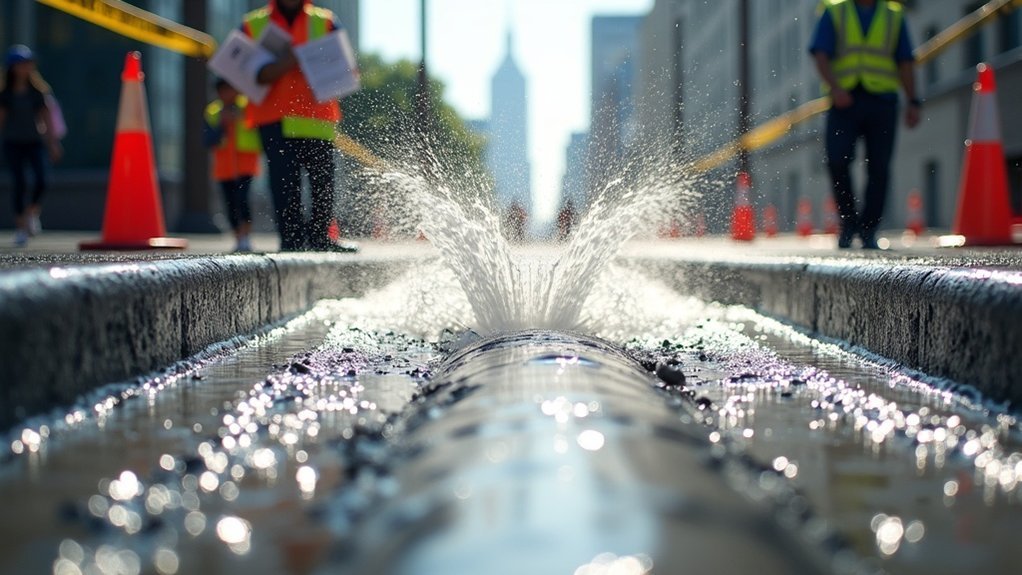
To prepare for urban water main breaks, it’s essential to stockpile at least three days’ worth of water—one gallon per person per day. Use clean, durable containers and ensure to refresh your supply regularly to maintain freshness. Stay vigilant by monitoring local advisories and collaborating with your neighbors to share critical safety information. If you spot a break, document the situation thoroughly and report it immediately to your local utility to ensure a swift response. Familiarizing yourself with proper reporting procedures and having emergency hygiene solutions in place can significantly bolster your preparedness. For those interested in long-term strategies and fostering community resilience, additional insights are available to enhance your survivalism and prepping efforts.
Key Takeaways
- Store at least three days’ worth of water, one gallon per person per day, in clean, food-grade containers to ensure you are prepared for any emergency.
- Regularly inspect and rotate your water supply to maintain its freshness and safety, as having a reliable water source is crucial for survival.
- Prepare alternative hygiene solutions, such as baby wipes and hand sanitizer, as part of your emergency kit to maintain sanitation when water may be scarce.
- Familiarize yourself with local reporting procedures to ensure you can swiftly report any water main issues that could impact your community.
- Engage with your community to promote awareness and preparedness for potential water outages, as collective readiness can enhance resilience in the face of urban infrastructure failures.
Understanding Water Main Breaks and Their Impact
Water main breaks present serious challenges for urban survivalists and preppers, affecting countless residents and disrupting essential water supplies. These breaks often result from aging infrastructure, extreme weather conditions, or shifts in the soil.
When a break occurs, it may lead to a boil water advisory if there’s a risk of contamination in your drinking water. The subsequent service disruption can lead to flooding, road closures, and increased repair costs, all of which can strain municipal resources.
In colder areas, utilities can experience over 50 breaks in a single season due to deep frost, further highlighting the importance of being prepared.
For those focused on self-sufficiency and emergency preparedness, understanding the signs of a water main break—such as bubbling water or low pressure—is crucial.
Community awareness and prompt reporting can help mitigate the impacts of these incidents, ensuring that you and your family can maintain access to safe drinking water and other essential resources during emergencies.
Steps to Take When You Notice a Water Main Break
Noticing a water main break requires immediate action to mitigate its impact on your survival and preparedness efforts. First, report the incident to your local utility using their emergency hotline, as this is crucial for community safety. Avoid areas with running water, as they may conceal potential dangers. Observe and document visible flooding signs, and communicate with neighbors to coordinate reporting and share information on how to stay safe.
| Action | Details |
|---|---|
| Report | Call local utility emergency hotline |
| Observe | Avoid hazardous areas and flooding risks |
| Keep Records | Document complaint number for follow-up |
Stay updated on local advisories, particularly those related to health and safety measures concerning potable water. It’s essential to be prepared for any disruptions in your water supply and have contingency plans in place for emergencies.
Reporting Procedures for Water Main Breaks
When you discover a water main break, it’s crucial to take immediate action for your safety and preparedness.
First, report the issue to your local utility service through their 24-hour hotline. Be sure to provide precise details about the location and any visible signs of the break. This not only helps ensure a swift response but also contributes to your overall survival preparedness by keeping your community informed.
Make sure to document your complaint number; this will assist you in tracking the repair status and ensuring access to safe water supplies in the future.
Immediate Reporting Steps
To ensure you’re prepared for emergencies like a water main break, it’s crucial to know how to respond swiftly.
First, save your local utility’s 24-hour hotline number, such as 311, for quick access during a crisis. When reporting a water main break, provide specific details about the location and any signs you’ve observed, such as water bubbling or changes in water pressure.
Keep a record of the time and nature of your report, and request a complaint number for tracking purposes. Additionally, familiarize yourself with online reporting tools in your area for alternative reporting options.
Staying alert and promptly reporting these incidents will greatly enhance your preparedness and ability to respond effectively during water emergencies.
Always remember, being proactive can make a significant difference in your survival strategy.
Utility Contact Information
Having the right utility contact information is essential for effectively managing water main breaks, especially in survival situations.
Always store your local utility’s 24-hour hotline number, like 311 in New York City, in your phone for quick access. In the event of unusual water behavior, such as bubbling or low pressure, it’s crucial to report it immediately.
Keep a record of your complaint number for future reference. Many utilities also offer online tools or mobile apps that can facilitate communication during emergencies.
Additionally, having the correct social media accounts of your local utility can enhance your ability to stay informed during critical situations.
Stay vigilant and proactive to ensure a rapid response and repair for any water main issues, as access to clean water is vital for survival and preparedness.
Incident Documentation Importance
Understanding the importance of incident documentation is crucial for effectively managing water main breaks, especially in the context of survivalism and prepping. Accurate reporting procedures—documenting the date, time, location, and specific details of the break—are vital for ensuring that you can respond quickly in emergency situations. This information helps you prepare for potential service interruptions and allows for better planning in your water storage and purification strategies.
Preppers need to be aware that utilities rely on this documentation to assess the impact on service delivery and prioritize repairs based on severity. In a survival scenario, being informed about the state of local water infrastructure can help you decide when to stock up on water or implement alternative water purification methods.
Post-repair, maintaining records of water quality test results is essential for ensuring compliance with health regulations and safeguarding your water supply. If you’re reliant on municipal water, understanding this process can help you make informed decisions about when it’s safe to consume.
Additionally, clear communication about repair status and advisories, such as boil water notices, is critical for community safety and awareness during these incidents. Being proactive and informed can significantly enhance your preparedness and resilience in the face of unexpected disruptions.
Preparing Your Home for Potential Water Outages
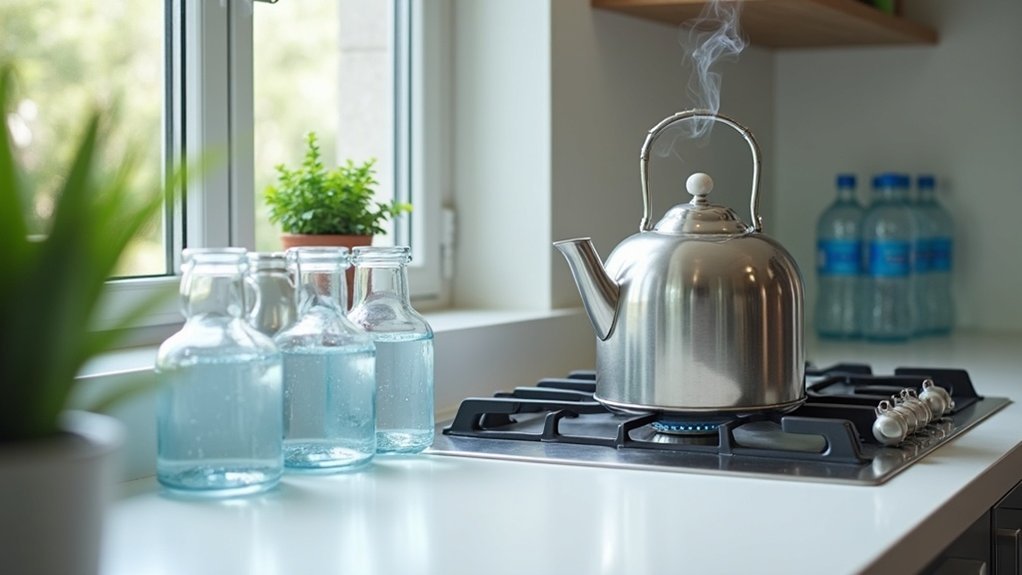
When a water main break occurs, being prepared at home is crucial for ensuring your survival and minimizing disruption to your daily life. Store at least three days’ worth of water—one gallon per person per day—using clean, food-grade containers specifically designed for long-term storage.
Regularly inspect and replace this supply to maintain freshness and ensure it’s safe for consumption.
In anticipation of unexpected water outages, arrange alternative hygiene solutions, such as baby wipes, hand sanitizer, and portable shower options. Identify locations for bathing and laundry, such as friends’ homes, local gyms, or even community centers that may offer facilities during emergencies.
Stay vigilant by monitoring local maintenance schedules that could affect your water service lines and remain aware of potential weather impacts that could compromise water pressure.
Health and Safety Considerations During Water Main Breaks
During a water main break, it’s crucial to prioritize your safety and preparedness. Equip yourself with appropriate Personal Protective Equipment (PPE) to shield against potential hazards.
Stay aware of your surroundings, especially traffic conditions, as nearby repair operations can create unsafe environments. Adhering to OSHA standards is essential for safe excavation practices, but also consider having emergency supplies on hand, such as water, food, and first aid kits, to ensure you’re ready for any situation that may arise.
Stay vigilant and prepared to navigate through unexpected challenges effectively.
Personal Protective Equipment (PPE)
Personal Protective Equipment (PPE) is crucial for ensuring the safety of individuals involved in survivalist activities, especially during tasks like water main break repairs.
To maintain safety and adhere to relevant standards, consider the following PPE components:
- Hard Hats & Safety Goggles – These protect against potential hazards such as falling debris and flying objects, which can occur during repairs or outdoor survival activities.
- Steel-Toed Boots & High-Visibility Vests – Steel-toed boots provide essential protection for your feet from heavy materials, while high-visibility vests ensure you’re seen in low-light conditions, crucial for safety in emergency situations.
- Respirators & Gloves – These items are vital for protection against harmful dust, fumes, and other contaminants that may be encountered in various environments, particularly during cleanup or repair work.
Regular training and inspections of PPE are essential for ensuring that all equipment remains functional and effective.
Traffic and Site Safety
Effective traffic and site safety measures are crucial for ensuring the safety of both repair crews and motorists during emergencies, such as water main breaks. In a survivalist context, being prepared for unexpected situations is vital.
Implementing strong traffic control, including barricades and warning signs, facilitates clear communication of hazards. Visibility is paramount; utilizing bright lights at repair sites, particularly at night, helps alert drivers to ongoing work, which is essential for community safety.
Adverse weather conditions can amplify risks; thus, exercising extra caution during rain or darkness is necessary. Repair crews should adhere to OSHA standards and wear appropriate personal protective equipment (PPE) to enhance their safety.
Additionally, raising community awareness is key; drivers must slow down and remain vigilant in work zones to protect everyone involved, especially in scenarios where resources may be limited.
Long-Term Strategies for Mitigating Water Main Break Risks
To mitigate the risks associated with water main breaks, survivalists and preppers should adopt a multifaceted approach that emphasizes proactive maintenance and innovative technologies.
Consider implementing these strategies for self-sufficiency and preparedness:
- Regularly inspect your own water supply infrastructure, focusing on materials that are prone to failure, such as older pipes that contribute to a significant percentage of breaks.
- Utilize advanced materials in your water storage and distribution systems to enhance durability and reduce the risk of leaks or breaks.
- Engage with your local community through awareness programs, encouraging fellow preppers to report any signs of water main issues promptly, ensuring that everyone is informed and prepared for potential water shortages.