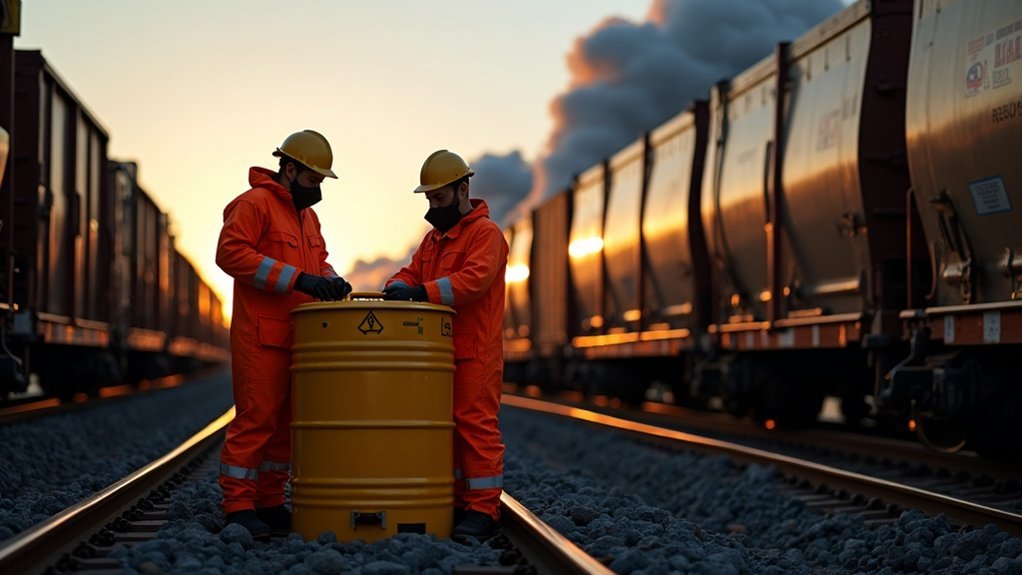
To prepare for rail hazmat incidents, you’ll need a robust emergency response strategy that prioritizes community safety and resilience. Regular training sessions and drills are crucial for enhancing preparedness and ensuring that everyone understands their responsibilities during a crisis. Conducting routine inspections is essential to confirm safe storage practices and adherence to regulations. Engaging with Local Emergency Planning Committees fosters collaboration and strengthens responses to potential threats. By focusing on these proactive measures, you’ll be better equipped to handle any unexpected challenges that may arise. Stay vigilant and informed to enhance your survival skills! More insights await you!
Key Takeaways
- Create and continuously refine personal emergency response plans that cater to your family’s needs, ensuring you’re prepared to act quickly during rail hazmat incidents.
- Participate in regular training and drills with family and neighbors to become familiar with hazmat procedures and enhance overall preparedness in the community.
- Conduct frequent inspections of your storage methods for hazardous materials at home to ensure compliance with safety standards and prevent leaks or accidents.
- Collaborate with local survival and preparedness groups to identify potential hazmat risks through community commodity flow studies and sharing knowledge.
- Take advantage of resources like TRANSCAER® for free training initiatives and community exercises to strengthen your readiness for rail hazmat incidents.
Importance of Emergency Response Plans
When a rail hazmat incident occurs, having a well-structured emergency response plan is crucial for ensuring a swift and effective reaction that aligns with survivalism and prepping principles.
These plans serve as a blueprint for individuals and communities, enabling first responders and civilians alike to minimize risks to public safety. A Unified command structure fosters collaboration among local, state, and federal officials, ensuring that decisions are made based on real-time conditions and preparedness levels.
Local Emergency Planning Committees play a significant role in customizing these plans to meet the unique needs of the community, which is vital for effective disaster readiness.
Furthermore, training and preparedness initiatives, such as those found in the Emergency Response Guidebook, equip both responders and civilians with essential survival skills.
Regular updates to these plans ensure that everyone is familiar with procedures, enabling prompt protective actions during critical moments and enhancing the overall resilience of the community in the face of emergencies.
Regular Training and Drills
A well-structured emergency response plan is only as effective as the training behind it. Regular training and drills are essential for preppers and survivalists to identify hazards associated with hazardous materials transported by rail.
Engaging in outreach and training can significantly enhance community preparedness for hazmat incidents. Utilizing resources like the TRANSCAER® Learning Management System, individuals can access 24/7 online training, including critical incident management videos.
Simulated hazmat scenarios during drills improve readiness and response effectiveness, equipping survivalists with the skills needed to respond to emergencies. Continuous training fosters trust and collaboration within communities, ensuring everyone is prepared for potential hazardous materials transportation incidents and can respond effectively in times of crisis.
Routine Inspections and Maintenance
To ensure the safe storage and transport of hazardous materials in a survivalist context, routine inspections and maintenance are crucial. Regular checks on storage containers and transport vehicles are necessary to confirm their structural integrity and to identify any damage, corrosion, or wear. Pay particular attention to critical components such as valves and seals to prevent leaks that could pose a risk. Employ advanced technologies, such as drones, to enhance the efficiency and thoroughness of your inspections. Adhering to best practices and relevant regulations is vital, as they dictate the frequency and thoroughness of inspections. Meticulously document all findings to demonstrate your commitment to safety and preparedness, allowing for timely corrective actions when necessary.
| Inspection Focus | Key Components | Technology Used |
|---|---|---|
| Structural Integrity | Storage containers, vehicles | Drones, ultrasound |
| Leak Prevention | Valves, seals, gaskets | Visual inspection |
| Compliance | Best practices, regulations | Automated documentation |
Compliance With Regulatory Standards
Routine inspections and maintenance are crucial for ensuring compliance with safety standards in the transport of survival supplies and emergency materials.
To ensure safety in your prepping endeavors, it’s important to adhere to regulations that govern the storage and transport of such materials. This includes rigorous training for individuals involved in handling these supplies, ensuring they’re well-versed in safety protocols and emergency procedures.
Additionally, obtaining necessary permits for transporting certain materials may be required, highlighting the importance of following all safety guidelines.
Compliance involves careful management of shipments, proper packaging, and thorough inspections of storage units, ensuring adherence to both federal and industry safety standards to mitigate risks and prepare for potential emergencies.
Community Engagement and Collaboration
While individual preparedness for hazmat incidents is crucial, engaging with your community is equally vital for survivalism and prepping.
Collaborating with Local Emergency Planning Committees (LEPCs) and local agencies helps in crafting robust emergency response plans that benefit everyone. Participate in commodity flow studies to pinpoint hazmat risks and bolster risk assessment efforts.
TRANSCAER® offers free hazmat training initiatives that involve community members and first responders, enhancing local preparedness and knowledge. Joint training exercises with railroads ensure familiarity with emergency protocols, fostering trust and improving incident management.