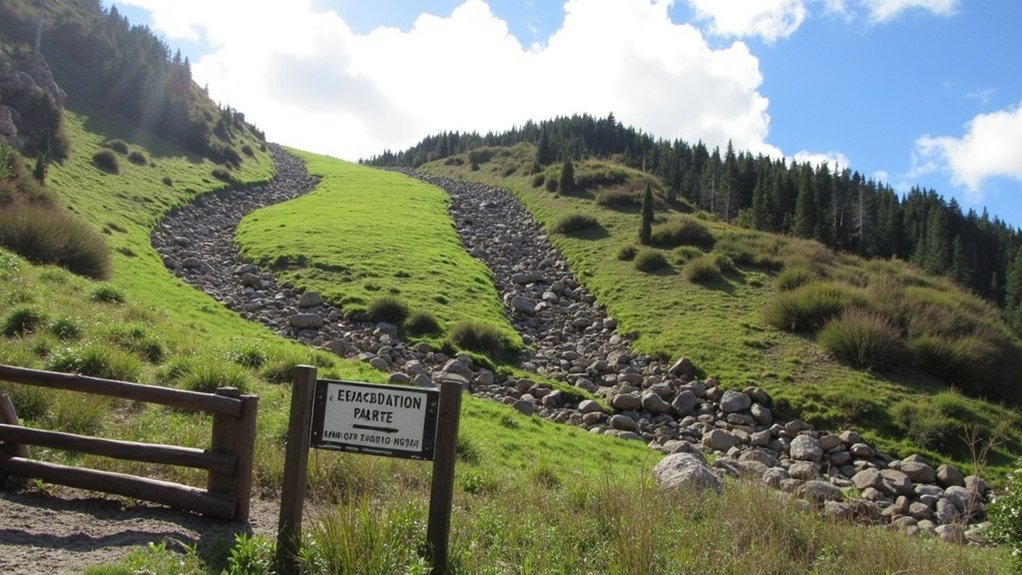
To effectively prepare for landslides on slopes, start by assessing your risk through local geological maps and familiarizing yourself with warning signs such as cracks or bulging ground. Assemble a comprehensive emergency kit stocked with essential supplies, and develop a well-thought-out evacuation plan that includes multiple routes to safety. During periods of heavy rainfall or when you notice significant changes in the landscape, remain vigilant and be ready to evacuate immediately if danger is imminent. After a landslide event, prioritize safety by maintaining a safe distance from the affected area and assessing for potential hazards. For more in-depth strategies on survivalism and community preparedness, continue to explore specific actions you can take to protect yourself and your loved ones.
Key Takeaways
- Evaluate local geological hazard maps to pinpoint areas prone to landslides and determine slope stability for informed survival planning.
- Keep vigilant for warning signs like ground cracks, bulging soil, and altered drainage patterns on slopes that could indicate impending landslides.
- Develop a thorough evacuation strategy with clear meeting points and multiple escape routes to ensure a swift response in case of a landslide.
- Assemble a robust emergency kit stocked with essential survival supplies, including water, non-perishable food, a flashlight, and other necessities for potential evacuation scenarios.
- Stay updated on weather forecasts and local alerts to enable prompt action during severe weather events or landslide warnings, ensuring your safety and preparedness.
Assessing Your Landslide Risk
When assessing your landslide risk in the context of survivalism and prepping, it’s essential to analyze local geological hazard maps to pinpoint areas with a history of landslides, as these zones are more likely to face future events.
Focus on slopes with steep inclines and loose soil, particularly after wildfires that strip away protective vegetation. Be vigilant for changes in storm-water drainage patterns and the appearance of cracks in the ground, as these signs can indicate heightened risk and need further investigation.
Engaging with geotechnical professionals can provide valuable insights into specific site conditions and help identify potential hazards.
To bolster your preparedness, ensure regular maintenance of drainage systems and consider replanting native vegetation to reduce erosion and enhance slope stability.
These proactive measures can significantly lower your landslide risk and improve your overall survival strategy.
Recognizing Landslide Warning Signs
To recognize potential landslide hazards, it’s crucial for survivalists and preppers to actively monitor changes in drainage patterns on slopes, as these can indicate instability that may threaten your safety and preparedness efforts.
Be vigilant for any new cracks in structures, as well as unusual sounds, which may signal ground movement. Identifying these warning signs early allows you to take proactive measures to protect yourself, your loved ones, and your preparedness supplies from potential disasters.
Stay alert and ready to act to ensure your survival.
Changes in Drainage Patterns
Changes in drainage patterns can signal an increased risk of landslides, which is crucial for survivalists and preppers to monitor closely. Unexpected water flow or pooling on slopes can indicate an unstable environment, potentially jeopardizing your preparedness efforts.
Unusual storm-water runoff paths may suggest erosion and weakening slope stability, heightening the risk of landslides that could impact your homestead or bug-out location. It’s vital to pay attention to new drainage channels forming or existing ones becoming clogged, as these can be indicators of instability that threaten your safety.
Signs of water seeping from the ground or bulging soil often point to groundwater movement that can lead to slope failure. Regularly monitoring these drainage patterns, especially during heavy rainfall, is essential for early identification of potential landslide hazards.
This vigilance can help you take proactive measures to safeguard your property and ensure your survival in adverse conditions.
Cracks in Structures
Monitoring drainage patterns is just one part of identifying potential landslide risks; observing cracks in structures is equally crucial.
Keep a vigilant eye on any new or widening cracks in plaster, tile, or brick, as these can be clear indicators of ground movement and possible landslide hazards. Pay special attention to stair-step cracks or those along the foundation, as they may suggest shifting soil conditions.
If doors and windows begin to stick, it could indicate that the building’s structure is adjusting due to land movement, which is a situation that could escalate.
Additionally, be alert for bulging ground on slopes and any new water breaks, as these signs require immediate assessment to ensure the stability of the area.
Being proactive and prepared can make a significant difference in survival during such unpredictable events.
Unusual Sounds Indicating Movement
As you survey the terrain for potential landslide hazards, it’s crucial to stay vigilant for unusual sounds that may indicate ground movement.
Listen closely for rumbling or cracking noises, which can signal unstable slopes and shifting earth. These sounds may resemble thunder or heavy machinery, serving as warnings of an imminent landslide or debris flow.
Pay special attention to the noises created by falling trees or large boulders, as they can be telltale signs of danger.
During heavy rainstorms, if you detect these unusual sounds, take them seriously. They could mean that the ground is becoming unstable, and a landslide could be on the horizon.
Staying aware of your surroundings and understanding these auditory cues can be vital for your safety and preparedness in the wilderness.
Preparing an Emergency Kit
When preparing for potential landslides, having a well-stocked emergency kit is crucial for ensuring your safety and resilience. Your kit should include at least one gallon of water per person per day for a minimum of three days, along with a supply of nonperishable food that can sustain you during an extended emergency. Essential supplies like a reliable flashlight, extra batteries, a comprehensive first aid kit, and personal hygiene items should also be included. Important documents must be secured in a waterproof container for quick access during evacuation. Additionally, don’t overlook the needs of your pets; include provisions and supplies specifically for them.
| Essential Item | Quantity |
|---|---|
| Water | 1 gallon/person/day |
| Nonperishable Food | 3-day supply |
| First Aid Kit | 1 kit |
| Flashlight | 1 |
| Extra Batteries | As needed |
| Personal Hygiene Items | Assorted items |
| Waterproof Document Container | 1 |
| Pet Supplies | As needed |
Being prepared can make all the difference in your survival and well-being during emergencies.
Developing an Evacuation Plan
Creating a thorough evacuation plan is a critical step in ensuring your family’s safety against potential landslides. As part of your survivalist and prepping strategy, follow these guidelines to enhance your preparedness:
- Develop a comprehensive evacuation plan that includes designated meeting points and escape routes away from landslide-prone areas, ensuring you’re well-prepared for any situation.
- Map out multiple evacuation routes, considering alternative paths in case primary routes become obstructed. This redundancy is key in a survival scenario.
- Conduct regular evacuation drills so everyone in your household knows how to respond quickly and effectively during a landslide alert. Familiarity breeds confidence and efficiency.
- Stay informed about local emergency alerts and risks through NOAA Radio or trusted news channels. Knowledge is power in survival situations.
Additionally, assemble a portable emergency kit that’s easily accessible, enabling a swift evacuation when necessary.
Being prepared means you can act decisively when time is of the essence.
Actions to Take During a Landslide
During a landslide, your first action should be to evacuate immediately if you sense danger or notice warning signs. Trust your instincts and be prepared to act swiftly.
Stay informed by utilizing a battery-operated radio or a charged device to receive updates from authorities and local emergency services. It’s crucial to have a designated emergency communication plan in place.
Avoid dangerous areas, such as compromised roads, bridges, and low-lying regions, to ensure your safety.
Always have an emergency kit ready, stocked with essential supplies like food, water, first-aid items, and tools, so you can be self-sufficient during such crises.
Evacuate Immediately if Needed
If you suspect a landslide is imminent, evacuate the area immediately to ensure your safety.
Follow these survival tactics to minimize risk:
- Heed local officials: Always follow their instructions regarding evacuation routes and safe zones, as they’ve the most current information.
- Monitor weather changes: Stay alert to weather forecasts, as intense rainfall can trigger landslides. Prepare for rapid weather shifts.
- Seek higher ground: If you’re in a landslide-prone area, move quickly to elevated locations to avoid potential danger.
- Avoid hazardous areas: Don’t cross roads or bridges that have flowing water or visible mud, as these can indicate the presence of debris flows.
Your immediate response is critical to ensuring your safety during this emergency event.
Stay prepared and vigilant!
Stay Informed and Alert
Staying informed and alert during a landslide is crucial for your survival and preparedness. Actively monitoring local news and weather updates can significantly enhance your situational awareness of potential risks.
Regularly tune into local news stations or NOAA Radio for heavy rainfall warnings and landslide alerts. Be vigilant for unusual signs, such as rumbling or cracking sounds, which may indicate an imminent landslide, prompting immediate action.
If you notice bulging ground or new cracks, evacuate to higher ground according to your emergency plan. Keep your communication devices fully charged to ensure you can receive critical updates and stay informed.
Additionally, avoid crossing roads or bridges with flowing water, as these areas are often unstable and pose significant landslide hazards. Being prepared and aware can save lives in these emergencies.
Avoid Dangerous Areas
As landslides can occur with little warning, it’s essential for survivalists and preppers to take immediate action by evacuating the area upon observing warning signs or unusual noises.
To ensure your safety during a landslide, follow these guidelines:
- Stay away from river valleys and low-lying areas that are susceptible to flooding and debris flows.
- Avoid crossing roads or bridges that may collapse due to a sudden increase in mud or water.
- If indoors, relocate to the highest level to prevent being trapped by debris.
- Pay attention to local authorities for emergency instructions and updates regarding safety concerns.
Always have a plan in place and be prepared to act quickly in the event of a landslide.
Safety Measures After a Landslide
After a landslide, it’s crucial to prioritize safety and preparedness by maintaining a safe distance from the affected area, as the risk of additional slides remains high.
Quickly check on your neighbors and offer assistance without entering the slide zone, ensuring your own safety first. Report any potential hazards, such as downed power lines and damaged roadways, to local authorities immediately.
Check on neighbors and offer help from a safe distance; report hazards to authorities immediately. Your safety comes first.
Make sure to turn off utilities as necessary to prevent further risks. Stay updated with information from emergency services regarding safe routes for returning home and any ongoing dangers.
Assess your property for foundation damage and consider consulting a geotechnical expert to evaluate stability and potential loss of ground cover.
In these critical situations, being proactive and prepared is essential for ensuring your safety and that of your community.