To prepare for dust storms, fortify your homestead by reinforcing windows and doors, and applying weather stripping to reduce dust infiltration. Assemble a comprehensive emergency kit that includes plenty of water, non-perishable food, and respiratory supplies such as N95 masks. When on the move, ensure your vehicle’s seals are tight to prevent dust from entering and always have additional masks on hand. During a dust storm, hunker down indoors and utilize air purifiers to maintain air quality. Familiarize yourself with the risks associated with dust storms and implement safety measures to protect yourself and your family. Staying informed and prepared is crucial for effective survival during these events.
Key Takeaways
- Fortify windows and doors with weather stripping and caulk to create a robust barrier against dust infiltration during storms.
- Assemble a comprehensive emergency kit stocked with non-perishable food, ample water, and first aid supplies to sustain you for at least three days.
- Keep N95 masks and airtight goggles readily available in your vehicle to ensure protection when traveling through dust storm-prone regions.
- Regularly inspect and clean air filters in your vehicle to maintain optimal air quality and visibility, crucial for safe travel.
- Prune tree branches and secure outdoor items to eliminate potential projectiles during high winds, safeguarding your property and ensuring your safety.
Understanding Dust Storms
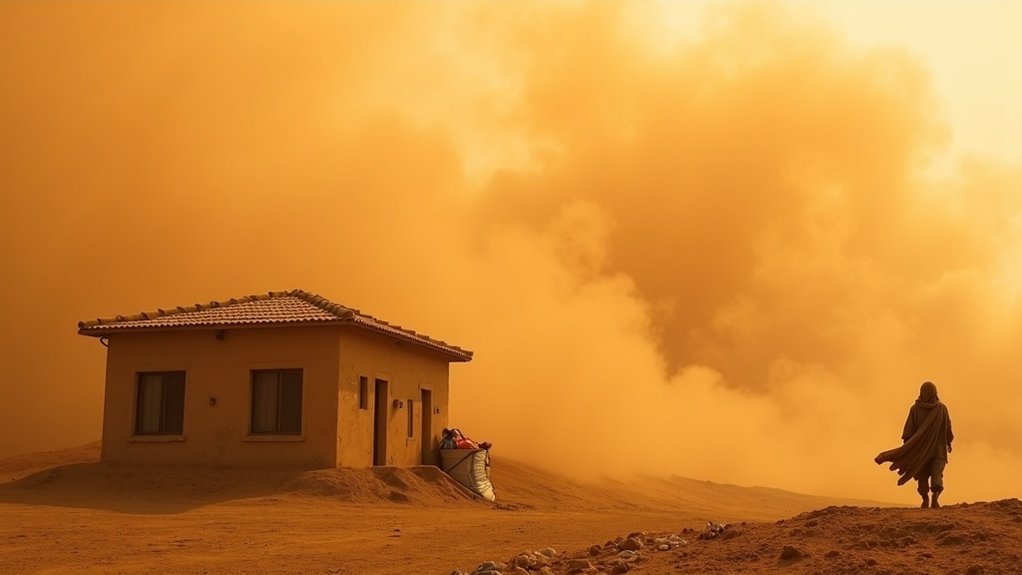
As you delve into the world of survivalism and prepping, understanding dust storms is crucial for preparedness. These natural phenomena occur when strong winds lift loose sand and soil from arid landscapes into the atmosphere, potentially impacting your survival plans.
Severe dust storms can dramatically reduce visibility, creating hazardous conditions for outdoor activities and travel. Ideal conditions for their formation include drought and land degradation, particularly in regions like the Sahara and the southwestern United States.
Severe dust storms significantly lower visibility, posing dangers for outdoor activities and travel, especially in drought-stricken regions.
Haboobs, which are intense dust storms triggered by thunderstorm winds, pose additional risks that survivalists must consider. The airborne dust particles can linger for long periods, affecting air quality and potentially leading to respiratory issues, even hundreds or thousands of miles away from the storm’s origin.
Being informed about these events and having a solid plan for dust storm preparedness can enhance your resilience in the face of such natural challenges.
Health Risks and Safety Measures
While dust storms may seem like a distant threat, their health risks are both immediate and significant, especially for those who prioritize survivalism and preparedness. Dust particles can aggravate respiratory issues such as asthma and COPD, increasing the risk of infections from pathogens carried in the dust.
To ensure your safety and that of your loved ones, it’s crucial to stay indoors during these events. If you must venture outside, wearing N95 masks is imperative to filter out harmful particulates.
For those committed to prepping, investing in air purifiers equipped with high-efficiency filters can significantly enhance indoor air quality, creating a safer living environment.
Don’t overlook eye protection—wraparound glasses can shield your eyes from irritation, while artificial tears can help alleviate discomfort caused by dust exposure.
Staying informed and proactive is key to ensuring your well-being during such natural occurrences. Prepare in advance to protect yourself and your family from the dangers of dust storms.
Home Preparation Strategies
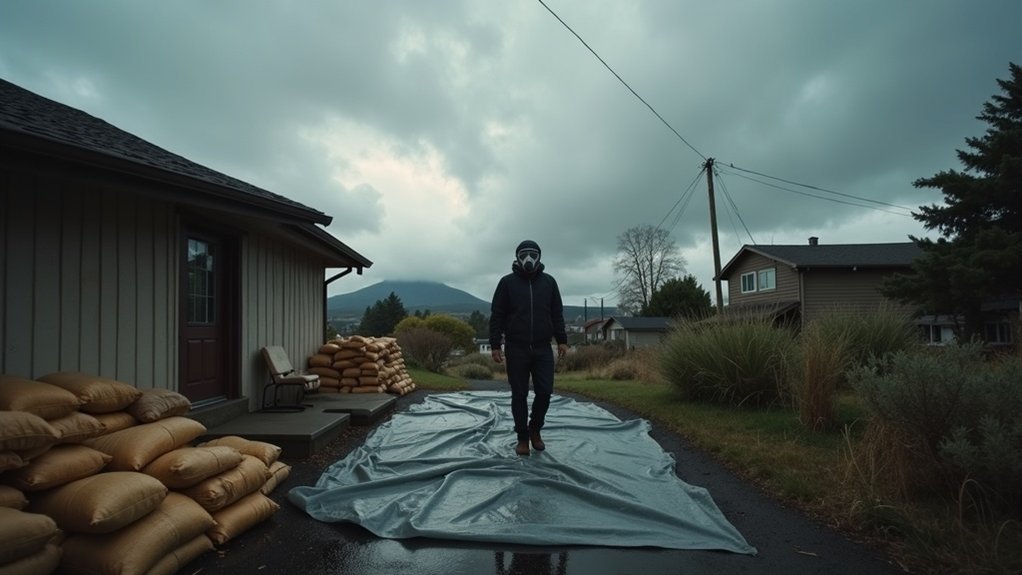
To effectively prepare your homestead for dust storms, begin by reinforcing windows and doors to minimize dust infiltration.
It’s crucial to keep your air conditioning system set to recirculation mode and ensure that filters are clean to maintain optimal air quality.
Furthermore, take proactive measures to secure outdoor gear and equipment, preventing them from becoming hazardous projectiles in strong winds.
Emphasizing these survival strategies will help safeguard your home and family during severe weather events.
Secure Windows and Doors
Ensuring your windows and doors are secure is crucial for minimizing dust entry during a storm, especially in a survival situation where even minor gaps can lead to significant infiltration.
Conduct a thorough inspection and repair any damage to create a tight seal that protects your shelter from external elements. Apply weather stripping around doors and use caulk around windows to establish a durable barrier against dust and debris.
Additionally, utilize draft stoppers at the bottoms of outside doors to further enhance your defenses. Regularly check for small cracks in frames and thresholds, as these can worsen dust penetration and compromise your indoor air quality.
Before a storm hits, make sure all windows and doors are tightly shut to safeguard your living space from the harsh effects of high winds and to maintain a secure environment for you and your supplies.
Maintain Air Conditioning Systems
Maintaining your air conditioning system is crucial for creating a safe and comfortable indoor environment, especially during dust storms when survival and preparedness are key.
Proper maintenance not only helps trap fine particles, improving indoor air quality, but also reduces the risk of respiratory issues that can arise from poor air conditions.
- Regularly clean or replace filters to ensure optimal dust trapping and air quality.
- Set your unit to recirculation mode to limit the entry of outside dust and protect your indoor environment.
- Schedule annual professional servicing to strengthen dust protection and ensure your system is ready for emergencies.
- After a storm, inspect and rinse the exterior of your units to remove any accumulated dust and debris.
- Increase ventilation following storms to clear out any lingering airborne dust and maintain a healthy atmosphere indoors.
Outdoor Item Preparation
As dust storms can unleash powerful winds that transform ordinary items into dangerous projectiles, preparedness for your outdoor space is crucial for survival.
Begin by securely storing outdoor furniture and decorations to prevent them from becoming harmful debris. Regularly trim tree branches to decrease the risk of falling hazards. Clear your yard of loose items such as toys and tools to minimize potential dangers during severe winds.
Additionally, reinforce fencing around your property to endure high winds, and take down patio umbrellas and canopies, as these can easily be lifted and pose significant risks.
Implementing these strategies can significantly enhance your safety and resilience during dust storms.
Outdoor Area Preparation
To effectively prepare your outdoor area for dust storms and enhance your survival readiness, it’s essential to take proactive measures that minimize potential damage and hazards.
Preparing your outdoor area for dust storms requires proactive measures to reduce potential damage and hazards.
Begin by ensuring your property is fortified to withstand high winds:
- Trim tree branches that could become projectiles during a storm.
- Secure or store outdoor furniture and loose items to prevent them from being swept away.
- Reinforce fencing to withstand flying debris and deter intruders.
- Clear your yard of toys and garden tools that could pose a risk in high winds.
- Regularly inspect outdoor structures for stability to ensure they can endure harsh conditions.
Emergency Supplies and Preparedness
While dust storms can strike with little warning, being well-prepared with the right emergency supplies can significantly reduce their impact on your survival and readiness.
| Essential Supplies | Purpose |
|---|---|
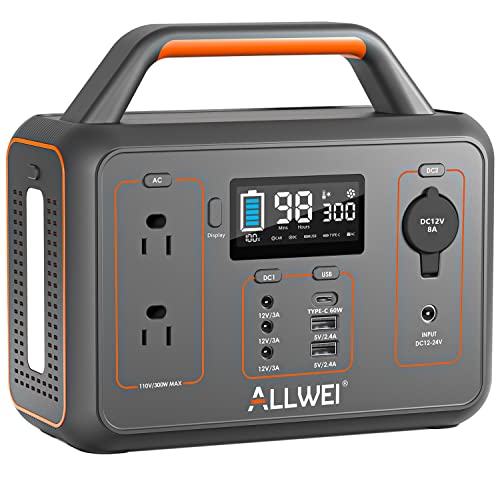
| Emergency Kit | Flashlights, batteries, and chargers for power outages |
| Non-Perishable Food | Sustenance that requires no cooking during emergencies |
| First Aid Kit | Essential medications to address respiratory symptoms |
Always store sufficient water for at least three days per person to prevent dehydration. Familiarize yourself with local emergency resources and designate secure areas in your home for effective sheltering during dust storms. Being prepared is key to thriving in unexpected situations.
Preparing Your Vehicle
Preparing your vehicle for dust storms is crucial for ensuring your safety and minimizing disruption during these unpredictable events. To effectively prepare, consider the following survivalist strategies:
- Always carry an N95 mask and airtight goggles to protect against inhaling dust particles.
- Keep a well-stocked emergency kit in your vehicle, including water, non-perishable snacks, a first-aid kit, and essential survival gear.
- Regularly monitor local weather updates for dust storm alerts before embarking on any travel.
- Inspect your vehicle’s windows and vents to ensure they seal tightly, preventing dust from entering the cabin.
- If you find yourself caught in a dust storm, safely pull off the road, turn off all lights to avoid confusion, and engage your emergency brake to stabilize your vehicle.