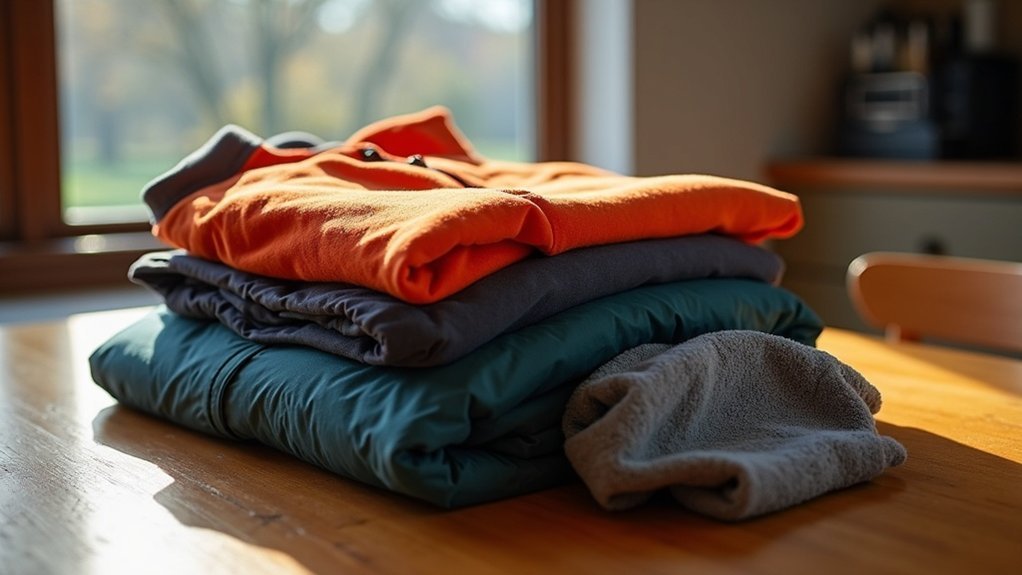
To pack clothing layers for emergencies, adopt a strategic layering system tailored for survival situations. Begin with a moisture-wicking base layer to keep sweat away from your skin, which is crucial for maintaining body temperature. Next, add an insulating middle layer such as fleece or wool to retain warmth in cold conditions. Finally, equip yourself with a durable, waterproof outer layer to protect against the elements.
To maximize space and efficiency, roll your clothes instead of folding them, and consider using compression bags for better organization in your pack. Ensure quick access by sorting your clothing by layers, allowing for rapid deployment of necessary items. Regularly inspect and maintain your gear to ensure it’s in top condition and ready for any emergency. There’s a lot to consider for optimal preparedness, so stay informed and ready for any situation.
Key Takeaways
- Utilize compression bags to significantly reduce the volume of clothing, maximizing your packing space for efficient storage in emergency preparedness kits.
- Organize your clothing by layering (base, insulating, outer) to ensure quick access during critical survival situations.
- Roll your clothes instead of folding them to minimize wrinkles and optimize space in your bug-out bag.
- Designate a specific compartment for your clothing layers to ensure easy retrieval when every second counts.
- Regularly inspect and rotate your clothing to maintain optimal condition and readiness for a variety of weather conditions in emergency scenarios.
Understanding the Importance of Layering
When you find yourself in unpredictable weather conditions, grasping the significance of layering can be crucial for your survival.
A strategic layering system consists of a base layer, insulating layer, and outer layer. The base layer is essential for wicking moisture away from your skin, which is vital for staying dry and preventing hypothermia in cold environments.
Following that, the insulating layer serves to trap heat, providing warmth without excessive bulk—critical for conserving energy during long-duration survival scenarios.
Lastly, the outer layer offers protection from wind and rain, acting as a barrier against the elements.
Together, these layers equip you to adjust your clothing for optimal comfort and mobility, ensuring you’re ready to tackle any sudden weather changes that may arise during emergencies.
Selecting the Right Base Layer
Selecting the right base layer is crucial for survival and comfort in varying weather conditions. Focus on moisture-wicking materials such as merino wool or synthetic fibers to help regulate body temperature and keep your skin dry, which is vital for preventing hypothermia in survival situations. Opt for thinner base layers in warm weather to enhance breathability, while mid to heavyweight options are essential for cold conditions to effectively retain body heat. Steer clear of cotton, as it retains moisture and can lead to discomfort and increased risk in survival scenarios. Don’t forget to include moisture-wicking or wool socks year-round for optimal foot health. Always consider fit, comfort, and the specific weather conditions to ensure ease of movement during your outdoor activities.
| Material | Weather Suitability | Key Benefits |
|---|---|---|
| Merino Wool | Cold | Moisture-wicking, warm |
| Synthetic Fibers | Warm & Cold | Lightweight, quick-dry |
| Cotton | Warm | Not moisture-wicking |
| Lightweight | Warm | Breathable |
| Heavyweight | Cold | Insulating |
Choosing Insulating Middle Layers
After you’ve selected the appropriate base layer, the next crucial step in your survival gear setup is to focus on insulating middle layers that will keep you warm during cooler conditions.
An effective middle layer is essential for retaining heat by trapping warm air close to your body, which is vital when facing unpredictable weather in the wild.
Consider options like wool, which excels in insulation even when damp, making it a reliable choice for survival situations.
Down jackets provide excellent lightweight warmth, but it’s important to pair them with a waterproof layer, as they lose their effectiveness when wet.
For moist environments, synthetic insulated jackets are superior, as they retain warmth and are often more cost-effective than down alternatives.
Make informed choices to ensure maximum comfort and preparedness in any situation!
Protecting Yourself With an Outer Layer
An effective outer layer is your first line of defense against harsh weather conditions, shielding you from wind, rain, and snow—essential for any survivalist or prepper.
Choose a durable water-repellent outer layer that keeps moisture out while allowing sweat to escape, ensuring you remain dry and comfortable in critical situations.
Opt for waterproof/breathable jackets to guarantee comfort in cold conditions, preventing condensation that could compromise your core temperature.
Your outer layer should fit comfortably over other clothing layers, allowing for easy movement during survival tasks and adaptability to sudden weather changes.
Look for features like adjustable hoods, cuffs, and vents to enhance protection and comfort when facing unpredictable environments.
Selecting dark, subdued colors not only helps you maintain a low profile in emergencies but also reduces visibility to potential threats, ensuring your safety during critical situations.
Seasonal Considerations for Clothing
Understanding seasonal considerations for clothing is vital for effective emergency preparedness in survival situations.
In summer, prioritize lightweight, breathable clothing with moisture-wicking properties to help regulate body temperature and keep you cool during strenuous activities.
Prioritize lightweight, breathable clothing in summer to stay cool and comfortable during strenuous activities.
For winter emergencies, ensure you have thicker base layers, insulated jackets, and snow gear to maintain warmth and protect against the elements.
During the rainy season, equip yourself with reliable rain gear, such as waterproof jackets and pants, to shield against moisture and prevent hypothermia.
Always consider layering options, like lightweight fleece, which can provide flexibility to adapt to sudden weather changes.
Additionally, tailor your clothing selections to your region’s climate, ensuring that each family member has the appropriate gear suited to their individual needs and preferences, enhancing your overall survival readiness.
Packing Tips for Efficient Storage
To maximize storage in your emergency kit, choose compact and durable materials that minimize space without sacrificing quality.
Utilize compression bags to significantly decrease the volume of your clothing, ensuring you have more room for essential gear.
Organize items by layering them strategically for quick access during critical situations.
Implementing these practical packing tips will enhance your preparedness and efficiency when facing emergencies.
Choose Compact Materials
Packing clothing layers efficiently is crucial for survivalists and preppers, and it requires selecting compact materials that maximize space without compromising comfort.
Choose moisture-wicking and quick-drying fabrics like merino wool or high-performance synthetic fibers, which help minimize bulk and ensure you stay dry during strenuous activities.
Lightweight and versatile options, such as convertible pants or multi-purpose jackets, are essential for adapting to changing weather conditions while maintaining a low pack weight.
Prioritize durable outer layers that can withstand harsh environments and are easy to stow away when not in use.
Rolling your clothing instead of folding it not only reduces wrinkles but also creates compact storage, optimizing your emergency kit.
Utilize Compression Bags
Selecting the right materials is just the beginning of crafting an effective emergency clothing strategy. Compression bags are essential for survivalists, as they significantly reduce the bulk of your clothing by eliminating excess air, allowing you to maximize space in your bug-out bag.
To further enhance packing efficiency and minimize wrinkles, roll your clothes before placing them into these bags. Using compression bags not only helps keep your clothing organized but also facilitates quick access during critical situations.
It’s advisable to separate your clothing by layers—base, middle, and outer—to streamline both packing and retrieval when time is of the essence. Regularly check and rotate the contents of your bags to ensure everything remains in optimal condition and suitable for the current season.
This strategic layering provides better adaptability in emergencies, ensuring you’re prepared for whatever challenges may arise.
Organize by Layering
Organizing your survival clothing by layers is essential for efficient packing in emergency situations.
Begin by categorizing your gear into base, middle, and outer layers. This method ensures that your clothing is well-organized and easily accessible when you need it most.
Utilize compression bags to maximize space, and roll your clothes to minimize wrinkles and optimize packing efficiency.
Designate a specific compartment in your survival bag for these layers, allowing for quick retrieval during emergencies.
Regularly check and rotate your clothing seasonally, ensuring that all items are appropriate for the current weather conditions.
This layered organization not only streamlines your packing process but also enhances your preparedness for any unforeseen events, ensuring you’re ready for whatever challenges may arise.
Essential Clothing Items for Your Kit
When assembling your emergency kit, it’s crucial to include versatile clothing items that can withstand varying conditions.
Start with a moisture-wicking base layer made from merino wool or synthetic fibers to keep you dry and comfortable. For insulation, pack a fleece jacket or wool sweater as a reliable middle layer.
Don’t overlook the importance of a waterproof jacket to protect against wind and rain while still allowing moisture to escape. Include durable, quick-dry pants and thermal underwear to ensure comfort in fluctuating temperatures.
Finally, equip your kit with warm hats, gloves, and moisture-wicking socks to help retain body heat and maintain foot health during emergencies.
Being well-prepared can significantly enhance your chances of survival.
Regular Maintenance and Gear Checks
Regular maintenance and gear checks are crucial for ensuring your emergency clothing kit is always prepared for any situation.
It’s vital to routinely inspect your items for signs of wear and tear and replace anything that shows damage.
Additionally, rotating seasonal clothing is important for keeping your kit aligned with current weather conditions, ensuring you have the appropriate layers ready to face any climate challenges that may arise.
Routine Gear Inspection
Maintaining your emergency clothing layers is crucial for staying prepared in unpredictable situations, especially for survivalists and preppers. Conducting a routine gear inspection ensures that all items are in good condition and suitable for current weather conditions. Regular checks can mean the difference between comfort and vulnerability in the field. Always check for wear, replace damaged items, and verify that moisture-wicking and insulating layers function properly. Here’s a quick checklist to help you assess your gear:
| Clothing Item | Condition Check | Action Needed |
|---|---|---|
| Base Layer | Check for tears or stains | Replace if damaged |
| Insulating Layer | Test heat retention | Replace if ineffective |
| Outer Layer | Inspect zippers and seams | Repair or replace |
| Accessories | Verify all components are present | Restock if necessary |
Seasonal Clothing Updates
Seasonal clothing updates are essential for maintaining the effectiveness and relevance of your emergency kit in survival situations.
Regularly assess your gear to ensure it can withstand changing weather conditions. It’s advisable to perform gear checks at least twice a year to stay prepared.
Here’s a crucial checklist for seasonal updates:
- Insulated jackets to protect against winter cold
- Waterproof pants to shield yourself in rainy conditions
- Moisture-wicking layers for comfort during summer heat
- Thicker clothing layers for added warmth in colder months
Replace Worn Items
It’s crucial for survivalists to regularly monitor the clothing in their emergency kit for any signs of wear and tear. Conduct frequent inspections of items, particularly base and insulating layers, to ensure they remain functional and effective.
Promptly replace worn items to maintain optimal warmth and moisture management during emergencies. Schedule seasonal gear checks to rotate clothing based on changing weather conditions, ensuring you have the right layers ready for any situation.
Maintain an inventory of all clothing, documenting their conditions and replacement dates, to facilitate timely maintenance. Consider designating a specific storage area for replacement clothing, streamlining the process of updating your emergency kit as necessary.