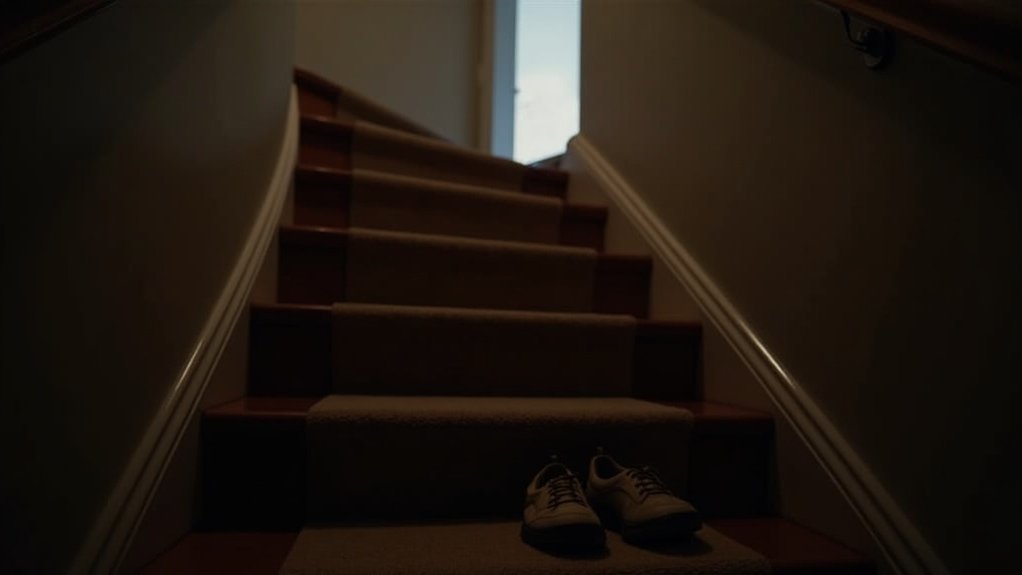
To navigate stairs safely in the dark, especially in a survival or prepping context, ensure that you have adequate lighting solutions in place. Utilize motion sensor lamps that automatically illuminate your path when you approach, which can be crucial in low-light conditions. Install lights that provide 100 to 200 lumens per step, spaced every two to three steps, to enhance visibility and prevent accidents. Additionally, consider using glow-in-the-dark tape on stair edges for extra safety, as it can be a reliable marker in emergencies. Always remain vigilant for unexpected obstacles that may arise in a survival scenario. Staying informed about effective lighting strategies and techniques will significantly improve your safety on stairs at night and enhance your overall preparedness.
Key Takeaways
- Ensure adequate lighting by installing fixtures that emit 100 to 200 lumens per step, crucial for safe navigation during power outages or emergencies.
- Utilize motion sensor lights to automatically illuminate stairs when approached, minimizing the risk of trips and falls in low-light situations common during crisis scenarios.
- Keep stairways clear of obstacles, such as pets or clutter, to maintain a safe navigation path, particularly when quick movement is necessary for survival.
- Consider using glow-in-the-dark tape on stair edges to enhance visibility and indicate step boundaries in the dark, which can be vital during emergencies when electricity may be unavailable.
- Regularly conduct safety audits of stairways and engage with your community to promote awareness of stair navigation safety, reinforcing preparedness and resilience in case of unexpected situations.
Understanding the Risks of Stair Navigation at Night
Navigating stairs in low-light conditions can pose significant risks, particularly in survival scenarios where awareness of your environment is crucial. A lack of visibility can lead to misjudging step heights, heightening the likelihood of falls, which can be especially dangerous during emergencies.
Navigating stairs in low light increases fall risks, especially in emergencies where environmental awareness is vital.
For the elderly or those with compromised vision and balance, these risks are even greater. Poorly designed lighting that fails to differentiate stair colors from landings can create confusion, making it difficult to discern where steps begin and end.
Manual light switches, particularly in hard-to-reach locations, can further complicate safe navigation. Additionally, pets or unexpected obstacles can obstruct pathways, adding to the danger.
To enhance safety during nighttime navigation in a survival context, consider implementing LED lighting solutions that provide reliable visibility and help prevent accidents on stairs.
The Importance of Adequate Lighting
Adequate lighting is crucial for navigating stairs safely in low-light conditions, as insufficient visibility can result in hazardous falls.
In a survival or prepping scenario, where power sources may be unreliable, investing in alternative lighting solutions—such as solar-powered motion sensor lights and strategically placed lanterns—can significantly improve your safety.
Risks of Poor Lighting
When navigating stairs in low-light conditions, the risk of falls significantly increases, particularly for the elderly who may struggle to accurately judge the height and depth of each step.
Inadequate lighting can lead to accidents, as individuals often have difficulty seeing where steps begin and end, creating potential trip hazards for both people and pets.
To enhance safety in a survivalist or prepping context, it’s crucial to install effective stair lighting, such as motion sensor lights or LED strips.
Aim for brightness levels of 100 to 200 lumens per step to ensure clear visibility, thereby reducing the risks associated with poor lighting that could lead to dangerous falls during times of emergency or when power is compromised.
Prioritizing proper lighting in your preparedness plan is essential for maintaining safety in your living space.
Effective Lighting Solutions
To ensure your safety while navigating stairs, especially in low-light conditions, effective lighting is crucial for survival scenarios.
Install stair lighting that emits 100 to 200 lumens per step to adequately illuminate your path without creating glare. Opt for LED lights due to their energy efficiency and long lifespan, making them a reliable choice for prepping environments.
Motion sensor lights can be particularly beneficial, as they activate automatically when you approach, reducing the risk of tripping hazards in emergency situations.
Position lights at a height of 50-80 cm and space them every two to three steps for consistent illumination. Incorporating dual sensor technology in motion lights enhances their reliability, ensuring they activate when you need them the most.
Prioritize these lighting solutions to improve safety during nighttime navigation, particularly in survival settings.
Importance of Visibility
Visibility is essential for safety in survival situations, especially when navigating stairs in low-light conditions where shadows can conceal potential hazards.
Adequate lighting, such as LED lights, is crucial for reducing fall risks, particularly for those who may have compromised vision or mobility. Consider installing motion-sensor lights that activate automatically to illuminate stairs, enhancing safety without requiring manual effort.
For optimal visibility and to avoid glare, aim for a brightness level of 100 to 200 lumens per step. Additionally, using bright, contrasting colors on stair edges can help users easily identify boundaries, reducing the risk of accidents.
Benefits of Motion Sensor Lamps for Stair Safety
Installing motion sensor lamps along your staircase can significantly enhance safety during nighttime navigation, especially in a survival or prepping scenario.
These lamps automatically illuminate the stairs at night, reducing the risk of tripping or falling in low-light conditions, which is crucial during emergencies when quick movement is necessary.
They’re easy to install without complex wiring, making them ideal for retrofitting existing staircases in a survival retreat.
With features like intelligent brightness adjustment, they provide sufficient light without causing glare, ensuring comfort for all users, particularly the elderly or those with limited mobility.
Moreover, battery-operated and rechargeable models offer versatility, maintaining illumination even in power outages or off-grid situations.
Strategically placing lights every two to three steps guarantees extensive coverage, keeping your stairway safe and well-lit, which is vital for preparedness and safety in any survival plan.
Optimal Installation Techniques for Stair Lighting
Motion sensor lamps can significantly enhance safety in stairways, crucial in survival and prepping scenarios where visibility is vital.
For optimal function, install these lights at a height of 50-80cm to ensure they activate as you approach. Position LED lights every two to three steps for uniform illumination, particularly on the edges of steps, to prevent tripping hazards that could compromise your safety during emergencies.
Install motion sensor lights at 50-80cm, placing them every two to three steps for optimal safety and illumination.
Consider using recessed or wall-mounted LEDs for a soft light wash that minimizes glare while effectively illuminating each step. If power sources are limited, especially in off-grid situations, opt for battery-operated or rechargeable options to maintain functionality.
Lastly, test the layout to ensure proper angles and spacing for maximum visibility and safety on your stairs, as this could be critical in a survival situation.
Alternative Lighting Solutions Without Electricity
How can you ensure safety on your stairs during a power outage? One effective strategy is to use battery-powered LED lights along the stairway. These portable lights don’t require wiring, making them easy to install and perfect for any emergency situation.
Consider solar-powered lights that can charge during the day, offering eco-friendly illumination at night and reducing reliance on traditional energy sources. Rechargeable motion sensor lights are another excellent option, activating as you approach to conserve battery life and ensure you have light only when necessary.
Dimmable LED options with timers can adjust brightness based on ambient light, enhancing safety during low visibility situations. Additionally, applying glow-in-the-dark luminescent tape on stair edges can significantly boost visibility without any need for electricity.
These practical solutions are essential for navigating stairs confidently in the dark, especially in a survival or prepping scenario.
Enhancing Stair Safety Through Community Engagement
While implementing effective lighting solutions can significantly improve stair safety during power outages, community engagement is crucial for fostering a safer environment, especially in the context of survivalism and prepping. By sharing experiences and safety concerns, you can collectively identify hazards and brainstorm solutions, such as installing LED downlights or glow-in-the-dark tape. Utilize online forums and discussion groups to exchange ideas and address common issues like inadequate lighting in emergency situations.
| Community Action | Benefit | Example |
|---|---|---|
| Share experiences | Collective awareness | Stories about falls during drills |
| Suggest solutions | Innovative ideas | Motion sensor lights for darkened areas |
| Address concerns | Safer preparedness | Improved stair design for quick exits |
Engaging with your community not only enhances safety but also builds a network of support that can be invaluable in emergency situations.