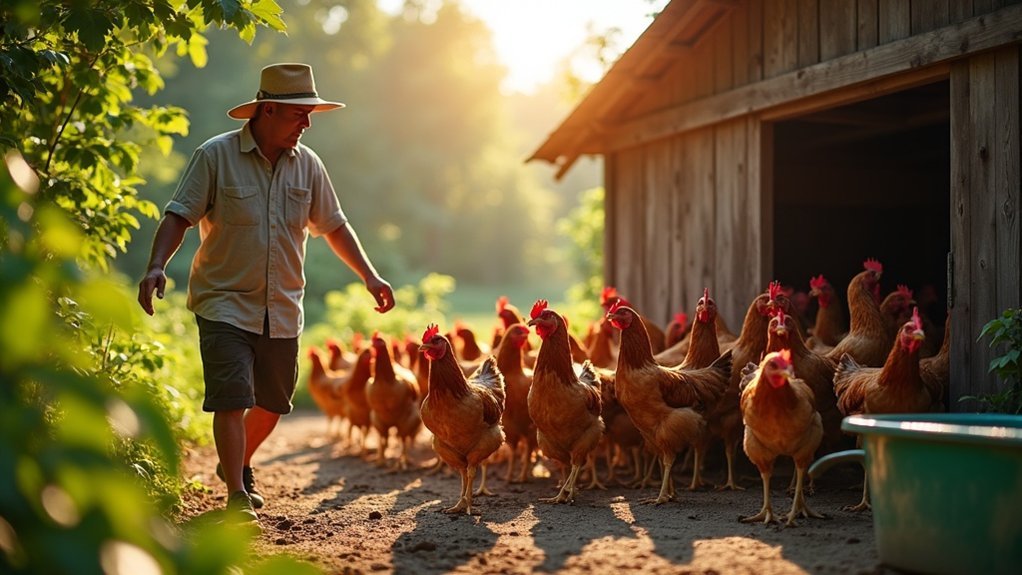
To move poultry during heat waves, it’s crucial to plan your relocation for cooler times, such as early morning or late evening, to minimize heat exposure. Monitor temperatures closely and ensure your transport area is shaded and well-ventilated to provide a safe environment for your birds. Before and after the move, supply fresh, cool water to keep them hydrated and vigilant for any signs of heat stress, like panting or lethargy. Prioritizing proper airflow and reducing stress is essential for ensuring the well-being of your poultry. In a survival situation, these steps are vital in safeguarding your livestock and enhancing your preparedness for extreme weather conditions.
Key Takeaways
- Schedule the move during cooler times, like early morning or late evening, to reduce the risk of heat exposure during critical survival situations.
- Stay updated with weather forecasts to select days when temperatures are below 85°F for safer transportation of your poultry, ensuring your food supply remains intact.
- Create a shaded and well-ventilated transport area to promote airflow, which is essential for reducing heat stress in your livestock.
- Provide fresh, cool water before and after relocation to keep your birds hydrated during the move, which is vital for maintaining a sustainable food source.
- Closely monitor your poultry for signs of heat stress after relocation and ensure they have adequate ventilation and shade to promote their well-being in a survival scenario.
Assessing Heat Stress Symptoms in Poultry
As temperatures rise, it’s crucial for preppers to recognize the signs of heat stress in poultry to ensure their survival and well-being.
Look out for symptoms such as panting, wings held away from the body, and increased beak-parting when temperatures exceed 85°F. Older or overweight birds, particularly heavy breeds like Orpingtons, will show signs more readily.
Watch for signs of heat stress in poultry, such as panting or wings held away, especially in older or heavier breeds.
Severe heat stress can result in heavy panting, pale wattles, lethargy, or even unconsciousness, necessitating immediate intervention.
Keep a close eye on their behavior, as chickens may reduce feed intake, which can impact egg production and overall health during critical survival situations.
Ensure they’ve consistent access to cool water to help them cope with extreme heat effectively, thereby maintaining your food supply in challenging conditions.
Preparing a Comfortable Indoor Environment
Creating a comfortable indoor environment for your poultry is essential for effective survivalism, especially during extreme heat events when temperatures can rise rapidly.
Here are four key strategies to help protect your chickens from the heat:
- Ventilation: Ensure proper airflow by using fans and opening windows to prevent stagnant air, which can lead to heat stress in your birds.
- Reflective Surfaces: Incorporate light-colored materials to reflect sunlight, minimizing heat absorption in the coop or run, which is crucial for maintaining a stable environment.
- Shade: Establish adequate shade using cloth or reflective materials to create cool resting areas where your chickens can escape the heat.
- Cool Flooring: Avoid using metal surfaces that can heat up quickly; instead, opt for straw or other insulating materials to keep the flooring comfortable for your birds.
Regularly monitor temperature and humidity levels to ensure a safe and conducive environment for your poultry, as part of your overall preparedness strategy.
Timing the Move for Optimal Comfort
To ensure your poultry remains comfortable during a move in hot weather, timing is crucial for survival preparedness.
Schedule the relocation of your chickens during the cooler parts of the day, such as early morning or late evening, to minimize their exposure to high temperatures and reduce stress levels.
Consult weather forecasts to identify days when temperatures are below 85°F for a safer transfer.
Ensure that the transport area is shaded and well-ventilated to promote airflow.
Limit the duration of the move and provide fresh water before and after to keep them hydrated.
Watch your birds closely for signs of heat stress, such as panting, and be prepared to implement cooling measures if necessary to maintain their well-being during the transition.
Ensuring Proper Ventilation and Airflow
After ensuring that you time your move for peak comfort, focusing on ventilation and airflow becomes crucial for your poultry’s survival during heat waves. Proper airflow not only helps manage heat stress but also contributes to the overall well-being of your birds.
Here are key strategies to implement in your prepping plan:
- Create gaps in box-style coops to enhance ventilation and prevent overheating.
- Replace solid windows with wire mesh to facilitate better airflow while keeping predators out.
- Provide adequate roosting space to prevent crowding, allowing air circulation and reducing stress on your birds.
- Utilize fans and wind turbine vents to expel hot air and improve coop conditions, ensuring a cooler environment.
Regularly assess coop conditions on hot nights to maintain optimal airflow and safeguard the health of your poultry, which is essential for self-sufficiency and preparedness.
Monitoring Poultry After Relocation
Monitoring your poultry after relocation is crucial for survival preparedness, especially during heat waves, as their well-being can significantly impact your self-sufficiency.
Keep a close watch on your birds for signs of heat stress, such as panting or wings held away from their bodies. Ensure they’ve sufficient shade and ventilation in their new environment to keep cool.
Regularly check their drinking water, providing cool, clean options, as hot water can hinder hydration and compromise their health.
Pay attention to their feed consumption, as extreme heat may reduce their intake, affecting your food supply.
Conduct regular health checks for lethargy or unusual behavior to identify any potential issues early on.
Your vigilance and proactive measures are vital for maintaining a sustainable poultry operation.