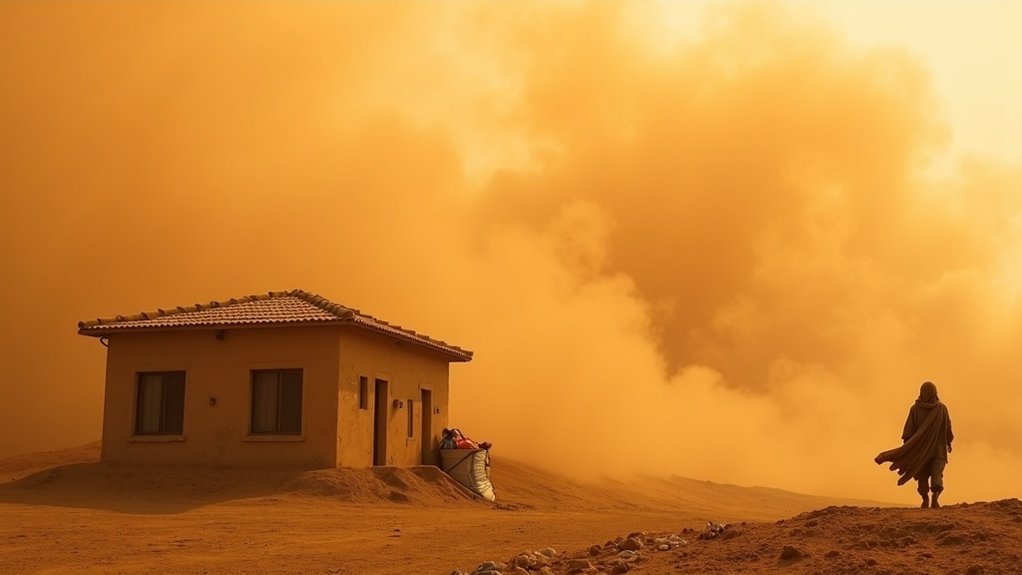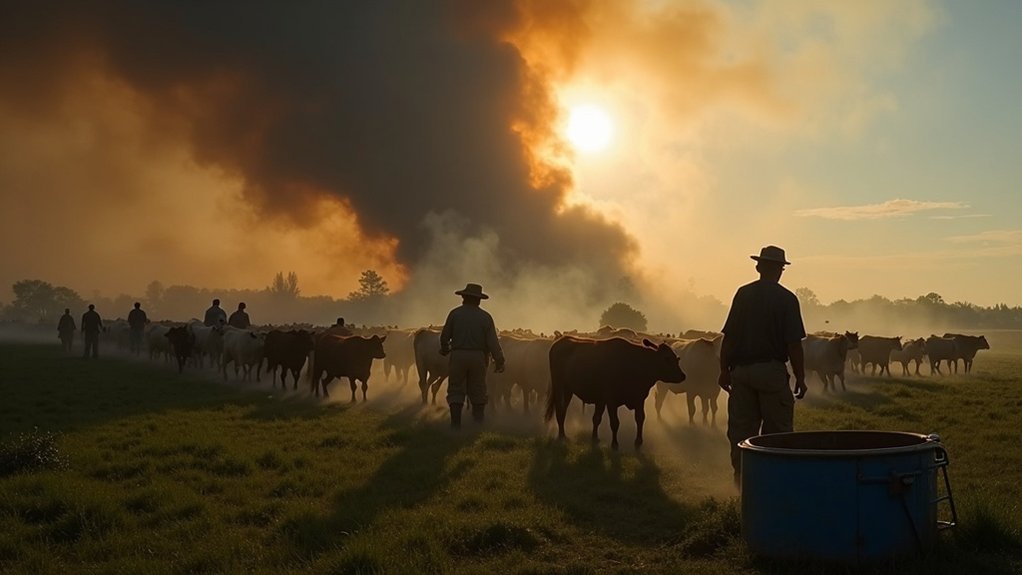
To manage livestock during wildfires, it’s crucial to develop a comprehensive evacuation plan that includes clearly marked routes and designated safe zones. Ensure you have a stockpile of emergency feed and a dependable water supply to sustain your animals. Evacuate your livestock early to minimize their exposure to smoke and provide them with shelter. Regularly monitor their health for any indicators of stress or illness. After the wildfire, it’s advisable to consult your veterinarian and allow for a recovery period before returning your animals to any burnt pastures. Implementing these strategies can significantly enhance the safety and well-being of your livestock during such emergencies. Remember, being prepared is essential for survival and effective management in times of crisis.
Key Takeaways
- Preemptively evacuate livestock to designated safe zones before wildfires escalate, using strategically planned evacuation routes to ensure safety.
- Establish adequate shelter for livestock to minimize smoke exposure, utilizing barns or natural cover that can withstand adverse conditions.
- Vigilantly monitor livestock health for respiratory issues or stress during and after wildfires, as preparedness can make a significant difference in recovery.
- Thoroughly assess feed and water sources for contamination following a wildfire incident to maintain the health and well-being of your livestock.
- Consult with veterinarians for health evaluations and recovery plans tailored to livestock needs after a wildfire event, ensuring they receive the best care possible.
Preparing an Emergency Evacuation Plan for Livestock
When wildfires threaten your area, having a robust emergency evacuation plan for your livestock is essential for survival.
Start by designating secure safe zones and maintaining clear evacuation routes to reduce chaos during a wildfire threat. Regularly inspect your livestock trailers and access roads to ensure they’re in optimal condition for rapid evacuations.
Designate safe zones and clear evacuation routes to minimize chaos during wildfires, and inspect your trailers and access roads regularly.
Keep meticulous and updated livestock records, which should include identification methods such as ear tags or microchips, to facilitate the reunification of animals in the event they become separated.
Establish designated holding areas in well-grazed pastures or arenas, and conduct regular drills of your evacuation plan with family and staff to ensure everyone is well-prepared and understands their responsibilities.
Being proactive and prepared can be a lifesaver when emergencies strike.
Essential Supplies for Livestock Safety
To ensure your livestock’s safety during wildfires, it’s crucial to be well-prepared with essential supplies.
Stockpile emergency feed reserves, maintain a reliable fresh water supply, and keep accurate identification records for all animals.
These proactive measures can significantly reduce stress and enhance the likelihood of a successful evacuation, aligning with survivalism and prepping principles for safeguarding your livestock.
Emergency Feed Reserves
Having a reliable supply of emergency feed reserves is crucial for ensuring your livestock’s survival during wildfires and other emergencies.
Stockpile feed in multiple, strategically chosen locations to mitigate the risk of loss from fire and to ensure your animals have access to adequate nutrition when grazing areas become compromised.
Regularly inspect your storage areas and keep them free of flammable materials to minimize fire hazards.
Additionally, it’s wise to prepare logistics in advance for quick and efficient feed transport during an emergency.
Don’t overlook the importance of maintaining a sufficient water supply near feeding areas, as hydration is essential for your livestock’s overall health and resilience.
With thorough planning and preparation, you can protect your animals’ well-being during these challenging times.
Fresh Water Supply
Access to fresh water is crucial for the health of your livestock, particularly in the face of wildfire events. Ensure that stock tanks are filled and strategically placed near feeding areas to provide easy access to clean water.
This practice not only supports the well-being of your livestock but also aids local fire departments during firefighting efforts. Regularly check and maintain these water sources, ensuring they’re free from debris and contaminants, especially those that may come from firefighting chemicals.
After a wildfire, it’s important to monitor water quality to prevent any harmful substances from affecting your livestock’s health. Additionally, establish an emergency water delivery plan to ensure a reliable supply if your regular sources become compromised.
Keeping your livestock hydrated is essential for their safety and overall well-being in a survival situation.
Identification and Records
Maintaining a reliable water supply for your livestock is just the start of preparing for wildfires; proper identification and record-keeping are equally vital for their safety.
As a responsible prepper, ensure that each animal has a permanent identification method, such as ear tags or microchips, to facilitate recovery if they become separated.
Keep a printed inventory complete with photos and descriptions for swift identification after a wildfire. Organize essential documents, including vaccination records, in a secure yet easily accessible location.
Additionally, establish a communication network with neighbors and local livestock associations to share information about lost or found animals, fostering a cooperative community response during emergencies.
Being prepared not only helps protect your livestock but also contributes to a stronger survival network.
Identifying Safe Routes and Shelters
When wildfires threaten, having a well-defined evacuation strategy and knowledge of safe shelter locations is crucial for survivalists and preppers.
It’s important to develop a comprehensive plan that includes multiple escape routes to ensure you can swiftly relocate your livestock and essential supplies to safety.
Regularly reviewing and rehearsing this plan with your preparedness team will enhance your readiness and maintain a sense of calm during emergencies.
Always be proactive; keep your survival gear accessible and your communication lines open for effective coordination.
Designated Evacuation Routes
To ensure the safety of your livestock during wildfires, it’s crucial to establish and practice clear evacuation routes that avoid fire-prone areas, such as dense vegetation and narrow paths.
Designate large, well-grazed pastures or arenas as holding areas to reduce the risk of your animals becoming trapped. Make sure access roads are well-maintained and keep transportation resources, like livestock trailers, ready for rapid evacuations.
Build a network with nearby farms and ranches that are willing to assist in moving livestock to safety, creating multiple shelter options for your animals.
Regularly review and rehearse your emergency evacuation plan with your team, ensuring everyone is familiar with the designated routes and procedures for a swift, coordinated response in a crisis.
Safe Shelter Locations
Identifying safe shelter locations is crucial for protecting your livestock during wildfires, especially within the realm of survivalism and prepping. Look for areas with minimal vegetation that can serve as temporary holding zones, significantly reducing fire risk.
Establish clear evacuation routes leading to these shelters, ensuring they’re well-maintained and accessible for transportation resources during emergencies. Regularly practice evacuation procedures with your livestock, familiarizing both animals and handlers with the routes to minimize panic in high-stress situations.
In the spirit of preparedness, keep emergency feed reserves and fresh water supplies at these designated locations to support your livestock during evacuations.
It’s also wise to maintain detailed maps that highlight safe shelter locations, evacuation routes, and water sources. This will facilitate quick decision-making in emergencies and enhance your overall preparedness strategy.
Being proactive about these measures can make a significant difference in safeguarding your livestock and ensuring your survival during a wildfire crisis.
Managing Livestock Before a Wildfire
Preparing for a wildfire isn’t just about recognizing the threats; it’s about taking proactive measures to ensure the safety and survival of your livestock.
Begin by establishing defensible spaces around barns and pastures by removing combustible materials and keeping grass trimmed short. This is crucial for minimizing fire risks.
Develop a comprehensive evacuation plan that identifies safe zones and transportation methods, ensuring that you can relocate quickly if necessary.
Keep meticulous livestock records for efficient tracking during emergencies.
Ensure that your transportation resources are ready and in optimal condition for rapid deployment.
Lastly, stockpile vital supplies such as fresh water, feed, and medical kits to maintain your livestock’s health and wellbeing throughout a wildfire event.
Being prepared is key to survival in the face of disaster.
Handling Livestock During a Wildfire
While wildfires can pose significant threats to survival and preparedness, having a comprehensive plan for managing your livestock can significantly alleviate stress and enhance their safety. Ensure that you have identified safe zones and reliable transportation resources for a swift evacuation. Maintain fresh water supplies near feeding areas, and keep a close eye on your livestock for any signs of stress or illness. Implement permanent identification methods to effectively track your animals.
| Action | Purpose | Tips |
|---|---|---|
| Evacuate livestock | Ensure safety | Plan evacuation routes in advance |
| Provide shelter | Minimize smoke exposure | Utilize barns or natural cover |
| Monitor health | Detect issues early | Regularly check for signs of respiratory stress |
Post-Wildfire Recovery for Livestock
After a wildfire, addressing the recovery of your livestock is crucial for their long-term survival and resilience. Focus on these key areas for effective post-wildfire recovery:
- Allow a recovery period of 4-6 weeks before handling or transporting livestock to reduce stress.
- Avoid returning to burned pastures immediately; grazing may need to be deferred to prevent further health risks.
- Monitor livestock health closely for respiratory issues or injuries, as smoke inhalation can lead to long-term complications.
- Assess feed and water sources for contamination to ensure they’re safe for consumption; consider alternative sources if necessary.
- Consult veterinarians for health checks and treatment plans, and keep a stock of essential veterinary supplies on hand for emergencies.
Resources for Ongoing Support and Assistance
Accessing the right resources during and after a wildfire can be crucial for managing your livestock effectively. Connect with your local county AgriLife Extension services for expert guidance tailored to survival and preparedness. Explore financial support options such as the After the Fire Landowner Assistance program to aid in your recovery efforts. Utilize the Funding Connector to discover grants specifically designed for livestock management and recovery. Regularly review and update your emergency plan with all stakeholders to ensure readiness for any situation. For health guidelines, consult publications from the American Veterinary Medical Association to keep your livestock safe.
| Resource Type | Description | Contact Information |
|---|---|---|
| AgriLife Extension | Technical assistance for livestock | [Contact Info] |
| Financial Assistance | Aid for recovery efforts | [Contact Info] |
| Funding Connector | Grants for wildfire recovery | [Contact Info] |
| Emergency Planning | Preparedness strategies | [Contact Info] |
| Health Guidelines | Livestock health resources | [Contact Info] |