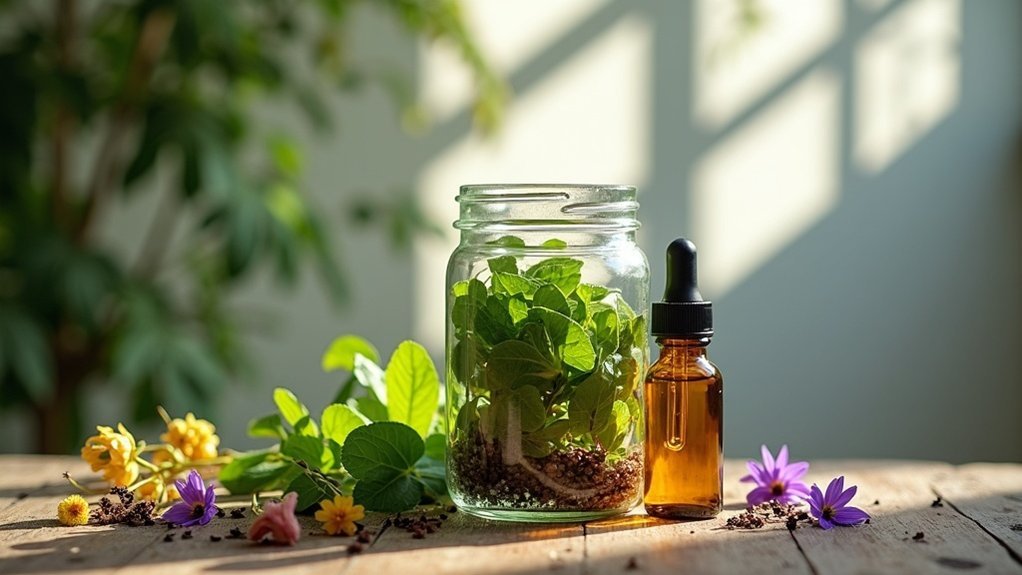
To create tinctures from plants, an essential skill for survivalism and prepping, start by gathering fresh or dried herbs along with high-proof alcohol, such as vodka. Fill a glass jar halfway with dried herbs or about ¾ full with fresh ones, then completely submerge them in the alcohol. Ensure the jar is sealed tightly and store it in a cool, dark place, shaking it daily for 4-6 weeks. After the infusion period, strain the liquid into amber bottles for optimal storage. This straightforward process not only preserves the medicinal benefits of the herbs but also equips you with a valuable resource for health and wellness in emergency situations. Keep reading for additional survival tips and techniques.
Key Takeaways
- Gather fresh or dried herbs, ensuring they are pesticide-free and accurately identified to avoid toxic varieties, which is essential for survival situations.
- Use a rubber-sealed glass jar, filling it halfway with dried herbs or ¾ full with fresh herbs, ensuring you have enough for long-term storage.
- Cover the herbs completely with high-proof alcohol (40-50% vodka recommended) and seal the jar tightly to preserve the tincture for emergencies.
- Store the jar in a cool, dark place, shaking it daily for 4-6 weeks to promote infusion, which can provide you with valuable medicinal resources.
- After the infusion period, strain the mixture through cheesecloth into amber glass bottles for storage, allowing you to have herbal remedies ready for use in survival scenarios.
Understanding Tinctures
Tinctures are valuable herbal extracts that can be an essential part of your survival and prepping strategy. They provide a convenient way to utilize the benefits of plants in liquid form, allowing you to harness medicinal properties for various situations.
By soaking plant material in a solvent, typically alcohol, you effectively extract both water-soluble and non-water-soluble compounds. For optimal extraction, a 1:1 ratio works best for fresh herbs, while a 1:4 ratio is ideal for dried ones. The unique properties of alcohol help capture a wider range of phytochemicals, but vinegar or glycerin can also serve as effective alternatives in a pinch.
Once prepared and stored in amber glass bottles, your tinctures can last indefinitely, making them a practical and long-lasting addition to your herbal arsenal for survival scenarios.
Ingredients and Equipment Needed
Creating your own tinctures is an essential skill for any survivalist or prepper, as it allows you to harness the medicinal properties of herbs for use in emergency situations. To ensure a successful extraction, start with fresh or dried herbs, using a 1:1 ratio for fresh and 1:4 for dried. High-proof alcohol, such as vodka with an alcohol content of 40-50%, is ideal for preparing herbal tinctures.
Essential equipment includes a rubber-sealed glass jar for infusion, which helps to maintain the potency of the herbs, a funnel for easy bottling, cheesecloth for effective straining, and amber glass bottles for storage. Amber bottles are crucial as they protect the tincture from light degradation, ensuring its longevity.
Be sure to label your jars with important details such as the herb’s name, preparation date, and any specific uses. This practice not only aids in organization but also ensures safety and effectiveness when you need to rely on your homemade remedies in a survival scenario.
Collecting Your Herbs
Once you have your ingredients and equipment ready, the next step is gathering the right herbs for your tinctures. Focus on collecting fresh herbs during their peak growing season for maximum potency, as this will help you sustain your preparedness efforts.
Ensure you harvest from areas free of pesticides and pollutants to support your health and wellness goals, especially in a survival situation. When foraging, always identify herbs accurately to steer clear of toxic varieties, which can be detrimental in critical situations.
If you opt for dried herbs, choose high-quality, organic options to ensure their efficacy. Remember to use gloves when handling prickly plants like stinging nettles to avoid irritation.
Your careful selection will significantly enhance the effectiveness of your herbal tinctures, making them a valuable resource for any prepper’s toolkit.
The Tincture Preparation Process
The tincture preparation process is an essential skill for any survivalist or prepper looking to harness the healing properties of herbs.
Begin by gathering your herbs, ensuring you have a reliable source for both dried and fresh options. For dried herbs, fill a Mason jar halfway; for fresh herbs, aim for about ¾ full. Coarsely chop and wash them to enhance extraction efficiency.
Gather your herbs from a trusted source, filling a jar appropriately, and coarsely chop and wash them for optimal extraction.
Completely cover the herbs with a high-proof vodka or brandy, then seal the jar tightly to prevent contamination. Store the jar in a cool, dark place, and remember to shake it daily to keep the herbs fully submerged.
This method allows the mixture to steep for 4-6 weeks, maximizing the extraction of beneficial compounds. Once ready, strain the tincture through muslin or cheesecloth, and transfer it into amber glass bottles to protect it from light, ensuring its longevity for your preparedness needs.
Pressing and Storing Your Tincture
Once your tincture has steeped for 4-6 weeks, it’s crucial to strain the liquid using muslin or cheesecloth to maximize your yield.
Squeeze out every drop to ensure you’re not wasting any of those valuable compounds that could aid in your survival.
After straining, proper storage is vital; use amber bottles to protect your tincture from light degradation and label them clearly to keep track of important details.
This way, you can ensure you have a reliable herbal remedy on hand when you need it most in your prepping endeavors.
Straining the Liquid
As you approach the final stages of your tincture-making process after weeks of careful steeping, straining the liquid becomes a crucial step to ensure you capture all the beneficial properties of the herbs you’ve chosen for survival.
Utilize muslin or cheesecloth to strain the plant material into a bowl, making sure to squeeze thoroughly to extract every last drop of liquid. This maximizes your tincture yield, which is vital for your preparedness stockpile.
Once strained, transfer the tincture into amber glass bottles using a funnel to avoid any spills. Remember to label each bottle with the herb used, the type of alcohol, and the preparation date for easy identification in your supplies.
Finally, store your tinctures in a cool, dark place to maintain their potency, ensuring you have effective remedies ready when you need them most.
Maximizing Yield Techniques
After straining your tincture, it’s crucial to focus on maximizing your yield to ensure you get the most out of your herbal extraction process, especially in survival situations.
Use muslin or cheesecloth to strain the liquid into a bowl, then squeeze the herbal material firmly to extract every last drop. This technique is vital for maximizing yield and maintaining potency, which can be essential for your preparedness.
Once you’ve gathered your tincture, transfer it into amber glass bottles using a funnel to protect it from light exposure, which can degrade the tincture over time.
Be sure to label each bottle clearly with the herb name, alcohol type, and preparation date to facilitate easy tracking in your survival supplies.
Store your tinctures in a cool, dark place to enhance their longevity, ensuring you have access to these valuable resources when needed.
Proper Storage Methods
To ensure your tincture remains potent and effective for long-term survival use, proper storage methods are essential.
After allowing the mixture to steep for 4-6 weeks, carefully strain the liquid through muslin or cheesecloth, gently squeezing the herb material to maximize yield.
Transfer the strained tincture into amber glass bottles using a funnel to protect it from light exposure. This step is crucial since tinctures are concentrated extracts that can degrade in sunlight, reducing their effectiveness when you need them most.
Clearly label each bottle with the herb type, alcohol used, and preparation date to keep track of your supplies.
Finally, store your tincture in a cool, dark place, such as a root cellar or pantry, to maintain its quality.
When prepared and stored correctly, tinctures can last indefinitely, making them a valuable asset in your survival and prepping toolkit.
Usage and Safety Considerations
While tinctures can be a valuable addition to your survival and prepping toolkit, understanding their proper usage and safety considerations is essential.
A general dosage guideline is 20-40 drops taken three times daily, but it’s crucial to consult with a knowledgeable herbalist for specific advice, particularly if you’re pregnant, breastfeeding, or managing health conditions such as diabetes.
Be aware that mild gastrointestinal upset or allergic reactions may occur, so it’s important to know your sensitivities. Tinctures aren’t recommended for children under 12 due to safety concerns.
Always label your tincture bottles with preparation dates and ingredients to maintain safety and effectively track your usage in emergency situations.
Creative Ways to Use Tinctures
Tinctures can be a valuable resource in your survival and prepping toolkit, enhancing both your meals and health practices during challenging times.
You can easily incorporate them into emergency rations, homemade herbal remedies, or even energy-boosting drinks to optimize your nutrition.
Additionally, using tinctures in foot soaks or topical applications can aid in recovery and support skin health after long days of survival activities, making them an essential item for holistic self-care in your preparedness strategy.
Culinary Applications of Tinctures
Incorporating tinctures into your survival cooking can significantly enhance your meals and drinks, providing not only flavor but also potential health benefits. A few drops can elevate your foraged cocktails or add depth to homemade dressings and marinades. Here’s a quick guide to inspire your survival culinary adventures:
| Application | Tincture Use | Flavor Profile |
|---|---|---|
| Cocktails | Herbal infusions from foraged plants | Unique and complex |
| Salad Dressings | Burst of herbal flavor from wild herbs | Fresh and zesty |
| Baking | Infuse survival cookies or cakes | Distinct, like wildflower honey |
| Soups & Sauces | Rich depth of flavor from preserved herbs | Savory and satisfying |
| Teas | Enhance a cup of herbal tea made from foraged ingredients | Calming and aromatic |
Explore these options to integrate nature’s bounty into your meals while preparing for any situation!
Health and Wellness Uses
When you’re preparing for emergencies and looking to enhance your health and wellness, tinctures can be an invaluable addition to your survival kit.
Here are some practical ways to incorporate them into your prepping routine:
- Take 20-40 drops three times daily as a dietary supplement to maintain optimal health during stressful situations.
- Add tinctures to your stored water or tea for both flavor and therapeutic benefits, ensuring you stay healthy even in tough times.
- Use elderberry tincture to bolster your immune system, especially during cold and flu seasons, when illness can spread quickly.
- Apply herbal tinctures like turmeric topically, diluted in carrier oils, to manage inflammation and joint pain that may arise from physical exertion or injury.
Harness the power of plants through tinctures as part of a holistic approach to safeguard your well-being during any survival scenario.