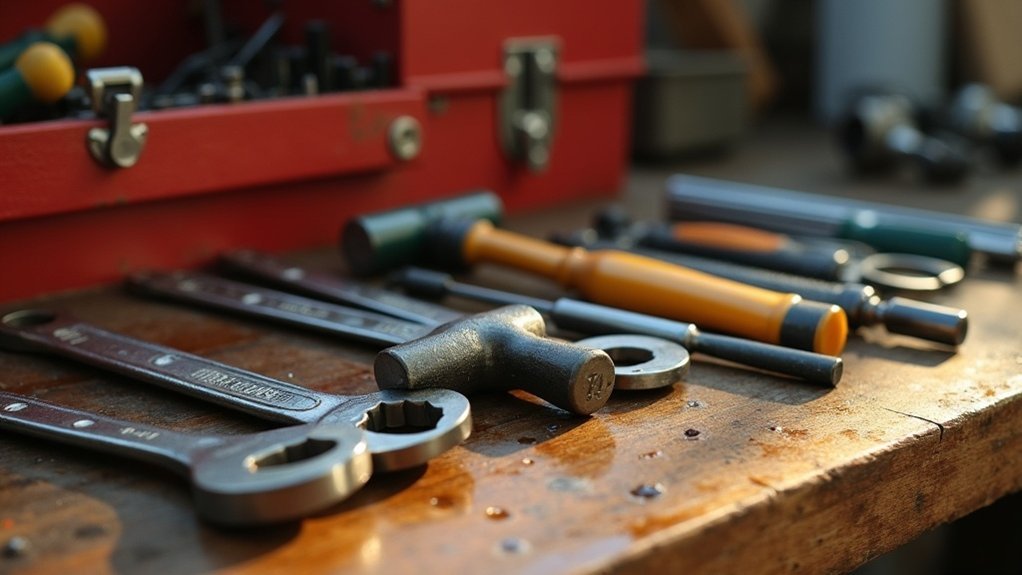
To maintain tools for reliability in a survivalist context, prioritize regular inspections to catch wear early and prevent breakdowns, especially when preparing for emergencies. Clean tools thoroughly after every use to prevent rust and corrosion, and store them in a dry, organized space to ensure they’re ready when you need them most. Address any signs of damage immediately, such as replacing cracked or deformed parts, to avoid failures during critical moments. Implement a structured maintenance schedule that includes condition monitoring and documentation of all activities, so you can track the readiness of your tools. Ensuring that all members of your prepper group are properly trained on tool handling will also enhance their lifespan and effectiveness. There are additional strategies you can adopt to further optimize your maintenance practices and ensure your tools are always in top condition for any survival scenario.
Key Takeaways
- Conduct regular inspections and monitoring of your survival tools to identify any signs of wear, ensuring they remain operational and reliable during emergencies.
- Clean your tools thoroughly after each use and store them in a controlled environment, protecting them from the elements and maintaining organization for quick access when needed.
- Address any signs of wear and damage immediately, repairing or replacing tools as necessary to ensure safety and functionality in critical situations.
- Implement a comprehensive maintenance schedule and document all upkeep activities to track tool condition and enhance longevity in your prepping arsenal.
- Train yourself and your team on proper tool use and handling, emphasizing safety practices and keeping updated on new technologies to improve your preparedness for any scenario.
The Importance of Regular Inspections
Regular inspections of your survival tools and equipment are essential not only for identifying wear and damage but also for preventing costly breakdowns that can hinder your preparedness efforts.
By implementing a routine inspection schedule, you can enhance maintenance practices and bolster the reliability of your gear. These inspections should focus on proper functioning, calibration, and cleanliness, directly impacting your operational efficiency during emergencies.
Implementing regular inspections enhances gear reliability, ensuring optimal performance and efficiency in emergency situations.
Documenting the inspection process provides valuable data for asset management, enabling continuous improvement in your preparedness strategies.
Studies show that individuals and organizations prioritizing inspections experience up to 30% less unplanned downtime, emphasizing the importance of a proactive approach to survival tool management.
Proper Cleaning and Storage Techniques
After ensuring your survival tools are in good working order through regular inspections, focus on proper cleaning and storage techniques to prolong their lifespan and ensure readiness in emergencies.
Regularly clean your tools after each use with soft cloths and appropriate cleaning solutions to remove dirt, grease, and moisture that could compromise their functionality.
Store them in a dry, temperature-controlled environment using toolboxes or pegboards to keep them organized and easily accessible when needed.
Apply a light coat of lubricant on metal surfaces to create a protective barrier against moisture and oxidation, which is especially important in survival situations.
Always inspect tools for wear and damage during cleaning and storage, ensuring they’re stored in designated places to avoid unnecessary wear and guarantee they’re ready for any situation.
Addressing Signs of Wear and Damage Promptly
To ensure your survival tools remain dependable, it is essential to address any signs of wear and damage without delay. Regular inspections can help prevent equipment failure and maintain optimal performance when you need it most. Implement a scheduled maintenance routine and keep thorough records of all maintenance activities. Establish clear criteria for retiring tools based on indicators of wear.
| Signs of Wear | Preventive Actions | Tool Performance Impact |
|---|---|---|
| Cracks | Immediate repair or replace | Decreased reliability in critical situations |
| Rust | Cleaning and applying protective coatings | Increased risk of failure during emergencies |
| Deformation | Align or replace components | Compromised safety and functionality |
Cultivating a culture of proactive maintenance is vital for ensuring the reliability of your survival gear.
Training Staff on Tool Use and Handling
While proper training on tool use and handling might seem like a secondary concern, it’s critical for minimizing accidents and ensuring the longevity of your survival gear.
Training individuals in standardized operating procedures (SOPs) guarantees everyone understands the correct protocols, promoting consistent maintenance of essential equipment.
Regular hands-on sessions should emphasize ergonomics and correct lifting techniques, reducing physical strain and enhancing the performance of your tools.
Ongoing training is essential, incorporating updates on new survival tools and technologies to keep preparedness professionals proficient.
Implementing a mentorship program allows experienced preppers to guide newer survivalists, fostering a culture of safety and reliability that ultimately improves overall preparedness outcomes.
Keeping an Inventory of Maintenance Supplies
Effective training on tool use and handling is essential for maintaining a well-stocked inventory of survival and prepping supplies.
Regularly auditing your inventory allows you to identify overstocked or understocked essentials, enhancing resource allocation and minimizing potential shortages during emergencies.
Implementing a tracking system for both equipment and consumables helps anticipate needs, enabling you to order supplies proactively before they run out.
Categorizing survival supplies based on usage frequency optimizes inventory management, ensuring that high-demand items are readily accessible when needed most.
Utilizing a centralized inventory management system provides real-time visibility into stock levels, facilitating better decision-making regarding purchases and further improving the reliability of your preparedness efforts.
Implementing a Maintenance Schedule
Implementing a maintenance schedule is crucial for ensuring your survival tools remain in optimal condition and are ready for use when needed.
Outline specific maintenance activities, including cleaning, inspecting, and servicing your gear at regular intervals. Utilize condition monitoring to adjust your schedule based on actual usage and performance data, enabling targeted preventive maintenance to enhance reliability in critical situations.
Document all activities in a maintenance management system to track compliance and identify patterns that could indicate the need for replacements or upgrades.
Regularly review and update the maintenance schedule to account for changes in usage, environmental factors, or advancements in technology.
Training your team on this maintenance schedule is vital for maximizing the longevity of your survival tools and ensuring preparedness for any scenario.
Utilizing Condition Monitoring Techniques
To effectively prepare for emergencies, you need to utilize condition monitoring techniques that combine basic inspection methods with advanced monitoring tools.
By analyzing real-time data on your supplies and equipment, you can identify potential issues early, ensuring optimal readiness and extending the lifespan of your resources.
This proactive approach won’t only enhance reliability but also minimize unexpected setbacks during critical situations.
Basic Inspection Techniques
Conducting regular inspections is essential for maintaining the performance and reliability of your survival tools and gear. Here are some basic inspection techniques to implement:
- Visual Checks: Regularly inspect your gear for signs of wear, damage, or corrosion that could compromise functionality in critical situations.
- Vibration Analysis: For power tools, use this technique to detect imbalances or misalignments that could lead to failure during use.
- Temperature Monitoring: Keep an eye on the temperatures of essential tools to prevent overheating, which can lead to costly repairs or replacements when resources are limited.
- Lubrication Checks: Ensure that all moving parts are adequately lubricated to reduce friction and enhance the reliability of your equipment, particularly in survival scenarios.
Utilizing these condition monitoring methods helps you practice effective preventive maintenance, ensuring your tools and gear are always ready when you need them most.
Advanced Monitoring Tools
While basic inspections lay the groundwork for tool maintenance in survival situations, integrating advanced monitoring tools significantly enhances your ability to maintain essential equipment effectively.
Tools such as vibration analyzers and thermal cameras utilize condition monitoring techniques to enable real-time data collection, which is crucial in the field. By tracking critical parameters like temperature and vibration, you can implement predictive maintenance strategies that identify potential failures before they occur, ensuring your gear remains operational during emergencies.
IoT-enabled monitoring tools facilitate remote oversight of your equipment, improving decision-making and overall reliability of your survival gear.
Regularly analyzing data from these systems allows for continuous improvement in your maintenance practices, ultimately leading to enhanced reliability and longevity of your tools.
Embrace these advanced technologies to optimize your preparedness efforts and ensure you’re ready for any situation that may arise.
Real-Time Data Analysis
How can you ensure your survival tools are always ready for action? Implementing real-time data analysis through condition monitoring techniques is essential. Here’s how you can enhance reliability and reduce the risk of equipment failure:
- Utilize sensors to gather continuous data on the condition of your survival gear.
- Analyze patterns in tool usage and wear to create optimized maintenance schedules that ensure your gear is always ready.
- Employ vibration analysis and thermal imaging to detect potential failures early, giving you the upper hand in critical situations.
- Centralize data collection with a Condition Monitoring System (CMS) to facilitate proactive maintenance, ensuring that your equipment remains in peak condition when you need it most.