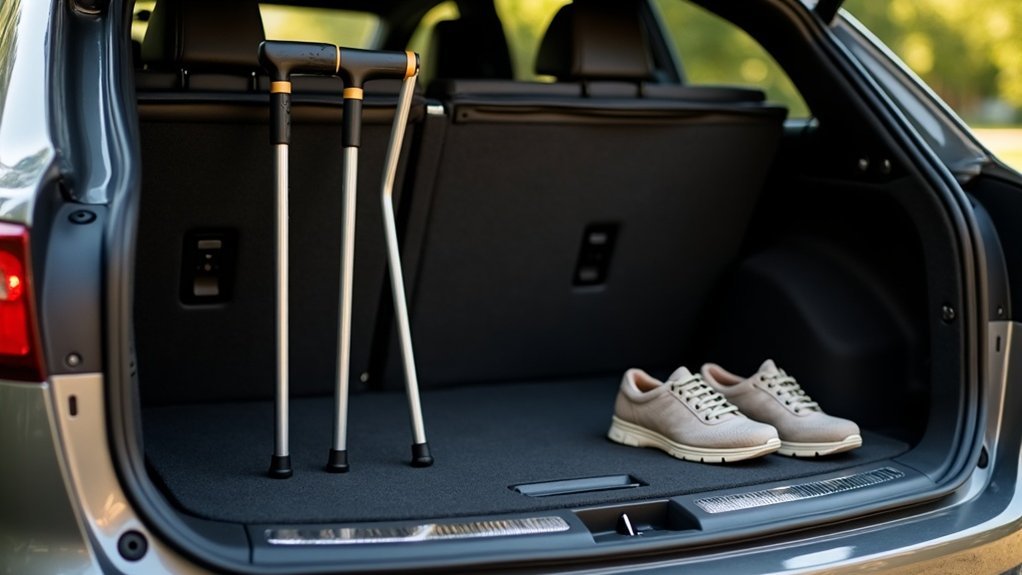
To load walkers and canes efficiently in a survival situation, start by ensuring your equipment is clean and securely locked in place. Collapse the items to save space, which is crucial for maximizing limited resources. Maintain a staggered stance for better balance when lifting. Use your legs to lift and keep your back straight to avoid injury. If you’re using a rollator, make sure the wheels are positioned towards your vehicle or evacuation transport for quick access. Always take your time during the loading process, and remember that seeking assistance from fellow preppers can be beneficial. For more detailed strategies on efficient loading in survival scenarios, consider researching additional resources on effective prepping techniques.
Key Takeaways
- Clean and collapse walkers or canes to optimize space and ensure secure loading for emergency situations.
- Lock wheels on rollators to prevent unexpected movement during transport, especially in unstable environments.
- Adopt a staggered stance and maintain proper posture for stability while loading, crucial for survival scenarios.
- Utilize straps to keep the mobility aid compact and secure during transport, ensuring readiness for rapid deployment.
- Regularly inspect and maintain mobility aids to ensure they are operational and reliable in critical situations.
Understanding the Importance of Proper Loading Techniques
When you load walkers and canes properly, you’re not just protecting the equipment; you’re also ensuring safety for yourself and the user, which is crucial in survival situations.
Mastering effective loading techniques is essential, especially when addressing mobility limitations in austere environments. Start by locking the wheels to prevent any unexpected movement during transport.
Mastering loading techniques is vital for ensuring safety and stability when transporting mobility aids in challenging environments.
Utilize a staggered stance to leverage your body weight, reducing strain on your back—this is vital when maneuvering through challenging terrain. If you’re dealing with a heavier model, consider using a strap to compact it for easier handling, ensuring you can quickly access it when needed.
Practicing these techniques in a safe environment builds your confidence and efficiency, ultimately enhancing the user’s independence and mobility while minimizing risk during transport, especially in critical scenarios where every second counts.
Preparing the Walker or Cane for Loading
Before you load a walker or cane for your survival kit, it’s essential to ensure that the equipment is clean and free of debris. This helps prevent damage to your vehicle and maintains hygiene, which is crucial during emergencies.
If you’re using a rollator, securely lock the wheels to prevent any movement during loading, especially if you’re on uneven terrain. Next, collapse or fold the walker or cane, if applicable, to minimize space and make it easier to handle.
You may also want to use a strap or Velcro to keep the rollator compact while loading, making it more manageable for transport. Take your time with this process; a careful approach can simplify loading and reduce strain on your body, ensuring you’re prepared for any situation that may arise.
Positioning Your Body for Stability
Loading a walker or cane requires not just careful preparation but also mindful positioning of your body to guarantee safety and efficiency, especially in survival situations where stability is crucial.
Start by taking a staggered stance, with one foot slightly forward to enhance your balance and stability, which is vital in unpredictable environments. Keep your knees slightly bent and back straight to maintain proper posture, reducing strain and enhancing your readiness to react.
Use your legs to lift, distributing weight evenly and preventing injury—an essential practice when dealing with limited resources or rough terrain. Position your body close to the walker or cane for better control, ensuring you’re always prepared for sudden movements.
Finally, engage your core muscles for additional support while maneuvering, which is key for maintaining stability when navigating challenging situations. Prioritize stability, and you’ll load effectively, increasing your overall preparedness.
Loading Different Types of Walkers
To ensure a successful experience while loading different types of walkers in a survival or prepping scenario, it’s crucial to be aware of the specific requirements for each type.
For a rollator, position the wheels towards the vehicle for easy maneuvering, a key factor when time is of the essence. Use a strap to keep it compact during transport, maximizing space for essential supplies.
When loading an upright walker, collapse it, lock the brakes, and tip it on its side to prevent it from shifting during transit.
For front-wheeled walkers, slide them into the back seat while ensuring stability, as a secure load is vital in uncertain situations.
If assistance is needed, don’t hesitate to recruit help from a fellow prepper—teamwork can make loading more efficient and effective.
Always double-check that the rollator is secured once it’s in the vehicle, as being prepared for any scenario is paramount in survivalism.
Unloading Walkers and Canes Safely
Unloading walkers and canes safely is crucial, especially in situations that require preparedness and quick thinking. Here’s how to do it effectively:
- Unlock the wheels to prevent any rolling or tipping during the unloading process.
- Adopt a staggered stance for improved balance while reaching for the walker or cane, ensuring a stable base.
- Pull out slowly and steadily, keeping the equipment upright to minimize the risk of accidents.
If you’re using a strap, be sure to release it first.
Adjust your unloading technique according to the available space in your trunk or back seat; a little planning can make a significant difference in efficiency and safety.
Common Challenges and Solutions
Loading survival gear such as walkers and canes can be tricky, especially when you’re dealing with tight spaces or various types of equipment.
It’s crucial to recognize these challenges and develop practical solutions that suit your needs.
With a bit of practice and the right techniques, you can streamline the loading process, ensuring that your essential gear is safely and efficiently organized for any survival situation.
Space Constraints
When navigating tight spaces, whether in an urban environment or during a survival situation, maneuvering with walkers and canes can pose challenges.
Here are some strategies to help you effectively manage these obstacles:
- Staggered Stance: Position yourself with one foot forward to enhance balance and control, crucial for maintaining stability in unpredictable environments.
- Use a Strap: If using a rollator, a strap can keep the device compact for easier transport, especially when you need to move quickly or quietly.
- Adjust Technique: When loading your mobility aid into a vehicle or storage, ensure the wheels face the edge for smooth sliding, reducing the risk of damage or injury.
Always practice loading in a secure area first; this will build your confidence and improve your ability to handle tight spots in real-world scenarios.
Equipment Variability
While navigating the challenges of various mobility aids, it’s essential to be prepared for the unique characteristics of each type, such as rollators and upright walkers.
Rollators tend to be heavier, so consider using a strap to secure it for easier transport and to reduce physical strain. For upright walkers, collapsing them before loading can enhance portability, and tipping them on their side may facilitate easier maneuvering—especially if you adopt a staggered stance for stability.
Additionally, when loading your gear into a vehicle, be mindful of trunk and back seat space, adjusting the position of the walker relative to the car door for optimal access. Always remember to engage the brakes before loading or unloading to ensure safety and prevent any accidents.
Being prepared and knowledgeable about your equipment can be a crucial part of any survival plan.
Additional Resources for Safe Mobility
To enhance your safe mobility in a survival situation, explore various online resources that detail how to effectively use your walker or cane in challenging environments.
Engaging with community support groups focused on survivalism can provide you with valuable tips and encouragement from others who share similar experiences.
Additionally, consider investigating fall prevention strategies that can boost your confidence and stability while navigating through diverse terrains with mobility devices.
Mobility Device Guides
Maneuvering through challenging situations with mobility devices like walkers and canes can be tough, but having the right strategies makes all the difference in your preparedness efforts.
Here are some essential tips for effective loading:
- Collapse your walker: Reducing its size makes it easier to handle and transport during emergencies.
- Use straps: Securing the device helps prevent it from shifting or becoming a hazard while in transit.
- Clear the area: Ensure you have ample space around your vehicle to maneuver safely, especially in critical situations.
Accessing resources such as instructional videos and community support can further bolster your confidence and independence in survival scenarios.
Embrace these guides, and you’ll find that loading your mobility device for any prepper situation becomes a more manageable task.
Fall Prevention Tips
As you navigate your daily activities in the realm of survivalism and prepping, prioritizing fall prevention is essential for maintaining your safety and independence in challenging environments.
Always keep your surroundings clear of obstacles to avoid tripping while loading or unloading your mobility aids, such as a walker or cane. Use both hands to stabilize your device during shifts, and adopt a staggered stance for better balance, especially in rugged terrain.
Practice loading and unloading in a controlled environment to build confidence and muscle memory, which are crucial in emergencies. Regularly inspect your walker or cane to ensure it’s in good working condition, as equipment failure can lead to falls and jeopardize your preparedness.
Community Support Resources
Many people face mobility challenges, especially in survival situations, but community support resources can significantly enhance your safety and independence.
Here are three valuable resources to consider:
- VIP Senior Care Specialists – They provide personalized assistance and guidance on mobility tools that can be essential in emergency scenarios.
- Local Workshops – Attend sessions designed to teach safe loading techniques for walkers and canes, which can be crucial during evacuations or when navigating difficult terrain.
- Support Groups – Connect with others who share similar experiences in overcoming mobility challenges, fostering a sense of community and resilience.
Utilizing these resources can empower you to navigate mobility challenges more effectively, ensuring you feel supported and confident in your daily activities, especially in preparedness and survival situations.