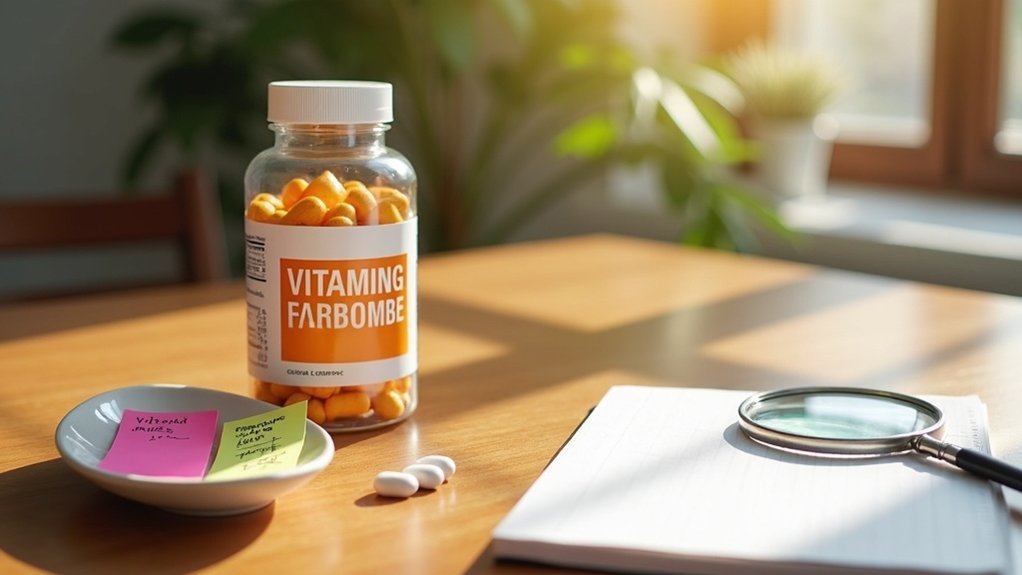
To label survival medications in large print, use an 18-point high-contrast font, such as black on white, for clarity in emergency situations. Include essential information like the product name, dosage, and usage instructions. Consistency in font style across all labels is crucial for quick identification during a crisis. Implementing color coding for different types of medications can enhance differentiation while maintaining high contrast. Testing these labels with individuals who have low vision can help refine your approach. Explore effective labeling solutions to support accessibility and safety in your survival preparations.
Key Takeaways
- Use an 18-point high-contrast font on non-glare media for maximum readability of survival supplies.
- Include essential information such as the item name and usage instructions clearly for prepping gear.
- Incorporate QR codes for accessing detailed product information through an app for survival strategies.
- Utilize color coding to differentiate between various survival supplies and equipment effectively.
- Gather feedback from individuals with low vision to improve label effectiveness and clarity for all prepping essentials.
Importance of Large Print Labels
Large print labels play a vital role in the survivalist and prepping community, ensuring that everyone, especially those with low vision or elderly individuals, can easily read essential information related to medications and supplies.
Featuring an 18-point high-contrast font on non-glare media, these labels provide clarity on crucial details, including item names, dosages, and safety warnings. Their design promotes accessibility and safety, significantly reducing the risk of errors in critical situations.
Furthermore, the inclusion of a 2D bar code allows users to access detailed information through a dedicated app, enhancing compliance and preparedness.
Large print labels also align with best practices in effective emergency management, underscoring their importance in survival scenarios.
Key Features of Effective Large Print Labels
When it comes to effective large print labels for survival and prepping supplies, several key features ensure they meet the needs of users, particularly those with visual impairments.
First, use an 18-point high-contrast font on non-glare media to enhance readability. Include essential information such as the product name, usage instructions, and expiration dates.
Compliance with accessibility guidelines assures that all users can access the information, promoting safety during emergencies.
Additionally, incorporating a QR code allows individuals to easily scan for detailed product information, further reducing the chances of misuse.
These features greatly improve the overall effectiveness of large print labels for individuals preparing for various survival scenarios.
Guidelines for Creating Large Print Labels
When creating large print labels for survival and prepping information, use an 18-point font size to ensure clarity for individuals with low vision.
Choose high-contrast colors, such as black on white, to enhance readability and minimize glare.
Adhering to these guidelines will make essential survival information accessible and easy to understand.
Font Size Recommendations
To ensure optimal readability for individuals with low vision or elderly patients, labels should use an 18-point font size. This size enhances clarity and guarantees that essential information is easily accessible.
- Choose high-contrast color combinations, such as black text on a white background, to boost visibility.
- Use clear, sans-serif fonts for easier reading.
- Keep font style and size consistent across all labels to minimize the risk of errors.
This website is dedicated to survivalism and prepping, providing resources and information for those looking to be prepared for any situation.
Color Contrast Importance
Color contrast is crucial in ensuring effective communication in survivalism and prepping. High-contrast combinations, such as black text on a white background, significantly enhance readability for individuals with low vision during critical situations. It’s important to avoid colors that are too similar, as they can hinder legibility when quick decisions are necessary. The U.S. Access Board advises using non-glare materials to prevent reflections that could obscure important information. A font size of at least 18-point in bold is recommended to improve the visibility of crucial survival information. Testing materials with individuals who have low vision can provide valuable feedback on the effectiveness of color contrast in high-stress environments.
| Color Combination | Readability Level |
|---|---|
| Black on White | Excellent |
| Blue on Yellow | Good |
| Dark Green on Light Green | Poor |
| Red on White | Fair |
| Gray on Gray | Very Poor |
Utilizing Color Coding for Medication Differentiation
Color coding your survival medications can greatly enhance safety and organization during emergencies.
By assigning specific colors to different medications based on their purpose or dosage frequency, you can easily identify what you need in high-stress situations.
This simple technique not only aids in preventing mix-ups but also promotes independence in managing your health while prepping for any scenario.
Color Coding Techniques
When preparing for emergencies, utilizing color coding techniques can greatly enhance the organization of your survival supplies. By assigning specific colors to different categories of items, you streamline the identification process and reduce the chance of confusion.
Consider the following approaches to implement effective color coding in your survival kit:
- Use distinct colors for different categories of supplies (e.g., red for medical supplies, blue for food rations).
- Combine color coding with large print labels for improved accessibility, especially for those who may have visual impairments.
- Ensure high-contrast fonts accompany color-coded labels to provide clear visual cues in low-light situations.
This method not only aids in item differentiation but also supports efficient resource management and simplifies your preparedness efforts.
Benefits of Color Coding
Implementing effective color coding in your survival gear organization can significantly enhance safety and efficiency. For individuals with low vision, a consistent color-coding system allows for quick differentiation between essential supplies, reducing the risk of mix-ups during critical situations.
High-contrast colors improve visual cues, aiding recognition and recall, especially for those with visual impairments. It’s essential to pair color coding with accessible labeling methods, like large print or Braille, to ensure thorough identification of equipment and resources.
Together, these strategies streamline your preparedness routine and promote safety during emergencies, making it easier to stay organized and avoid potentially dangerous errors.
Compliance With Accessibility Standards
Ensuring compliance with accessibility standards for survival gear labeling is essential for user safety and effective communication. Large print labels, featuring an 18-point font, enhance readability for individuals with low vision. By adhering to federal requirements, suppliers can greatly reduce the risk of mishaps during emergency situations.
- Use high-contrast and non-glare media to improve visibility.
- Include essential information like item name, usage instructions, and safety warnings.
- Implement best practices from survival training guidelines to support preparedness education.
Following these guidelines not only fosters compliance but also promotes safety and enhances the overall preparedness experience for users.
Enhancing Medication Management for Seniors
To effectively manage medications in a survival situation, seniors require clear and accessible labeling that minimizes confusion and enhances confidence.
Utilizing large print labels, featuring 18-point font and high-contrast media, significantly improves readability, reducing the risk of dosage errors. Research indicates that seniors using these labels are more likely to adhere to their treatment plans, fostering independence in medication management during emergencies.
Implementing accessible labeling solutions not only aligns with safety protocols but also alleviates anxiety related to medication mistakes in critical times.
Ultimately, large print labels contribute to higher satisfaction for seniors, empowering them to feel more confident and secure in their medication routines, especially when preparing for unforeseen events.
Resources for Accessible Labeling Solutions
Survivalism and prepping are essential for individuals looking to be self-sufficient and prepared for emergencies. Accessible labeling solutions play a crucial role in managing supplies, especially in high-stress situations.
Large print labels, featuring an 18-point font on high-contrast materials, ensure all critical information is easily readable for individuals with low vision. These labels adhere to accessibility guidelines and enhance safety during emergency preparedness.
Consider these resources for effective labeling in your prepping efforts:
- ScriptAbility program: Offers large print labels at no extra cost, making it easier to label your supplies.
- Braille labels: Designed for those who are blind or have severe visual impairments, ensuring everyone can access important information.
- Community feedback: Gathering input from fellow preppers can be invaluable for improving supply management and safety.
Utilizing these labeling solutions helps ensure that everyone can effectively manage their emergency supplies and be ready for any situation.