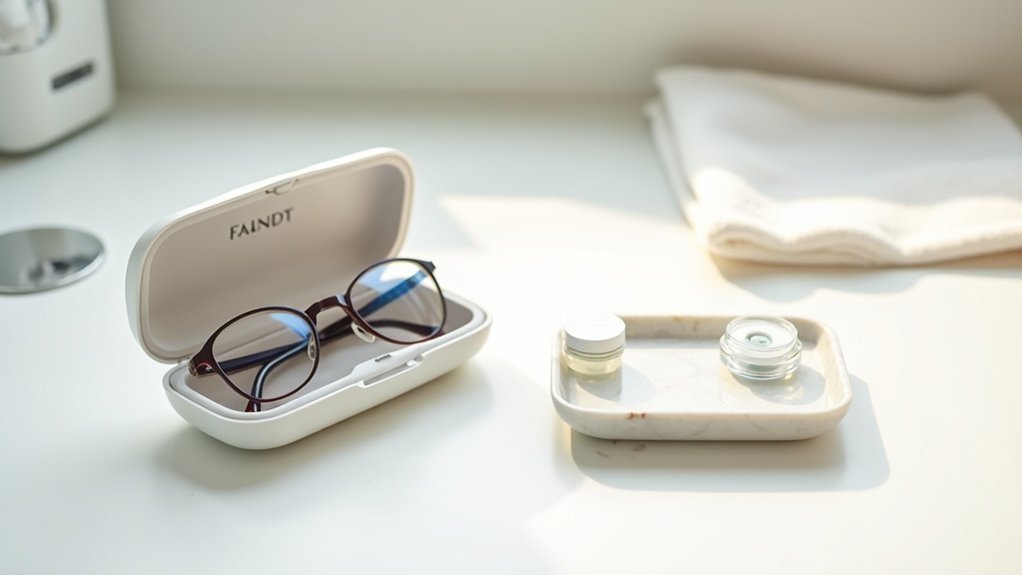
To ensure your eyewear is ready for any situation, be prepared by packing an extra pair of glasses in a sturdy case, along with travel-sized lens solution and a cleaning cloth. Prioritize hygiene by washing your hands before handling lenses and using sterile solutions to prevent infections. Consider daily disposables for quick use and ease during emergencies. Pay attention to climate conditions as extreme weather can impact your eyewear. Always have backup eyewear and keep a copy of your prescriptions in your survival kit. Being proactive about your eyewear management can significantly enhance your preparedness and safety in a crisis. Stay informed about maintaining eye care while on the move.
Key Takeaways
- Always pack an extra pair of glasses in a durable hard case for protection and quick access in emergencies.
- Use travel-sized contact lens solution and a lens cleaning cloth to maintain hygiene while on the go in survival situations.
- Keep a copy of your contact lens and eyeglass prescriptions with your survival gear for easy replacement when supplies are limited.
- Consider daily disposable contact lenses for convenience and reduced contamination risks in challenging environments.
- Regularly clean your contact lens case and replace it every three months to ensure safety and preparedness during extended outings.
Essential Packing Tips for Glasses and Contacts
When preparing for a survival trip, it’s crucial to ensure your glasses and contacts are packed effectively to avoid any disruptions in your vision.
Always include an extra pair of glasses in a hard case within your emergency kit for easy access and protection. For contact lens users, pack travel-sized lens solution that adheres to the 3-ounce limit, as you may need to manage limited resources.
Include an extra pair of glasses and travel-sized lens solution in your emergency kit for optimal vision management on your survival trip.
Don’t forget a lens cleaning cloth and hand sanitizer to maintain hygiene while handling your contacts in the field. Keeping a copy of your contact lens prescription is essential; it can be invaluable if you need to acquire replacements or additional supplies in an emergency situation.
Proper packing and preparation can significantly impact your ability to navigate and survive during your travels.
Maintaining Proper Hygiene During Travel
Packing your glasses and contacts is just the start; maintaining proper hygiene during travel is equally vital for survivalists. Always wash your hands thoroughly before handling contact lenses to prevent infections, which can compromise your health in critical situations. Use sterile contact lens solutions to reduce contamination risk, and carry hand sanitizer for scenarios where traditional washing isn’t feasible. Keep your contact lens case clean and replace it every three months to minimize bacterial growth. Avoid exposing your lenses to any water to protect your eye health, especially in uncertain environments.
| Hygiene Tip | Importance |
|---|---|
| Wash your hands | Prevents bacteria transfer |
| Use sterile solution | Reduces contamination risk |
| Carry hand sanitizer | Ensures clean hands in the field |
| Replace lens case | Minimizes bacterial growth |
Choosing the Right Contact Lenses for Your Trip
How can you ensure your contact lenses are suitable for your survival trip? Consider daily disposable lenses for convenience and hygiene; they eliminate the need for solutions and cases, which can be critical when resources are limited.
Assess your destination’s climate—if you’re heading to rugged areas with high pollen or dust, daily wear lenses can enhance comfort and reduce irritation.
It’s essential to consult with your optometrist about the best contact lenses for your lifestyle and the expected duration of your trip. If you plan on engaging in outdoor survival activities, choose lenses with UV protection to shield your eyes from harmful rays.
Additionally, pack extra regular contact lenses and a copy of your prescription for easy replacements, ensuring you remain prepared for any situation.
Importance of Backup Eyewear
While you may primarily depend on contact lenses for your daily vision needs, having a backup pair of glasses is crucial for ensuring clear sight in various survival scenarios. A spare pair can be a lifesaver if your contacts are lost or damaged, especially when you need to stay sharp in an emergency.
Consider these key points:
- Immediate Relief: Glasses provide comfort after extended contact lens wear, allowing your eyes to rest and recover during intense situations.
- Allergen Protection: In environments with high allergens, glasses serve as a protective barrier, minimizing eye irritation and keeping you focused on the task at hand.
- Emergency Preparedness: Keeping a copy of your eyeglass prescription on hand enables quick replacements when you’re in unfamiliar territory, ensuring you’re always ready for any challenge that comes your way.
Having backup eyewear is a vital part of any preparedness plan, ensuring that your vision remains clear no matter the circumstances.
Preparing for Unexpected Situations With Your Eyewear
Preparing for Unexpected Situations With Your Eyewear
When it comes to survival situations, having a backup pair of glasses is just the beginning of your eyewear preparedness. Always store your extra glasses in a hard case to prevent damage during rugged conditions.
Consider daily disposable contact lenses; they not only reduce the need for carrying solution and cases but also lighten your load, making them ideal for survival scenarios.
Keep a compact multi-tool with a small screwdriver in your survival kit to tighten any loose screws on your glasses, especially when in the field.
Additionally, carry a copy of your eyewear prescription to ensure you can quickly replace your glasses or contact lenses if needed while away from home or in an emergency situation.
Being proactive with your eyewear can make a significant difference in maintaining your vision and overall survival.