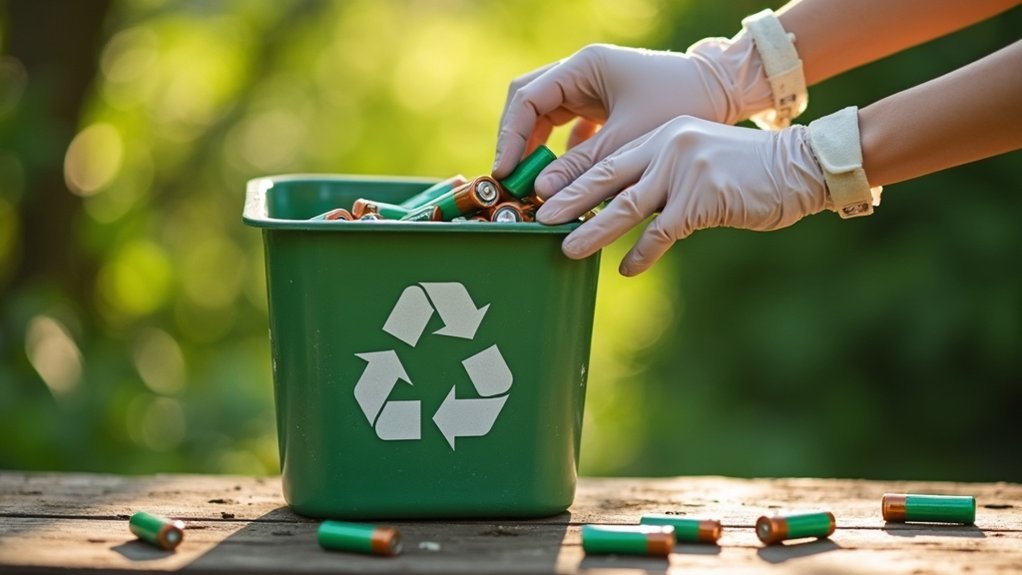
To dispose of batteries safely while prepping for emergencies, first identify their type. Single-use alkaline batteries can often be discarded in the trash, but be sure to cover 9V terminals with tape to prevent fires—essential for maintaining safety in your survival stockpile. Rechargeable batteries, such as NiCd and Ni-MH, should be recycled through local programs or participating retailers to ensure they’re disposed of responsibly. Lead-acid batteries, often used in backup power systems, require special handling at designated recycling centers to avoid environmental contamination. Improper disposal can harm the environment and diminish your self-sufficiency efforts. Understanding these guidelines not only guarantees safety and ecological responsibility but also equips you with crucial knowledge for sustainable prepping practices.
Key Takeaways
- When disposing of alkaline batteries, it is generally acceptable to place them in the trash. However, for safety during transport, make sure to tape the terminals of 9V batteries to prevent any fire hazards.
- Always prioritize recycling rechargeable batteries. Utilize local recycling programs or retailers that accept them, and remember to tape the terminals for added safety.
- Lead-acid batteries, often found in vehicles and backup systems, should be taken to designated recycling facilities. Transport them carefully to avoid leaks that could harm the environment.
- Coin batteries, including lithium and mercury types, are hazardous and require specialized recycling methods due to their toxic components.
- Always adhere to local regulations regarding battery disposal. Improper disposal can not only harm the environment but also pose risks to public health, which is crucial for maintaining a sustainable survivalist lifestyle.
Understanding Different Battery Types
How can you determine the type of battery you have on hand for your survival kit? Start by identifying the common types: alkaline batteries, such as AA and AAA, are often suitable for basic devices and can typically be disposed of in the trash, but it’s wise to insulate the terminals to prevent short-circuits.
However, rechargeable batteries, like NiCd and Ni-MH, should never be thrown away; they require proper recycling to minimize environmental impact and ensure that you have a sustainable power source when preparing for emergencies.
Lead-acid batteries, commonly used in vehicles and backup power systems, must be recycled at designated facilities due to their hazardous materials.
Lastly, coin batteries, including lithium and mercury types, are toxic and necessitate specialized recycling. Understanding these distinctions is crucial for effective battery management in your prepping strategy, ensuring you maintain a reliable and eco-conscious supply of power when you need it most.
Safe Disposal Methods for Single-Use Batteries
When disposing of single-use batteries, it’s crucial to follow proper guidelines to ensure your preparedness plan minimizes environmental impact.
Single-use alkaline batteries, such as AA, AAA, C, D, and 9V, can generally be placed in the trash in accordance with the Mercury-Containing and Rechargeable Battery Management Act. However, insulating 9V battery terminals with tape is essential to prevent sparks, which could pose a fire hazard in a survival situation.
While many states allow this disposal method, recycling through designated programs is highly recommended to support sustainability efforts. Always check local guidelines, as they may vary, especially in a survival context.
Additionally, consider investing in rechargeable batteries to significantly reduce landfill waste, as one rechargeable battery can replace hundreds of single-use alkaline batteries, making them a more sustainable choice for your emergency supplies.
Guidelines for Recycling Rechargeable Batteries
While single-use batteries can often be disposed of in the trash, rechargeable batteries require a more careful approach due to their hazardous components. Here are some essential guidelines for recycling rechargeable batteries, especially for those focused on survivalism and prepping:
| Action | Description |
|---|---|
| Don’t throw in trash | Always recycle rechargeable batteries responsibly to protect the environment and ensure safety. |
| Use designated locations | Find local recycling programs or retailers that accept rechargeable batteries; this helps maintain community resources. |
| Tape terminals | Prevent short circuits during transport by taping the terminals; this is crucial for safety in your emergency supplies. |
| Check battery types | Know which rechargeable batteries are accepted; this knowledge can be vital for maintaining your essential gear. |
| Reduce landfill waste | Your efforts can significantly lessen waste, aligning with the sustainable practices vital for prepping. |
Proper Handling of Lead Acid Batteries
When handling lead acid batteries, it’s crucial to follow safe transport guidelines to prevent leaks and spills, especially during emergencies.
You have several disposal location options, including auto parts stores and designated recycling centers, to ensure proper handling.
Being aware of the environmental impact of these batteries underscores the importance of responsible disposal practices, which are essential for sustainable prepping and survivalism.
Properly managing these batteries can also be a part of your preparedness plan, ensuring you have safe and reliable energy sources when needed.
Safe Transport Guidelines
Transporting lead acid batteries is a critical task for survivalists and preppers who understand the importance of sustainable energy sources. When preparing for transport, always submit a Hazardous Material Pickup request for safe removal assistance, as these batteries require special handling.
Ensure they’re placed upright in a durable container to prevent spills and leaks, which can pose environmental hazards and compromise your prepper supplies. Equip yourself with gloves and goggles to protect against contact with sulfuric acid, as it can cause serious burns.
It’s vital to adhere to local regulations for transporting lead acid batteries; improper disposal is illegal in Texas and can lead to hefty fines. Following these guidelines not only ensures safe transport but also reflects responsible stewardship of resources, an essential principle in the survivalist community.
Disposal Location Options
Finding the right disposal location for lead-acid batteries is crucial for ensuring both safety and environmental protection, particularly for those who prioritize self-sufficiency and preparedness.
In Texas, it’s essential to take these batteries to approved drop-off sites for recycling, as improper disposal not only poses environmental risks but can also be illegal.
When acquiring a new lead-acid battery, retailers are mandated to accept your old one, promoting responsible disposal practices that align with a sustainable lifestyle.
Local auto parts stores and service shops often accept lead-acid batteries as well, providing convenient options for those who are preparing for unforeseen circumstances.
If assistance is needed for removal from facilities, consider requesting a Hazardous Material Pickup to ensure safe handling.
Always handle and transport lead-acid batteries with care due to their weight and potential hazards, as part of a conscientious approach to survivalism and environmental stewardship.
Environmental Impact Awareness
Understanding the environmental impact of lead-acid batteries is crucial for preppers and survivalists who rely on these power sources for various applications.
These rechargeable batteries contain toxic substances like lead and sulfuric acid, which can severely contaminate soil and groundwater if improperly discarded. In Texas, it’s illegal to dispose of them in the trash; you must take them to approved recycling facilities.
When acquiring a new lead-acid battery for your emergency supplies, remember that retailers are required to accept your old one for recycling. Local auto parts stores and service shops typically accept these batteries, ensuring safe handling and compliance with environmental regulations while reclaiming valuable materials.
Being mindful of the environmental impact not only helps protect our planet but also ensures that you’re prepared for any situation without compromising safety.
Environmental Impact of Improper Disposal
When batteries are improperly disposed of, they pose a significant environmental threat that can impact your survival preparations and self-sufficiency goals. Toxic substances like cadmium, lead, lithium, and sulfuric acid can leak into the soil and groundwater, contaminating essential resources that could be crucial during emergencies.
Improper battery disposal threatens the environment and your survival plans, contaminating vital resources with toxic substances.
This leakage harms ecosystems, threatening wildlife and disrupting natural habitats, which can affect food sources and resources in a survival scenario. With over three billion single-use batteries purchased annually in the U.S., improper disposal contributes to rising hazardous waste levels that could hinder community resilience.
Many areas enforce strict regulations against improper battery disposal, underscoring the importance of being informed about safe disposal methods. By making responsible choices and educating your community on this issue, you can help mitigate long-term ecological damage, protect vital resources, and ensure a healthier environment for your survivalist endeavors.
Your choices matter; dispose of batteries responsibly.
Resources for Battery Recycling and Disposal
To ensure responsible battery disposal while maintaining a focus on survivalism and self-sufficiency, it’s important to utilize resources that aid in the recycling process. Here are some options that align with these principles:
- Call2Recycle: Locate local drop-off points for various battery types, helping you manage your resources effectively.
- Retailers like Best Buy, Lowe’s, and Staples: These stores offer convenient recycling options for specific batteries, allowing you to stay prepared without polluting the environment.
- City of Houston Solid Waste Management: Check out personal recycling centers to adhere to local regulations while maintaining your preparedness.
- Automotive parts stores: These locations accept lead-acid batteries, ensuring compliance with Texas law and contributing to sustainable practices.
- Community workshops: Participate in sessions that educate on safe disposal practices and guidelines related to the Rechargeable Battery Management Act, enhancing your knowledge for better self-reliance.
Utilizing these resources not only guarantees responsible battery disposal but also supports your preparedness efforts for a sustainable lifestyle.