To dehumidify storage spaces crucial for your survival supplies, start by selecting a climate-controlled unit to maintain optimal humidity levels. Always ensure that no damp or wet items are stored, as they can increase moisture levels and foster mold growth, jeopardizing your preparedness efforts. Utilize desiccants like silica gel packs to effectively absorb excess moisture, and consider installing a vapor barrier to thwart external moisture infiltration. Additionally, seal any cracks in walls or floors to prevent potential leaks. By implementing these straightforward strategies, you can safeguard your supplies from damage and ensure their longevity, which is vital for any survivalist. Explore more methods to keep your storage space dry and ready for any situation.
Key Takeaways
- Install a dehumidifier to maintain optimal humidity levels, which is crucial for preserving supplies and gear in storage spaces and preventing moisture damage.
- Regularly inspect your prepped items for moisture and ensure they are completely dry before storage to avoid mold and degradation.
- Utilize vapor barriers to thwart moisture infiltration, enhancing the performance of your dehumidification systems and protecting your preparedness stockpile.
- Incorporate moisture absorbers like silica gel packs or activated charcoal to effectively regulate humidity levels, ensuring your supplies remain in top condition.
- Conduct regular inspections for cracks and dampness in your storage areas, sealing any openings promptly to maintain a dry and secure environment for your survival gear.
Choose A Climate-Controlled Storage Unit
When it comes to preparing for emergencies or long-term survival, choosing a climate-controlled storage unit can be crucial, especially if you live in a region prone to extreme weather or high humidity.
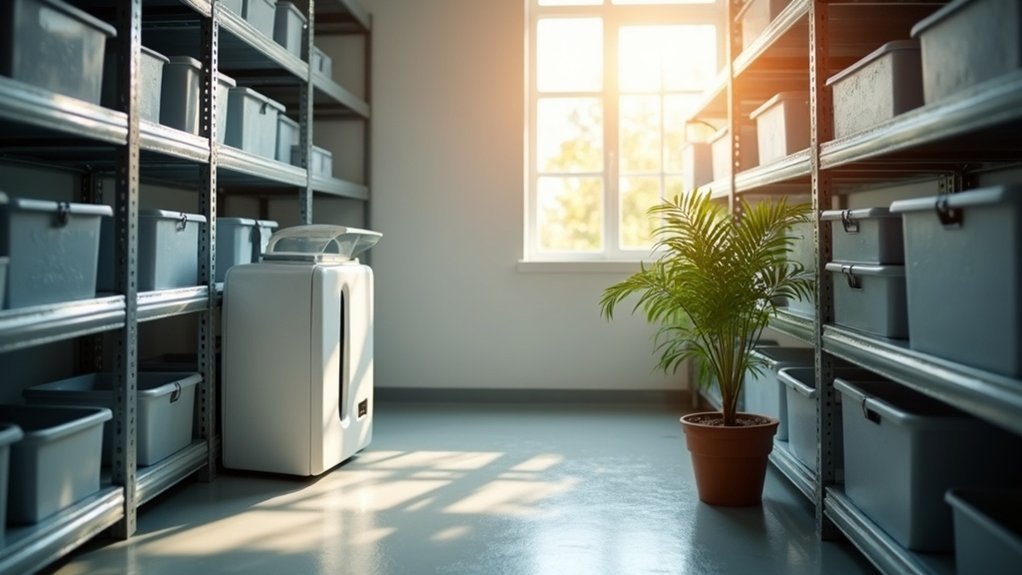
These units maintain optimal humidity levels around 50 percent, which is essential for protecting your supplies from the damaging effects of moisture. Equipped with HVAC systems and commercial-grade dehumidifiers, climate-controlled storage minimizes the risk of mold and mildew growth on critical items such as food supplies, medical supplies, and important documents.
Additionally, vents help mitigate moisture buildup, ensuring a stable environment for your essential gear. Investing in this type of storage is particularly wise for long-term preparedness, as it reduces stress on sensitive items like electronics, valuable tools, and survival gear.
Don’t Ever Store Damp or Wet Items
Storing damp or wet items can jeopardize your preparedness efforts and survival supplies.
Even a single damp item can raise humidity levels, leading to moisture damage and creating an ideal environment for mold and mildew growth. This not only risks the integrity of the damp item itself but can also compromise the condition of all other gear and supplies nearby.
A single damp item can elevate humidity, risking mold growth and damaging nearby supplies. Stay vigilant to protect your preparedness efforts.
Always ensure that items are completely dry before storing them—utilize towels or hair dryers if necessary, and take advantage of sunlight on clear days for additional drying.
Be diligent in checking washed items like clothing or bedding for moisture to prevent costly damage and avoid facing dire consequences when you need to access your stored supplies in an emergency.
Keep Contents Dry With Desiccants
To ensure your storage space remains dry and protected from moisture, consider incorporating desiccants such as silica gel packs or DIY charcoal options.
Strategically position these moisture absorbers throughout your storage unit, using breathable bags to enhance their effectiveness.
Regularly monitor and replace them every couple of months to maintain optimal humidity control, which is crucial for preserving your supplies and gear in a survival situation.
Types of Desiccants
Desiccants are vital tools for survivalists and preppers looking to safeguard their supplies from moisture damage during storage. Different types of desiccants can help maintain a dry environment in your storage spaces. Here’s a quick overview:
| Type | Description |
|---|---|
| Silica Gel Packs | Effective at absorbing moisture; replace every two months for optimal performance. |
| Charcoal Bricks | A homemade alternative; best used in breathable containers to maximize airflow. |
| Desi Paks | Breathable bags designed to absorb humidity; monitor regularly to ensure efficacy. |
| Cat Litter | Non-scented and acts as a natural desiccant; replace monthly to maintain dryness. |
Incorporating these desiccants into your prepping strategy ensures that your supplies remain protected from moisture damage while stored away. Choose the right type to meet your specific storage needs!
Placement Strategies
When preparing your storage space for survival supplies, strategic placement of desiccants is crucial for moisture control. Position silica gel packs or larger storage-grade packets throughout your unit to effectively absorb moisture and keep your supplies dry.
Use breathable bags to maximize their efficiency, ensuring they don’t come into contact with sensitive items like food or electronics. Regularly check and replace desiccants every two months, or more frequently in high-humidity environments to maintain optimal conditions.
In larger storage areas, distribute larger containers evenly for comprehensive coverage. Focus on placing desiccants near high-risk items, such as electronics or vintage clothing, to combat moisture build-up where protection is most vital for your survival gear.
Use a Vapor Barrier
Using a vapor barrier is a crucial strategy for survivalists and preppers looking to maintain optimal conditions in their storage spaces. Typically constructed from durable polyethylene plastic sheets, this barrier effectively prevents moisture in the air from infiltrating your supplies, significantly lowering the chances of mold and mildew growth.
A vapor barrier is essential for preppers, keeping supplies dry and protected from mold and mildew.
- Install it on the warm side of walls or directly on the ground for maximum effectiveness.
- Conduct regular inspections for any tears or punctures that could compromise its integrity.
- Utilize it to boost the efficiency of your dehumidification systems, ensuring a dry environment for your stored goods.
- Safeguard your vital supplies from outdoor moisture, preserving their longevity and usability in emergency situations.
Use Vacuum Sealed Bags
Many survivalists and preppers recognize the importance of vacuum-sealed bags in preserving a dry and secure environment for their stored supplies.
These bags significantly reduce air exposure, which is crucial in minimizing humidity levels and safeguarding against moisture damage—an essential consideration for long-term storage.
Before sealing any items, ensure they’re completely dry to avoid the risk of mold and mildew, which can compromise your preparedness supplies.
Vacuum-sealed bags are particularly useful for clothing, food, and small survival gear, as they not only compress items to save space but also provide exceptional moisture protection.
Regularly check the bags for any signs of leaks; even a small amount of air intrusion can undermine your humidity control efforts.
Discard any faulty bags promptly to maintain optimal storage conditions and ensure the longevity of your critical supplies.
Check for Potential Leaks In Your Container or Unit
To ensure your storage space remains dry and secure for your survival supplies, it’s crucial to regularly inspect the walls and ceilings for cracks or gaps that could allow moisture to infiltrate.
Even small openings can escalate into significant issues that compromise your preparedness. Seal any visible cracks immediately to maintain a dry environment.
Additionally, check the floor for dampness, as this could signal deeper moisture problems that require immediate action to protect your valuable resources.
Staying proactive in these inspections is key to effective prepping.
Inspect Walls and Ceilings
While you mightn’t notice them at first glance, cracks and gaps in the walls and ceilings of your storage unit can lead to serious moisture problems that could compromise your survival supplies.
Regularly inspecting these areas is crucial for early detection of issues that could threaten your preparedness.
- Look for visible cracks or gaps that could allow moisture infiltration.
- Use a moisture meter to detect hidden dampness that could affect your gear.
- Check for signs of mold or mildew, especially in corners, as these can ruin essential supplies.
- Assess the unit’s ability to withstand outdoor weather conditions, ensuring your items are protected.
Addressing these potential leaks promptly is essential for keeping your survival gear safe from humidity-related damage, ensuring that you’re well-prepared for any situation that may arise.
Seal Visible Cracks
After thoroughly inspecting the walls and ceilings of your storage unit, it’s crucial to shift your attention towards sealing any visible cracks that could allow moisture infiltration.
Even minor openings can escalate into significant issues over time, so utilize waterproof sealants or caulk to effectively fill these cracks. Ensure you create a tight seal to prevent water from entering, which could compromise your supplies and gear.
Regularly inspect for new cracks or any widening of existing ones, as fluctuations in temperature and humidity can undermine the integrity of your storage space.