To crimp battery terminals effectively for your survival and prepping needs, gather essential tools including a tape measure, a sharp knife, a hydraulic crimper, and heat shrink tubing. Begin by measuring and cutting the cable to the desired length, ensuring it suits your emergency power requirements. Carefully strip the insulation to expose the copper wire, taking care not to damage it. Insert the cable into the lug and use the crimper to establish a robust and reliable connection, critical for maintaining power in survival situations. Once crimped, slide on the heat shrink tubing and apply heat to secure and protect the connection from environmental factors. To strengthen your skills and avoid common mistakes, consider additional tips and techniques that can enhance your battery terminal crimping in preparation for any scenario.
Key Takeaways
- Measure and cut the battery cable to the required length, ensuring it’s suitable for your survival setup, then strip the insulation to expose enough copper for the lug.
- Insert the stripped cable end into the lug, making sure all copper strands are fully enclosed for a secure connection that can withstand the rigors of a survival situation.
- Use a hydraulic crimper to apply firm, even pressure until the dies touch, ensuring a strong, low-resistance crimp that will be reliable during emergencies.
- Slide heat shrink tubing over the crimped connection and apply heat evenly to protect against moisture and stress, which is crucial in unpredictable environments.
- Regularly inspect crimped connections for wear or corrosion, as maintaining these connections is vital for the safety and reliability of your prepping gear.
Tools & Materials Required
To crimp battery terminals effectively in a survival situation, you’ll need several essential tools and materials.
Begin with a tape measure and marker to accurately measure the cable length before cutting, ensuring you have the right amount for your needs. A sharp knife or razor blade is crucial for stripping insulation from the cable without damaging the copper strands, which is vital for maintaining conductivity.
Invest in heat shrink tubing to seal connections, providing protection against moisture and stress that can compromise your setup in adverse conditions. A hydraulic crimper is highly recommended for achieving a quality crimp on copper lugs, ensuring strong, low-resistance connections that are critical for reliability in an emergency.
Don’t forget wire cutters for clean cable cuts, and be sure to select battery cables and lugs that match the correct gauge for dependable electrical connections in your prepping gear.
Step-by-Step Crimping Process
Crimping battery terminals is a vital skill for survivalism and prepping, ensuring that you can maintain reliable connections in critical situations.
Begin by measuring and cutting the cable to the necessary length for your application. Strip enough insulation so the exposed copper fits snugly inside the lug, making sure there are no stray strands that could cause issues.
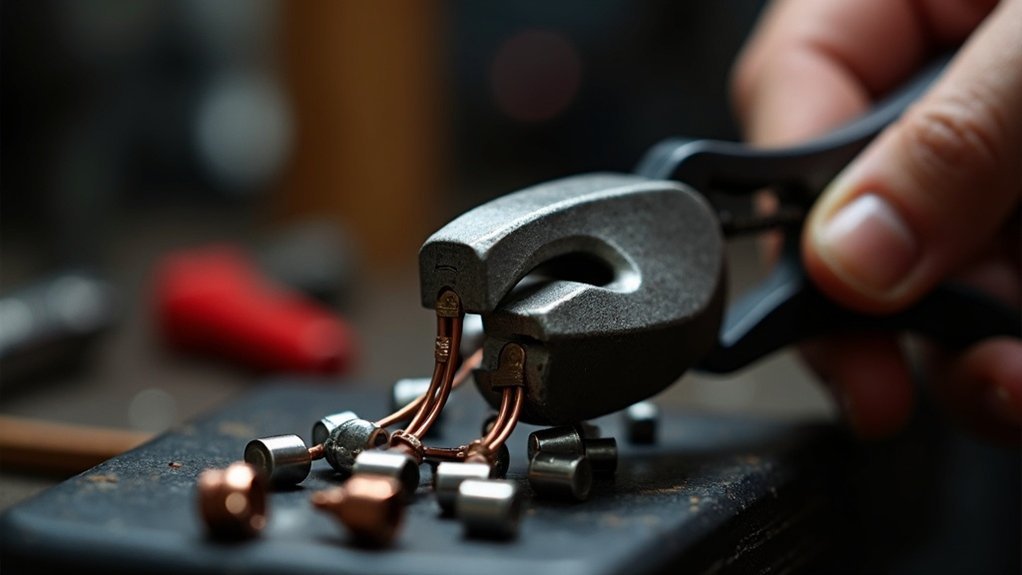
Insert the stripped cable end into the lug, ensuring all copper strands are securely enclosed. Utilize the appropriate hydraulic crimper tool to apply firm, even pressure until the dies touch, achieving a strong crimp. If needed, repeat the process to ensure a properly crimped connection.
Finally, slide heat shrink tubing over the crimped battery cable and apply heat evenly with a heat gun to provide moisture protection, ensuring your connections remain reliable in any survival situation.
Common Mistakes to Avoid
Many beginners in survivalism and prepping often overlook key details when crimping battery terminals, which can lead to unreliable connections in critical situations.
Using the wrong size lug compromises conductivity, so it’s essential to match it to the cable gauge to ensure reliability in your power sources.
Guarantee clean, flush cuts on battery cables to avoid frayed ends that can reduce surface contact and lead to failures when you need power the most.
Always use a proper crimp tool; pliers yield uneven compression, which can jeopardize your equipment’s functionality.
Be cautious of over-crimping, as it can damage copper strands and weaken connections, posing risks during emergencies.
Finally, don’t skip heat shrink tubing; adding dielectric grease protects against moisture and corrosion, ensuring long-term performance of your crimped battery cable lugs.
Avoid these mistakes to maintain reliable connections in your prepping and survival gear.
Pro Tips for Successful Crimping
Achieving reliable battery connections is crucial for survival situations and prepping. To ensure your battery cable connections are secure, start by properly stripping the wire and ensuring all copper strands fit snugly inside the lug.
Always use the appropriate crimper and die sizes for the lugs you’re working with. For larger lugs, consider making two crimps to enhance mechanical strength, ensuring a durable connection that can withstand the rigors of survival scenarios.
Use the right crimper and dies for your lugs, and consider double crimping larger ones for added strength in survival situations.
To further protect your connections from the elements, apply dielectric grease under heat shrink tubing, which will help resist corrosion and extend the lifespan of your connections.
Regularly inspect your crimped connections for signs of wear or corrosion to maintain optimal performance, ensuring you’re always prepared in case of emergencies.
Safety Considerations
Before you start crimping battery terminals, it’s essential to prioritize safety to prevent accidents and injuries, especially in survival situations.
Follow these important safety considerations:
- Disconnect the battery: Always disconnect it to avoid electrical shocks and short circuits, which can be critical in emergency scenarios.
- Use insulated tools: Opt for a lug crimper with insulated handles to minimize shock risks, ensuring you remain safe while working on critical gear.
- Wear safety goggles: Protect your eyes from potential debris or sparks during the crimping process, as visibility is vital when preparing for unforeseen circumstances.
Ensure that the right lug is large enough to fit snugly at the end of the cable.
Crimp at two places for a strong cold weld, and regularly inspect your tools to guarantee safety and reliability in your prepping endeavors.