Creating comfort kits for children in a survivalism context involves including items that can help them cope with challenging situations while also promoting self-sufficiency. Start by selecting practical sensory tools, durable art supplies, and personal items that provide emotional support, such as a favorite stuffed animal. Organize these essentials in a sturdy, waterproof container that can withstand the elements. It’s crucial to involve your child in the selection process, turning it into a valuable bonding experience. Encourage them to express their feelings and preferences to ensure the kit is tailored to their needs. Additionally, consider incorporating survival gear that is age-appropriate, such as a whistle, a flashlight, or a small first-aid kit. You’ll find more strategies for assembling an effective comfort kit that also aligns with preparedness principles.
Key Takeaways
- Select survival tools and gear that provide practical relief and promote self-sufficiency during emergencies.
- Personalize the kit with essential items like a favorite multi-tool or snacks for comfort and nourishment.
- Include creative resources such as a survival guide or note-taking supplies to encourage planning and distraction from stressors.
- Organize components in a durable, waterproof container for easy access and portability in various environments.
- Involve family members in selecting items to empower them and enhance their sense of preparedness and ownership of the kit.
Understanding the Purpose of Comfort Kits
Creating comfort kits for children serves a significant purpose: to equip them with essential tools for emotional resilience during challenging times.
These kits are designed to help children navigate tough situations like medical procedures, trauma, or anxiety, much like preparing for unexpected emergencies. By incorporating sensory items that engage their senses, comfort kits encourage self-soothing and emotional regulation, similar to how survivalists prepare mental strategies for high-stress scenarios.
Personalizing each kit with a child’s favorite toys fosters a sense of ownership and connection, making coping tools more effective, just as survival gear is tailored to individual needs.
Moreover, distraction tools tailored to different age groups ensure that children can manage stress appropriately, akin to how preppers strategize for various situations.
Essential Components of a Comfort Kit
When you put together a comfort kit for a child in a survival situation, it’s crucial to include items that not only provide emotional support but also serve practical purposes.
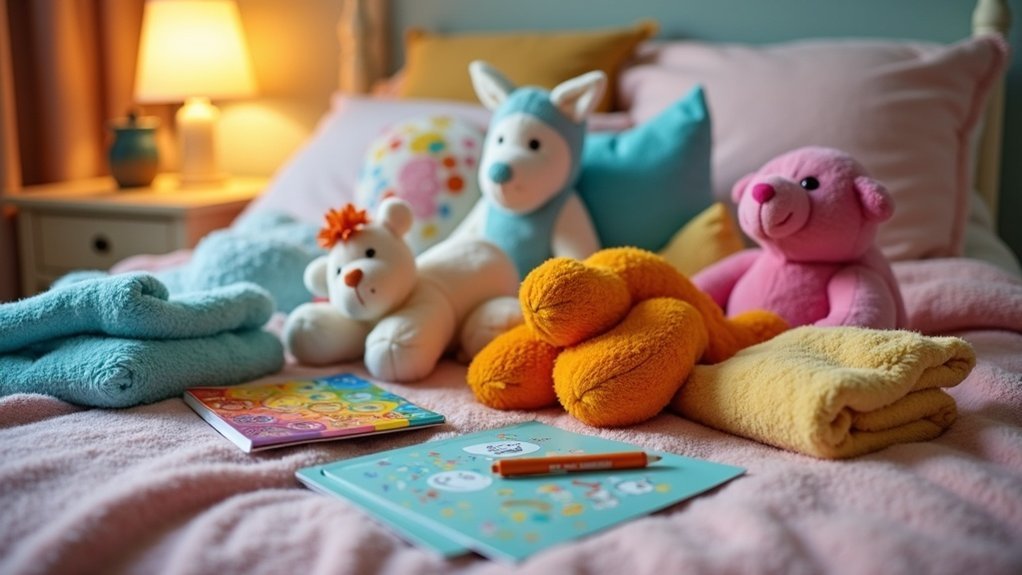
Consider adding sensory items like a stress ball or animal finger puppets to help ease anxiety during stressful times. Art materials, such as colored pencils and a small notebook, can be invaluable for creative expression and distraction during extended stays in a safe location.
Incorporate sensory items and art materials for creative expression to alleviate anxiety in stressful situations.
Tailor distraction tools to their age, like compact handheld toys for younger kids or portable music players for tweens and teens, which can help keep their spirits up.
Additionally, don’t forget personalized items like a favorite stuffed animal or a small treat, which can provide comfort and a sense of normalcy.
These components not only make the kit comforting but also meaningful in a survival context.
Steps to Assemble Your Comfort Kit
As you begin to assemble your survival comfort kit, consider the items that will provide both physical and emotional support during challenging times.
Personalizing the kit with essential tools, non-perishable snacks, and comforting sensory items can enhance morale and resilience.
Once you’ve selected the appropriate components, organize everything in a durable, waterproof container to ensure it remains accessible and protected when you need it most.
Choose Preferred Items
Building a comfort kit for a child during challenging times can also be a valuable exercise in survivalism and prepping. Start by selecting items that promote resilience and self-sufficiency—consider including a sturdy, comforting blanket for warmth, or a multi-tool that they can learn to use responsibly.
Involve your child in choosing items they find enjoyable and useful, ensuring they feel empowered and engaged. Add educational materials that outline basic survival skills and strategies for managing anxiety in stressful situations.
Don’t forget age-appropriate items like compact first aid kits or flashlight keychains. Finally, include a small snack or treat that can be stored for emergencies, creating a positive association with preparedness and motivating your child to embrace the concept of self-reliance.
Personalize for Comfort
Creating a survival comfort kit isn’t just about practicality; it’s also an opportunity to make it truly special for the child. Start by selecting items that engage their senses, like favorite survival-themed toys or books, ensuring the kit resonates with their personal preferences.
Include coping strategies, such as breathing exercises or Coping Plan Cards, empowering the child to manage their emotions during challenging situations.
Personalize the kit with a “special friend,” like a survival-themed stuffed animal, to offer additional comfort.
Collaborate with the child to choose items and decorate the kit, fostering a sense of ownership that helps the child feel secure and supported in any environment.
Assemble and Organize
When you’re ready to assemble your survival comfort kit, start by choosing a sturdy, portable container that suits your needs, like a durable backpack or a compact storage bag. Fill it with essential items that can help ease stress and anxiety during challenging situations.
| Item Type | Purpose | Example |
|---|---|---|
| Survival Tools | Essential for comfort | Multi-tool, whistle |
| Creative Items | Expression of feelings | Journal, colored pencils |
| Distraction Tools | Alleviate anxiety | Card games, portable music device |
Organize everything for easy access, empowering you to utilize the kit effectively when you need support during emergencies or survival scenarios.
Engaging Your Child in the Process
How can you make the process of assembling a survival kit more meaningful for your child? Involve them in the selection of items that resonate with their interests and practical needs.
Encourage personalization by including familiar items, like a favorite flashlight or multi-tool. Use conversation starters to deepen their engagement:
- Ask how each item could be useful in a survival situation.
- Discuss the purpose of each item in their survival kit.
- Allow them to help assemble the kit.
- Celebrate their choices to reinforce ownership and responsibility.
This collaborative approach empowers your child and enhances their understanding of preparedness and survival skills.
Strategies for Using the Comfort Kit Effectively
To make the most of your child’s comfort kit in a survival situation, start by incorporating items that engage their senses and promote calmness, such as stress balls or portable soothing music devices.
Personalizing the kit ensures it addresses their unique needs and interests, making it more effective during challenging times. Encourage your child to express their feelings and preferences, fostering a sense of control and comfort when facing uncertainty.
Additionally, consider including practical items like a small flashlight or whistle, which can enhance both emotional reassurance and preparedness.
Engaging Senses for Comfort
When preparing a comfort kit for survival situations, it’s crucial to consider how engaging a child’s senses can enhance their emotional resilience during stressful times.
Incorporating sensory items can aid in self-soothing and maintaining calm. Here are some suggestions to include:
- Stress balls for tactile engagement, helping to relieve pent-up energy
- Scented markers to stimulate smell, providing a comforting distraction
- Animal finger puppets for interactive storytelling, promoting creativity even in tough circumstances
- Soap bubbles for fun deep breathing exercises, encouraging relaxation techniques
Encourage your child to explore the kit together, allowing them to select items that resonate with their preferences.
This not only strengthens emotional connections but also promotes the effective use of sensory tools for emotional regulation during challenging survival scenarios.
Personalization for Individual Needs
Personalizing a survival kit for your child can make all the difference in how effectively they cope during emergency situations. Include items that resonate with their individual interests, like favorite toys or survival tools suitable for their age.
Utilize coping plan cards, allowing them to choose preferred strategies when feeling overwhelmed in a crisis. Incorporate sensory items that engage their senses—textures, sounds, and visuals—to enhance self-soothing and anxiety management.
Regularly update the kit with new items based on their evolving preferences and skills. Collaborating with your child in assembling the kit fosters ownership and connection, greatly increasing its effectiveness during challenging times.
Personalization is key to their preparedness and comfort in uncertain situations.
Encouraging Emotional Expression
When children face stress or anxiety during challenging times, having a comfort kit can serve as a valuable resource for fostering emotional expression, similar to how survival tools aid in preparedness.
You can guide children in processing their feelings by discussing their preferences and utilizing items from the kit. Here are some strategies to consider:
- Use coping plan cards to identify strategies that help them navigate tough situations.
- Incorporate sensory items like stress balls or finger puppets as tools for self-soothing in uncertain environments.
- Encourage storytelling or drawing to articulate complex emotions, akin to documenting experiences in a survival journal.
- Validate their feelings while they use the kit, reinforcing the importance of emotional expression even in prepper scenarios.
These approaches can help children find comfort and develop their emotional regulation skills, equipping them to handle future challenges with resilience.
Personalizing the Comfort Kit for Greater Impact
How can you make a comfort kit truly special for a child in a survival situation? Personalization is key! Choose items that reflect their interests and needs—favorite colors, toy replicas of survival gear, and items that provide sensory stimulation. Including a durable stuffed animal can offer comfort in uncertain times, while family photos or special notes can evoke a sense of familiarity and stability. Engaging the child in selecting their kit contents empowers them and enhances their coping skills in challenging environments.
Here’s a helpful table to guide your personalization for a survival-focused comfort kit:
| Item Type | Example | Purpose |
|---|---|---|
| Stuffed Animal | Camping Bear | Comfort and companionship |
| Survival Toy | Mini Survival Kit | Learning and preparedness |
| Memory Item | Family Photo | Sense of safety and connection |
| Coping Card | Emergency Strategies | Emotional regulation and resilience |
| Favorite Book | Survival Story | Distraction and relaxation |