To connect batteries in parallel for survivalist and prepping applications, start by ensuring all batteries have the same voltage ratings. Utilize heavy-duty cables to connect the positive terminals together, followed by the negative terminals. This configuration maintains a consistent voltage while increasing the total amp-hour capacity, which is crucial for efficient power use in emergency situations. Regularly monitor for uneven discharge rates or corrosion, as these can compromise your power supply. For those looking to deepen their understanding of this essential system, consider researching additional details and safety precautions to enhance your preparedness.
Key Takeaways
- Select batteries that have the same voltage rating and similar amp-hour capacities to ensure reliable performance during critical situations.
- Connect all positive terminals together and all negative terminals together using heavy-duty cables, which are essential in survival scenarios to maintain power.
- Regularly monitor the charge levels of each battery to ensure balanced discharge rates, as this can be crucial when relying on them for emergency power.
- Inspect connections for corrosion or damage frequently to maintain safe and efficient operation, which is vital for preparedness.
- Create a wiring diagram to clarify connections and facilitate troubleshooting if issues arise, ensuring you are always ready for any situation.
Understanding Parallel Connections
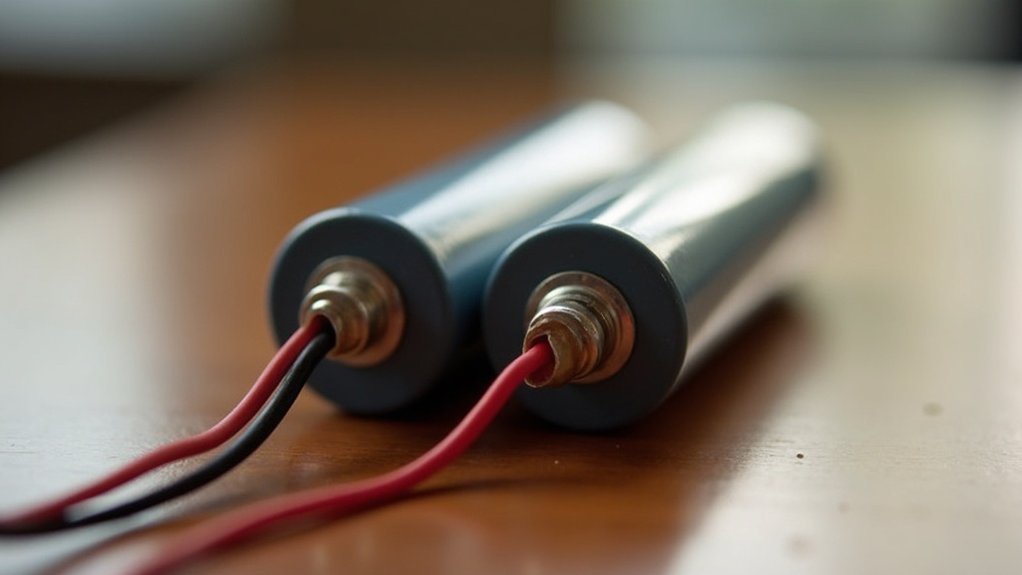
When you connect batteries in parallel for your survivalist setups, you’re effectively linking their positive terminals together and their negative terminals together.
This configuration keeps the voltage consistent while significantly increasing the total amp-hour (AH) capacity. For example, connecting four 12V 100Ah batteries results in a battery bank output of 12V and 400Ah, providing you with more energy for prolonged use during emergencies.
It’s crucial that all batteries have the same voltage rating, although slight differences in capacity can be tolerated. This arrangement promotes charge equalization, balances discharge rates, and can enhance the lifespan of your battery bank.
Always ensure you use heavy-duty cables to handle the higher amperage, ensuring the safe and efficient operation of your power system in any survival scenario.
Benefits of Connecting Batteries in Parallel
Connecting batteries in parallel is a crucial strategy for survivalists and preppers looking to enhance their energy storage capabilities during emergencies. This configuration significantly increases total capacity, allowing for a higher amp-hour rating while maintaining voltage.
For example, connecting four 12V 100Ah batteries in parallel yields a total capacity of 12V 400Ah, which is essential for sustaining power during extended outages or challenging situations.
Connecting four 12V 100Ah batteries in parallel provides a robust 12V 400Ah capacity, crucial for prolonged power needs during emergencies.
This setup is particularly beneficial for high current draws, as it effectively distributes the load across multiple batteries, reducing strain on each individual unit and increasing overall longevity.
Moreover, batteries with varying capacity ratings can work together harmoniously in parallel, promoting charge equalization and extending the life of your power system.
Additionally, connecting batteries in parallel enhances redundancy; should one battery fail, the others will continue to provide power, ensuring a reliable energy supply for your critical applications.
This reliability is vital for preppers who depend on consistent power for food preservation, communication, and other essential survival tasks.
Step-by-Step Guide to Connecting Batteries in Parallel
Establishing a reliable battery bank in parallel is crucial for any survivalist or prepper looking to ensure a dependable power source during emergencies.
Begin by selecting two or more batteries that have matching voltage ratings and amp-hour capacities to ensure optimal performance. Next, connect the positive terminals of all batteries using heavy-duty cables, ensuring that the connections are secure and robust. Following that, connect the negative terminals in the same manner.
This configuration will maintain the voltage while increasing the total amp-hour capacity, allowing for prolonged usage during critical situations.
It’s essential to regularly monitor the batteries, as differences in capacity can lead to uneven discharge rates, which may risk the faster depletion of the smaller capacity battery.
Safety Considerations When Connecting in Parallel
When connecting batteries in parallel for survivalist and prepping applications, prioritizing safety is essential. Here are some crucial safety considerations to keep in mind:
- Voltage Rating: Ensure all batteries have the same voltage rating to avoid overheating and maintain balance, which is particularly important in emergency situations.
- Heavy-Duty Cables: Utilize heavy-duty cables that can handle the expected amperage. This helps minimize resistance and lowers the risk of overheating, ensuring reliability when you need it most.
- Inspect Connections: Regularly examine connections for signs of corrosion or damage. Poor connections can lead to battery failure, which is critical to avoid in survival scenarios.
- Avoid Mixing: Steer clear of mixing batteries with different capacities and ages. This practice will enhance overall performance and longevity, ensuring that your power source is dependable.
Creating a clear wiring diagram can further enhance safety and effectiveness when connecting batteries, making it easier to respond quickly in emergencies.
Troubleshooting Common Issues With Parallel Connections
When creating a parallel battery setup for survival and prepping scenarios, troubleshooting common issues is crucial for ensuring reliable power when you need it most. Always confirm that the batteries have the same voltage rating, as mismatched capacities can lead to over-discharging of weaker batteries, which is particularly important when relying on your setup during emergencies.
Ensure all batteries in your parallel setup have matching voltage ratings to prevent over-discharging and ensure reliable power during emergencies.
Regularly check the state of charge to prevent unexpected failures that could leave you without power in critical situations.
Utilize heavy-duty cables to handle the increased current flow and ensure that each battery is receiving equal voltage. Significant voltage differences can signal loose terminals or faulty connections, which could compromise your entire system.
Additionally, inspect for corrosion on terminals, as this can create resistance and increase the risk of overheating, potentially jeopardizing your energy supply.