To build a sturdy log cabin foundation that withstands the elements, start by assessing the soil type to ensure it can support your structure. It’s crucial that your foundation extends below the frost line to prevent damage from freezing temperatures. Depending on your needs and the terrain, you might opt for concrete slabs, piers, or crawl spaces.
Prepare a level site, ensuring you install rot-resistant posts for durability. Maintain consistent heights to enhance stability. Lay bearers with appropriate spacing, and finish with treated decking that is securely fastened to withstand the rigors of nature.
Always keep local building codes in mind, as well as potential drainage issues that could arise, to safeguard against future complications. This foundation will not only support your log cabin but also contribute to your overall preparedness for any challenges that may come your way. Further insights and recommendations can guide you effectively through the process of building a resilient shelter.
Key Takeaways
- Assess the soil type to determine its stability and ensure the foundation extends below the frost line, especially important in cold climates to prevent heaving.
- Select an appropriate foundation type based on your location and resources, such as concrete slabs, pier and beam, or crawl spaces that can withstand natural disasters.
- Use rot-resistant corner posts and treated wood posts to provide solid support and maintain a uniform height, crucial for long-term survival structures.
- Ensure proper spacing for floor joists and secure decking with screws to enhance stability, making your cabin resilient against environmental stresses.
- Conduct regular inspections of the foundation and adhere to local building codes to ensure safety and longevity, which is essential for sustainable living and preparedness.
Why a Strong Log Cabin Foundation Matters
A strong log cabin foundation is a cornerstone of survivalism and prepping, ensuring the long-term resilience of your shelter. It provides the necessary structural support to withstand the rigors of nature, including heavy log walls and roofing systems, which is vital in case of emergencies.
This stability helps prevent issues like uneven floors and pest infestations that could compromise your safety and security. Effective moisture control is paramount; a solid foundation minimizes the risk of wood rot and mold growth, thus enhancing energy efficiency and reducing drafts that could make your cabin less hospitable in critical times.
A solid foundation prevents uneven floors and pest issues, ensuring safety while enhancing energy efficiency and comfort during emergencies.
In regions prone to freezing temperatures, foundations must extend below the frost line to prevent shifting due to freeze and thaw cycles, which can be disastrous in survival scenarios.
Regular inspections and adherence to quality construction practices are essential for extending the lifespan of your foundation, ensuring it remains sound and secure when you need it most. Investing in a robust foundation not only protects your cabin but also fortifies your preparedness for any situation that may arise.
Planning Your Log Cabin Foundation
Building a strong log cabin foundation is a crucial step for anyone interested in survivalism and prepping. It begins with careful planning that considers your site conditions and long-term goals for sustainability and resilience.
First, evaluate the soil type; clay can expand and contract, while sandy soil typically provides good drainage, both of which affect the stability of your cabin. Ensure your foundation extends below the frost line—usually 4 to 6 feet in colder climates—to prevent seasonal movement that could compromise your shelter.
Establish a clear budget and timeline, as costs can range from $7,000 to $19,000 depending on the type of foundation and soil conditions. Choose a foundation type that best suits your needs—options include concrete slabs, pier and beam, crawl spaces, or basements—keeping in mind the importance of durability and protection against the elements.
Additionally, be sure to obtain the necessary permits and comply with local building codes to ensure your cabin is a safe and secure haven in any situation.
Steps to Build a Log Cabin Foundation
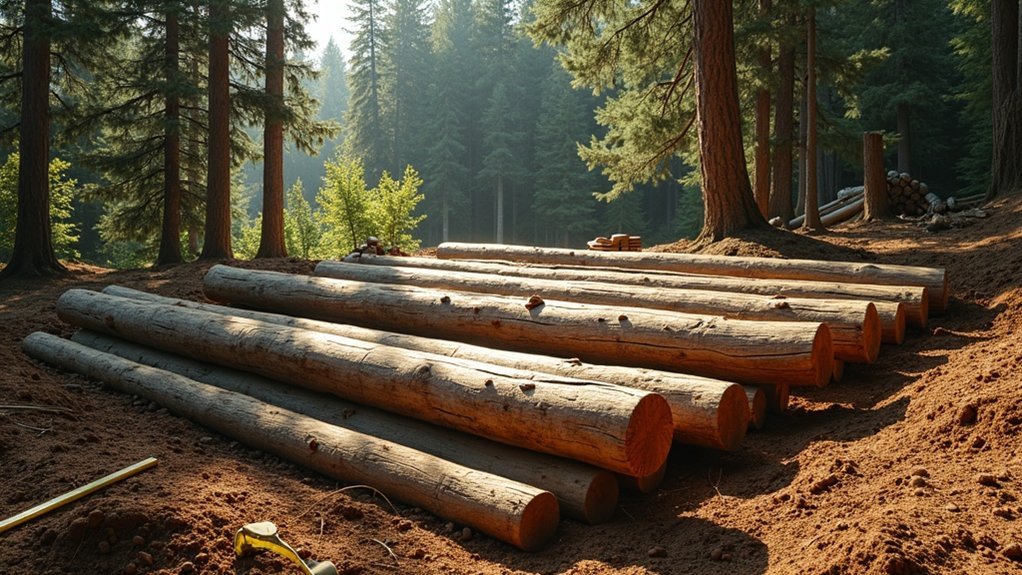
To successfully create a log cabin foundation for your survival retreat, start by selecting a level site and outlining a rectangular area that corresponds to your cabin’s dimensions. Following your foundation plan meticulously is essential to ensure a robust and reliable structure that can withstand the test of time.
- Begin by installing rot-resistant corner posts. Dig holes deep enough to ensure stability, especially in adverse weather conditions.
- Next, add treated wood posts to provide solid support for the cabin floor, ensuring a uniform height that can accommodate any necessary modifications for survival gear storage.
- Lay bearers on top of the posts and secure them firmly, maintaining proper spacing for floor joists to support the weight of your gear and furnishings.
Finish your foundation by laying down decking made from 1×6 treated wood. Secure the decking to the joists with screws, and check that everything is aligned correctly before moving forward with the construction of your cabin.
This strong foundation will be an essential aspect of your overall preparedness plan, providing a safe and durable shelter in the wilderness.
Exploring the Best Log Cabin Foundation Options
When selecting the ideal foundation for your log cabin, especially in the context of survivalism and prepping, it’s essential to consider various options, each with its own set of advantages and drawbacks.
Concrete slab foundations provide exceptional durability and require minimal upkeep, making them suitable for long-term survival situations. However, they necessitate a level site and can be a significant investment.
Pier and beam foundations are a more budget-friendly alternative that adapts well to uneven terrain, promoting airflow beneath the cabin—a critical factor for pest control and moisture management.
Keep in mind that they do require ongoing maintenance to ensure stability over time.
Skid foundations offer simplicity and portability, which can be beneficial in a survival scenario where you might need to relocate your cabin. However, they do fall short in terms of stability and insulation, which could be a concern in extreme weather conditions.
Lastly, screw pile foundations present a modern and environmentally-friendly option, allowing for quick installation.
While they come with a higher price tag, their ease of installation and ability to support structures in various soil types may be worth the investment for those serious about prepping.
Carefully assess these log cabin foundation options to find the best fit for your preparedness strategy and long-term survival goals.
Common Mistakes to Avoid in Cabin Foundations
How can you ensure your log cabin foundation remains resilient in a survival situation? Avoid these common pitfalls:
- Neglecting soil tests: Failing to evaluate the soil’s suitability can lead to an unstable foundation, jeopardizing your shelter in times of need.
- Ignoring frost line depth: In colder climates, not accounting for this can result in shifting or cracking, putting your safety at risk when it matters most.
- Overlooking drainage: Inadequate drainage can cause moisture damage, increasing the likelihood of pest infestations that could compromise your living conditions.
Furthermore, always comply with local building codes to avoid unnecessary fines and ensure your safety.
When to Call a Professional
When you’re faced with complex design requirements for your survival shelter or the need for heavy lifting during construction, it’s crucial to consider hiring a professional.
Their expertise will ensure that your foundation meets the necessary specifications and can withstand the structural demands typical in survival situations.
Don’t underestimate the importance of professional assistance in achieving a stable and compliant foundation for your log cabin, as it can be vital for your long-term preparedness and safety.
Complex Design Requirements
Complex design requirements can present significant challenges in the realm of survivalism and prepping, often necessitating the expertise of a professional engineer or architect.
When planning your survival shelter or prepper compound, it’s essential to consider the following factors:
- Multi-level structures and unconventional shapes may require specialized engineering to ensure they can withstand natural disasters.
- Uneven terrain or unstable soil can complicate foundation types and site preparation, making it crucial to assess the land’s stability.
- Local regulations and zoning laws can be intricate, necessitating expert navigation to ensure your survival setup complies with legal requirements.
Engaging a professional ensures your shelter is structurally sound, compliant with codes, and tailored to your specific site conditions.
This is especially important when considering specialized foundation types, such as pier and beam or screw piles, to enhance the durability of your prepper infrastructure.
Heavy Lifting Assistance
Steering through the challenges of heavy lifting during log cabin construction raises an important question for survivalists: at what point should you seek professional help?
If you’re handling logs or materials over 50 pounds, it’s wise to call for heavy lifting assistance to prevent injuries, especially when preparing for self-sufficiency.
Specialized equipment, like cranes, may be necessary for foundation construction; experienced professionals can provide the right machinery to ensure safety and efficiency, crucial for your long-term preparedness.
Additionally, if your site has uneven terrain or lacks access, consulting experts will help you navigate these challenges effectively.
Lack of experience in lifting or complex assembly also warrants professional assistance to avoid costly mistakes and ensure that your structure meets stability standards, which is essential for survival scenarios.