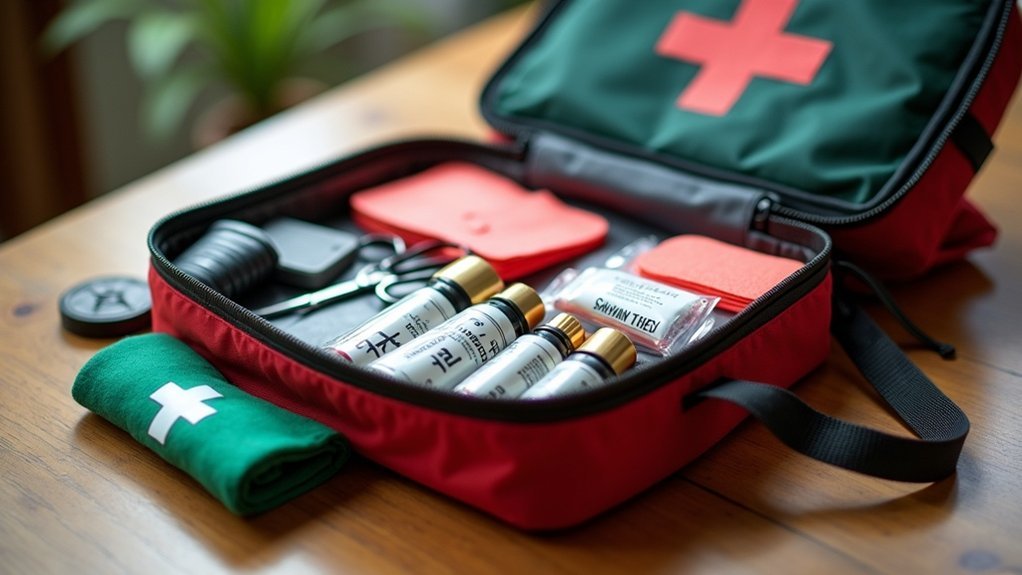
To build a comprehensive first aid kit for survival situations, begin by assessing your specific needs based on your environment and lifestyle. Include essential items such as adhesive bandages, non-latex gloves, and absorbent compresses. Personalize your kit by adding necessary medications and emergency contact information. Depending on your activities, especially if you engage in outdoor survival or prepping, consider incorporating supplies for injuries related to wilderness adventures or self-defense scenarios. It’s crucial to regularly update your kit every few months to ensure it’s ready for any emergency. Keep reading to discover more tips for enhancing your first aid preparedness in a survival context.
Key Takeaways
- Evaluate your environment and family demographics to identify specific survival needs and potential injuries in emergency situations.
- Equip your first aid kit with essential items such as adhesive bandages, gloves, a tourniquet, and an emergency blanket to ensure readiness for various scenarios.
- Personalize your kit with necessary medications, emergency contacts, and medical histories for each family member, ensuring you are prepared for any medical situation that may arise.
- Regularly inspect and replenish supplies, paying close attention to expiration dates and adapting to changing family needs and potential threats.
- Customize the contents of your first aid kit based on planned activities, such as hiking, camping, or other outdoor survival scenarios, to maximize your preparedness for any eventuality.
Assessing Your First Aid Needs
When you start building your survival first aid kit, it’s essential to assess your specific needs based on your environment and potential emergency scenarios.
Identify possible injuries or medical issues that could arise at home, in a bug-out situation, or during outdoor survival activities like hiking or camping.
Take into account the various sizes and demographics of your household; children, elderly individuals, or those with pre-existing conditions may require specialized first aid items.
Evaluate your specific activities, as survival situations or long-term preparedness might necessitate additional supplies, such as trauma kits, splints, or antiseptics.
Regularly review and update your well-stocked first aid kit to ensure it remains relevant to your evolving preparedness needs.
Don’t forget to include personal items like prescribed medications, emergency contact information, and vital medical history for quick reference during emergencies.
Essential Items for Your First Aid Kit
To effectively prepare for emergencies, it’s essential to equip your first aid kit with key items that address common injuries and medical needs, especially in a survival or prepping context. Here’s a list of vital first aid supplies you should pack:
| Item | Quantity | Purpose |
|---|---|---|
| Adhesive bandages | 25 assorted | Protect minor cuts and abrasions |
| Absorbent compress | 2 (5×9 inches) | Treat larger wounds and control bleeding |
| Non-latex gloves | 2 pairs | Prevent cross-contamination |
| Emergency blanket | 1 | Retain body heat in shock or hypothermia |
| Tourniquet | 1 | Control severe bleeding in extremities |
| Sterile gauze pads | 10 | Cover and protect larger wounds from infection |
| Antiseptic wipes | 10 | Clean wounds to reduce the risk of infection |
| Pain relievers | 20 (varied types) | Manage pain and discomfort during emergencies |
Including these items ensures you’re well-prepared for a variety of situations that may arise in survival scenarios!
Special Considerations for Specific Activities
Building on the foundation of essential supplies, it’s crucial to customize your first aid kit based on the specific survival activities you anticipate.
For outdoor adventures such as hiking or camping, ensure your kit includes waterproof dressings and insect bite relief to combat the elements.
If you’re engaging in sports or physical training, incorporate elastic bandages, cold packs, and pain relief medications to address potential injuries.
For boating excursions, include seasickness tablets and a buoyant rescue device for emergencies on the water.
In a survivalist or prepping context, tailor your kit to include burn care supplies and eye injury items, as these injuries can occur in various situations.
Additionally, for travel or bug-out scenarios, remember to pack personal medications and emergency contact numbers, ensuring everything is securely stored to withstand the rigors of movement and avoid damage.
Maintaining and Updating Your Kit
Maintaining your first aid kit is crucial for survival preparedness, as regular checks ensure all supplies are in optimal condition and ready for emergencies.
Regular maintenance of your first aid kit is essential for ensuring preparedness and having effective supplies ready for emergencies.
To keep your kit effective and aligned with your prepping goals, follow these steps:
- Regularly monitor expiration dates on medications, antiseptics, and bandages, and replace any expired items immediately to ensure your kit is always equipped with effective supplies.
- Review your checklist every three to six months to confirm that nothing has been overlooked and that all supplies are available in various sizes to accommodate different situations.
- Update personal items, including medications and emergency contacts, to reflect your family’s current needs and circumstances, ensuring your kit is tailored to your specific survival requirements.
Personalizing Your First Aid Kit
Personalizing your first aid kit is crucial for ensuring it meets the unique needs of your family and the diverse activities you engage in, especially in a survival or prepping context.
Start by including essential medications tailored for each family member, such as allergy treatments or personal prescriptions. Customize the kit’s contents based on your usual survival scenarios; for example, pack waterproof dressings for wilderness expeditions or insect bite relief for extended camping trips.
Additionally, include personal emergency contact information and detailed medical histories for each family member, ensuring quick access during emergencies. Regularly reassess and update your kit to reflect any changes in health needs, seasonal requirements, or specific survival situations.
Always store medications in their original containers for proper identification and to avoid confusion in high-stress situations.