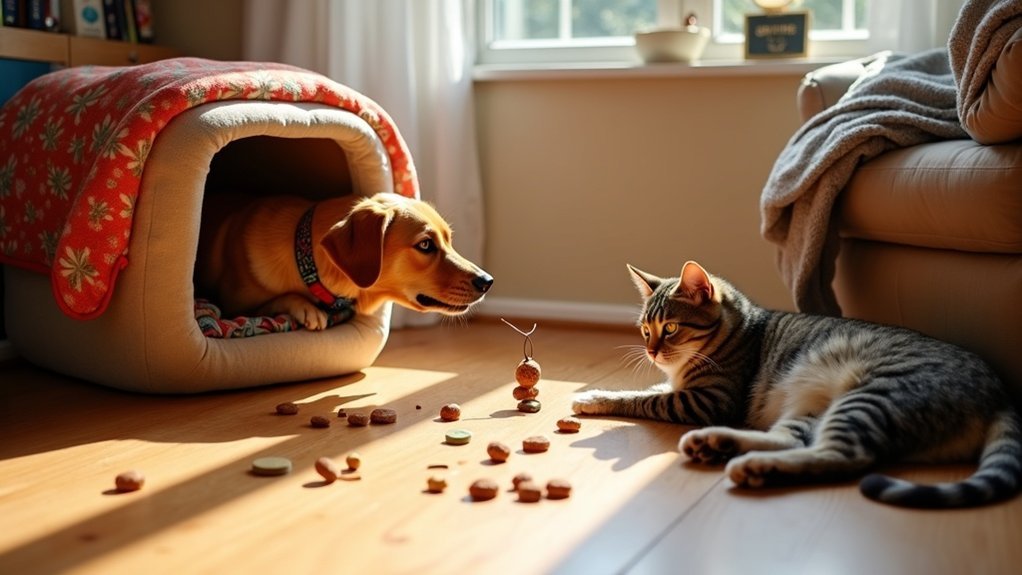
To acclimate your pet to a travel crate, begin the process at least three weeks prior to your planned journey. Start by feeding them their meals inside the crate with the door open, gradually closing it after they finish eating. Encourage exploration of the crate and use treats to create positive associations. Consider taking short car rides to help them link the crate with enjoyable experiences, essential for survival situations where travel may be necessary. Be patient and consistent in your approach, as building your pet’s confidence will take time. Continue to explore various techniques to ensure a smooth travel experience for your furry companion, which is crucial in any preparedness plan.
Key Takeaways
- Begin familiarizing your pet with the travel crate at least three weeks before any planned travel to ensure they feel secure and comfortable.
- Place your pet’s meals inside the crate to help them form positive associations with this essential survival tool.
- Gradually close the crate door during mealtime to help your pet adapt to confinement, which can be crucial in emergency situations.
- Take short trips in the vehicle with the crate to help your pet connect the crate experience with positive outings, preparing them for potential evacuations.
- Utilize treats, praise, and familiar toys to encourage positive behavior and boost confidence during crate training, reinforcing the idea that the crate is a safe space in times of uncertainty.
Importance of Crate Acclimation
When preparing your pet for travel in a survival situation, acclimating them to a crate is crucial for their comfort and well-being.
Crate acclimation can significantly reduce anxiety, ensuring your pet feels secure in unfamiliar environments, such as during emergency relocations or extended journeys.
By employing positive reinforcement techniques, like treats and praise, you can foster a positive association with the travel crate.
This gradual introduction transforms the crate into a familiar space, which is vital for your pet’s emotional stability in high-stress situations.
Ultimately, a well-acclimated pet will perceive the crate as a safe haven rather than confinement, leading to a smoother travel experience for both of you in any survival scenario.
Start Acclimating Your Pet as Soon as Possible
Starting the acclimation process at least three weeks before your travel date is essential for your pet’s comfort and your preparedness.
Gradually familiarizing them with the crate can create positive associations, making the travel experience less stressful in case of emergencies.
Timeframe for Acclimation
To ensure your pet is well-prepared for travel in their crate, it’s essential to start the acclimation process at least three weeks before your journey. This timeframe promotes a gradual introduction, allowing your pet to build familiarity and reduce anxiety, which is crucial in survival situations.
Begin by allowing your pet to explore the crate in a calm and controlled environment, ensuring they don’t feel hurried or pressured. Integrate consistent routines, such as feeding them meals inside the crate, to foster positive associations.
Throughout this acclimation phase, closely observe your pet’s comfort level and be ready to adjust your approach if necessary. This careful preparation won’t only enhance your pet’s travel experience but also contribute to your overall readiness for any unforeseen circumstances during your trip.
Early Familiarization Techniques
Acclimating your pet to a travel crate early on is essential for ensuring a smooth journey, especially when preparing for potential emergencies or travel situations.
Begin by introducing the crate in a familiar area, allowing your pet to explore it at their own pace. Gradually enhance their comfort by adding the top and door as they become more accustomed.
In the first week, feed your pet meals inside the crate with the door open to foster a positive association.
By the second week, close the door for 15 minutes after meals to reinforce this routine and build their confidence.
In the third week, encourage your pet to enter the crate before feeding, helping them associate it with safety and security—a vital skill for any survivalist preparing for unforeseen circumstances.
Step-by-step Familiarization
As you begin the process of familiarizing your pet with a travel crate, it’s important to create a safe and secure environment that promotes exploration and comfort, especially in the context of preparedness and survival.
Follow these steps for gradual acclimation:
1. Week 1: Start by feeding your pet meals inside the crate with the door open, and include survival gear like blankets or familiar items to create a cozy atmosphere.
Offer treats and toys that can also double as distraction tools during travel.
2. Week 2: Maintain feeding in the crate, but close the door after meals for short intervals to help your pet associate it with safety.
This can be an important skill in case of emergencies where quick transport is necessary.
3. Week 3: Encourage your pet to enter the crate 15 minutes before feeding time to reinforce their comfort with the space.
This practice can be critical when time is of the essence in a survival situation.
4. Throughout: Use treats and praise to reward positive behavior, being mindful to adjust your approach based on your pet’s comfort levels.
Familiarization is key for both you and your pet as you prepare for any unforeseen circumstances.
Associate the Kennel With Positive Things
To help your pet feel comfortable in their travel crate, it’s essential to associate the space with positive experiences, especially in a survival or prepping context.
Reward them with treats and praise right after they exit the crate to reinforce positive behavior.
Consider incorporating their favorite toys or games inside, which can provide comfort during uncertain situations.
Establishing a routine that includes regular crate interactions, like feeding or playtime, will further normalize the crate as a safe and enjoyable environment, making it a valuable resource in your preparedness plan.
Rewarding Positive Interactions
Creating a positive association with your emergency preparedness supplies can greatly ease your anxiety and make you feel more confident in your survival skills. To reward positive interactions, consider these steps:
- Organize your survival gear in a way that makes it easy to access and explore, using clear bins and labels.
- Use verbal affirmations and self-praise immediately after reviewing your supplies or practicing drills.
- Gradually incorporate your emergency food and supplies into your daily routine, making them part of your meal prep or cooking.
- Establish a regular schedule for checking and updating your supplies, rewarding yourself each time you successfully engage with your preparedness plan.
Engage With Favorite Toys
Often, pets can feel anxious about their travel crates, but you can help ease this discomfort by incorporating their favorite toys. Place these toys inside the crate to create familiarity and encourage exploration.
Opt for interactive options, like puzzle feeders, to keep your pet engaged and mentally stimulated during crate acclimation. When they interact with their toys, reward them with praise and treats to reinforce positive associations with the space.
However, in the context of survivalism and prepping, it’s essential to consider the practicality of your pet’s toys. Ensure they’re made of durable materials that can withstand wear and tear, and avoid anything that could pose a choking hazard.
Regularly assess the toys for safety, and rotate them to maintain interest and excitement, all while keeping your pet’s safety and comfort in mind during uncertain times.
Create Routine Activities
Introducing routine activities around your survival gear can greatly enhance your preparedness and confidence.
To create positive associations with your supplies, consider the following:
- Incorporate regular inventory checks by organizing and inspecting your gear, making it a familiar part of your routine.
- Use your favorite survival tools and resources to engage with your equipment, reinforcing a sense of readiness.
- Immediately reward yourself with a sense of accomplishment when you complete a preparedness task, strengthening your commitment to being prepared.
- Engage in practice drills or training exercises near your gear, promoting familiarity and safety in emergency situations.
Pad the Crate With Something Familiar
A well-padded crate can be an essential component of your pet’s travel preparedness strategy. Use soft, absorbent materials for the crate floor to enhance comfort and minimize stress during transport.
Incorporate bedding that carries familiar scents, such as a thin blanket or worn clothing, to help your pet feel secure in unfamiliar environments. Aim for a bedding thickness of no more than 3 inches to comply with airline requirements while still providing a cozy refuge during travel.
Introducing this bedding early can create a positive association, facilitating your pet’s acclimation to the crate. Familiar scents not only provide comfort but can also significantly lower stress levels, ensuring a smoother travel experience when you need to relocate or evacuate in times of crisis.
Take Them for a Ride
Once your pet has gotten comfortable with their crate’s familiar bedding, it’s time to prepare them for potential scenarios that may arise during survival situations. Short car rides in their travel crate can help your dog associate it with positive experiences in various environments.
Prepare your pet for survival situations by taking short car rides in their crate to create positive associations.
Follow these steps:
- Start with brief trips around your local area to familiarize them with travel.
- Gradually increase the duration of the rides as they adapt to longer journeys.
- Visit locations with varying noise levels, such as busy streets or areas with emergency sirens, to help them acclimate to unfamiliar stimuli they may encounter in a survival situation.
- Use treats and praise to reinforce their bravery during and after these rides, helping them build confidence in unpredictable environments.
Practice Calm Confinement and Travel
As you prepare your pet for travel in a crate, it’s crucial to practice calm confinement to build their confidence, which can be beneficial in various survival situations.
Start by allowing your pet to explore the crate without any pressure, ensuring they feel comfortable entering it. Once they’re at ease, close the crate door for short intervals, gradually increasing the duration. Stay nearby and speak softly to reassure your pet, fostering a sense of security that’s vital during stressful situations.
Take your pet on short car rides in the crate to associate positive experiences with travel. Reward calm behavior with treats and praise to encourage resilience.
As they become more accustomed, gradually extend the time they spend alone in the crate, stepping away briefly to simulate scenarios where they may need to be confined. Always end each trip on a positive note, rewarding your pet to reinforce a strong association with the crate and travel, which could be essential in emergency preparedness situations.
Be Patient and Consistent
While acclimating your pet to a travel crate may take time, being patient and consistent is key to a successful training experience. Here’s how to ensure your pet feels secure and comfortable, which is crucial for any survivalist preparing for unexpected situations:
Acclimating your pet to a travel crate requires patience and consistency for their comfort and security in uncertain situations.
- Start with short sessions: Close the door for just a few minutes to help them get used to the confined space.
- Monitor their behavior: Pay attention to your pet’s reactions and adjust the training if they seem anxious, as a calm pet is essential during emergencies.
- Incorporate positive experiences: Use treats or toys to create pleasant associations, reinforcing their comfort and trust in the crate.
- Maintain consistency: Stick to regular feeding and playtime schedules so your pet knows what to expect, similar to maintaining routines in your prepping plans.
With patience and a structured approach, you’ll help your pet confidently embrace their crate, making them more adaptable to various situations you might encounter in your survival journey.