For accurate temperature measurement in survival situations in 2025, consider options like K-Type Thermocouple Wire AWG 24 with PVC insulation, which offers reliability and flexibility in the field.
The K-Type with high-temperature fiberglass insulation is ideal for extreme environments, ensuring you can monitor temperatures accurately even in harsh conditions.
Digi-Sense’s J-Type Wire allows for customizable lengths, making it easier to adapt to various setups in your survival gear.
Stranded wires improve connectivity, essential for quick adjustments in critical situations.
Each choice affects accuracy and durability, which are key in prepping.
Continue to explore different thermocouple wire options to ensure you’re fully equipped for any scenario.
K-Type Thermocouple Wire Awg 24 with PVC Insulation
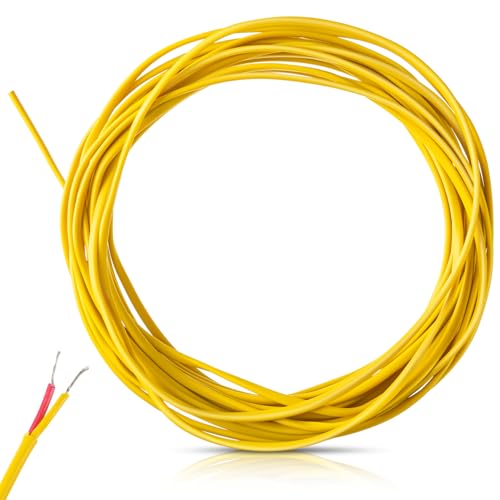
If you’re seeking a dependable solution for accurate temperature measurement in your survival and prepping endeavors, the K-Type Thermocouple Wire AWG 24 with PVC insulation stands out as an excellent choice. This solid wire, designed with 7 strands x 0.2mm, ensures precise readings with an accuracy rating of +/- 2.2°C or +/- 75°F. Its durable construction is built to withstand high temperatures, offering longevity and minimizing the need for frequent replacements—essential for any prepping scenario. Made from grade metal material, it is robust and reliable. Whether you’re manufacturing thermocouples for your off-grid setup or extending wires for various applications, this versatile wire meets a range of needs, making it a smart investment for your temperature measurement requirements.
Best For: Preppers and survivalists looking for accurate temperature measurement solutions for diverse applications.
Pros:
- Durable construction designed to endure high temperatures, ensuring a longer lifespan for critical situations.
- High accuracy rating of +/- 2.2°C or +/- 75°F for dependable temperature readings in various environments.
- Versatile use for manufacturing thermocouples or extending wires in a range of prepping scenarios.
Cons:
- May not be suitable for applications that require extreme temperature limits beyond its specifications.
- Limited to a specific gauge (AWG 24), which may not meet all project requirements in specialized setups.
- PVC insulation may not be ideal for environments exposed to harsh chemicals, which is something to consider in survival situations.
K-Type Thermocouple Wire AWG 24 Solid w. PVC Insulation – 50 Yard roll

The K-Type Thermocouple Wire AWG 24, solid with PVC insulation, is an invaluable tool for survivalists and preppers who prioritize reliable temperature measurement in their various survival setups. Sold in a 50-yard roll, this wire incorporates ANSI color coding for easy identification of connections—red for negative and yellow for positive. Its durable construction from Chromel/Alumel ensures accuracy within +/- 2.2°C or +/- 0.75%, making it a dependable choice for monitoring temperatures in critical situations. With an upper temperature rating of 221°F and a broad operational range from -320°F to +2500°F, it is ideal for crafting thermocouples or extension wires that can withstand extreme environments. Plus, with an impressive average rating of 4.9 stars, you can trust its quality and performance in your prepping endeavors.
Best For: Preppers and survivalists seeking high-quality thermocouple wire for precise temperature measurements in various survival scenarios.
Pros:
- High accuracy with a tolerance of +/- 2.2°C or +/- 0.75%, crucial for monitoring temperature-sensitive supplies.
- Extensive temperature range from -320°F to +2500°F, making it suitable for diverse survival situations.
- ANSI color coding (red for negative, yellow for positive) allows for quick and easy identification of connections, essential during emergencies.
Cons:
- Limited upper temperature rating of 221°F may restrict its use in some high-heat applications.
- The single strand wire design might not be ideal for all prepping needs, depending on the specific use case.
- The weight of 1.88 pounds could be cumbersome for some survival packs or setups.
K-Type Thermocouple Wire AWG 24 Stranded Wire w. PVC Insulation – (10 yd)

K-Type Thermocouple Wire AWG 24 Stranded Wire with PVC Insulation is an essential tool for survivalists and preppers who require consistent and accurate temperature readings in extreme conditions. Offered in 10 yd rolls, this stranded wire boasts a robust construction that enhances flexibility, making it ideal for extended runs in various outdoor scenarios. With an impressive temperature range from -320 to +2500°F, it ensures precision with an accuracy of +/- 2.2°C. The ANSI color-coded PVC insulation not only enhances safety but also resists softening up to 220°F, making it reliable for critical survival applications. Whether you’re connecting to temperature monitoring systems or extending thermocouple signals in your survival setups, this wire provides performance you can count on.
Best For: Survivalists and preppers needing dependable temperature measurements in extreme environments.
Pros:
- Durable stranded construction enhances flexibility and resistance to bending, crucial for rugged outdoor use.
- Wide temperature range from -320 to +2500°F with accuracy of +/- 2.2°C, ideal for various applications.
- ANSI color-coded PVC insulation ensures safety and withstands high temperatures up to 220°F, making it suitable for emergency situations.
Cons:
- Some reports of inconsistent quality and performance issues, which may be a concern in critical survival scenarios.
- Limited to K-type thermocouples, not suitable for other types, potentially restricting versatility.
- The insulation may soften at temperatures exceeding 220°F, which could affect reliability in extreme heat.
K-Type Thermocouple Wire AWG 24 with High Temperature Fiberglass Insulation

Looking for a reliable thermocouple wire that can withstand extreme temperatures for your survival gear? The K-Type Thermocouple Wire AWG 24 with high-temperature fiberglass insulation is an essential tool for your prepping needs. It handles temperatures up to 1292°F (700°C) and offers remarkable accuracy of +/- 2.2°C or +/- 0.75%, ensuring precise measurements crucial for monitoring environmental conditions. This solid wire features ANSI color-coded insulation, with red indicating negative and yellow for positive, simplifying connections during your projects. Sold in convenient 10-yard rolls, it’s ideal for crafting thermocouples or extending existing wires in your survival setup. Upgrade your temperature measurement capabilities with this durable and efficient thermocouple wire, designed for reliability in high-heat environments.
Best For: Preppers and survivalists requiring high-temperature measurement solutions in outdoor or emergency settings.
Pros:
- High temperature rating of up to 1292°F (700°C) ensures reliability in extreme conditions, essential for survival scenarios.
- ANSI color-coded insulation (red for negative, yellow for positive) makes installation and connections straightforward in any situation.
- Comes in convenient 10-yard rolls, making it manageable for various survival projects.
Cons:
- Limited to a maximum temperature of 1292°F, which may not suffice for some extreme applications.
- Solid wire design may not be as flexible as stranded wire options, making installation in tight spaces more challenging.
- Accuracy of +/- 2.2°C or +/- 0.75% may not meet the needs of applications requiring higher precision in critical situations.
Digi-Sense Thermocouple Wire Type-J, 20-Gauge (100-ft Spool)

For those focused on survivalism and prepping, the Digi-Sense Thermocouple Wire Type-J, 20-Gauge (100-ft Spool) is an essential tool for reliable temperature measurement in various survival scenarios. Featuring durable polyvinyl insulation, this wire is built to withstand tough conditions, ensuring you can monitor temperatures accurately whether you’re in the field or at home. The 20-gauge wire is versatile enough for numerous applications, making it a valuable addition to your prepping supplies.
You can select from 100-ft and 1000-ft spools, enabling you to customize the length to fit your specific needs for projects like food preservation or outdoor cooking. Additionally, the option for custom extension cables and various insulation materials, such as FEP and fiberglass, enhances its adaptability for different environments. With the Digi-Sense wire, you’ll have a dependable resource for temperature measurement, critical for effective preparedness.
Best For: Preppers and survivalists seeking reliable and customizable temperature measurement solutions for diverse applications.
Pros:
- Durable polyvinyl insulation protects against environmental challenges, crucial for survival situations.
- Available in multiple lengths (100-ft and 1000-ft) to accommodate various project requirements.
- Customizable options for extension cables and insulation materials enhance practicality and versatility in prepper kits.
Cons:
- Limited to Type-J thermocouple specifications, which may not meet all specific survival needs.
- Higher gauge options could be more suitable for certain high-precision temperature monitoring in critical scenarios.
- Availability of specialized insulation materials may lead to increased lead time for custom orders, which is something to consider in urgent prepping situations.
uxcell 2mm Dia K-Type Thermocouple Temperature Sensor Probe Cable (32M Long)
Product not found or API error.
When you’re in need of precise temperature monitoring for survival situations, the uxcell 2mm Dia K-Type Thermocouple Temperature Sensor Probe Cable stands out with its formidable 32-meter length. Made from robust metal, this cable excels in high-temperature conditions, making it ideal for applications in outdoor cooking, emergency heating systems, and other survival gear. With reliable readings within a couple of degrees, you can depend on its accuracy during critical scenarios. Keep in mind that it features non-standard color coding—red for positive and black for negative, which may require some attention during setup. While a few users have mentioned challenges with the prickly braid, the consensus is that it’s a quality cable at a fair price for those prepping for the unexpected.
Best For: Preppers and survival enthusiasts looking for reliable temperature measurements in high-stress environments like outdoor cooking or emergency heating.
Pros:
- Provides accurate temperature readings within a couple of degrees, essential for survival scenarios.
- Durable construction with stainless braided shielding designed to withstand high temperatures.
- The impressive 32-meter length offers versatility for various survival applications.
Cons:
- Non-standard color coding might lead to confusion during installation.
- Some users find the prickly outer braid challenging when working with the cable and stripping the metal sleeve.
- Delivery times can fluctuate, with occasional delays noted.
J-Type Thermocouple Wire AWG 24 with Braided Fiberglass Insulation (10 Yard)

Survivalists and preppers seeking dependable temperature measurement tools will appreciate the J-Type Thermocouple Wire AWG 24 with Braided Fiberglass Insulation. This robust wire is designed with braided fiberglass insulation, providing exceptional durability and safeguarding against high temperatures up to 752°F (400°C). With a standard accuracy of +/- 2.2°C, it’s ideal for creating thermocouples or extension wires crucial for monitoring environmental conditions. Each unit is available in 10-yard increments, making it easy to tailor to your specific survival needs. The ANSI color-coded scheme—red for negative and white for positive—streamlines installation, minimizing the risk of errors. This thermocouple wire is an essential tool for anyone focused on precise temperature measurement and control in challenging situations.
Best For: Preppers and survivalists requiring reliable and accurate temperature measurement solutions in high-temperature scenarios.
Pros:
- Durable braided fiberglass insulation offers excellent protection against high temperatures, vital for survival applications.
- Standard accuracy of +/- 2.2°C ensures consistent performance for monitoring critical temperature changes.
- ANSI color-coded wires simplify installation, helping to reduce mistakes in high-pressure situations.
Cons:
- Limited to a maximum temperature of 752°F (400°C), which may not be sufficient for extreme heat applications.
- Sold in 10-yard increments, potentially resulting in excess wire for smaller projects, which could be a consideration in resource management.
- As a single strand wire, it may be less flexible than multi-strand options, which could pose challenges during installation in tight spaces.
Factors to Consider When Choosing Thermocouple Wire
When selecting thermocouple wire for survival and prepping scenarios, it’s crucial to consider several important factors to ensure reliable temperature measurement in various situations. First, determine the type of wire that best fits your needs, keeping in mind the temperature range you may encounter in survival settings. Next, evaluate the insulation material to ensure it can withstand the elements and potential wear and tear in the field. Additionally, consider the gauge and stranding options for flexibility and durability, as well as the accuracy and calibration standards to ensure dependable readings during critical moments. Being prepared means having the right tools that can withstand the challenges of survival.
Wire Type Selection
Selecting the right thermocouple wire is crucial for survivalists and preppers who rely on accurate temperature measurements for various applications, such as food preservation, cooking, or monitoring environmental conditions. First, consider the temperature range; different thermocouple types, like K-type and J-type, have unique maximum ratings suitable for different scenarios, whether you’re heating food or checking the temperature of stored supplies.
Next, think about the insulation material—PVC provides basic protection, which can be useful in general situations, while high-temperature fiberglass is more suitable for extreme conditions, such as cooking over an open flame or in high-heat environments. Assess the wire gauge as well; AWG sizes like 24 can impact flexibility and current-carrying capacity, which is important if you’re using the wire in portable or makeshift applications.
Pay attention to ANSI color coding to ensure proper connections and avoid errors—red typically indicates negative for K-type, while yellow represents positive. Finally, check the accuracy rating, usually around +/- 2.2°C or +/- 0.75%, to confirm it meets your application’s precision needs, especially when you’re relying on accurate readings to make critical decisions in survival situations.
Temperature Range Requirements
Understanding the temperature range requirements of thermocouple wire is essential for ensuring accurate and reliable measurements in survival and prepping scenarios. Different thermocouple types have distinct operating ranges; for example, K-Type thermocouples function from -320°F to +2500°F (-210°C to +1370°C), making them ideal for high-temperature survival settings such as fire management or cooking in extreme conditions. It’s crucial that the wire’s temperature rating exceeds your maximum expected temperature to prevent insulation failures or inaccurate readings that could compromise your safety. Insulation material also plays a vital role; PVC limits you to 221°F (105°C), while fiberglass can handle up to 1292°F (700°C). For extreme environments, high-temperature fiberglass insulation offers superior performance. Always select a thermocouple wire that maintains accuracy throughout the necessary temperature range to ensure optimal results during your preparedness activities.
Insulation Material Options
Choosing the right insulation material for thermocouple wire is essential for ensuring accuracy in temperature measurements, especially in survival and prepping scenarios. Depending on your specific needs and environment, you can choose from PVC, fiberglass, or high-temperature fiberglass. PVC is suitable for lower temperature situations, softening at around 220°F (105°C) and performing well up to 221°F. However, if you’re preparing for high-temperature conditions, fiberglass is a more suitable option, with some types rated up to 1292°F (700°C), making it ideal for applications like kilns or industrial settings where you might need to monitor extreme heat. High-temperature fiberglass provides both durability and flexibility, ensuring reliable readings in tough conditions you might encounter in survival situations. Ultimately, your choice of insulation will not only impact the accuracy of your temperature measurements but also the longevity of your thermocouple wire, so choose wisely based on your specific survival and prepping needs.
Gauge and Stranding Considerations
When it comes to thermocouple wire in survival and prepping scenarios, the gauge and stranding are crucial for ensuring reliable temperature measurements. The wire gauge, measured in AWG, affects resistance and current capacity; lower gauge numbers indicate thicker wires that can handle higher currents, which is vital when relying on makeshift heating or cooking solutions. Stranded wire, composed of multiple smaller strands, offers the flexibility and durability needed for applications that may involve movement or tight spaces, such as in a portable survival kit. On the other hand, solid wire is more rigid and easier to connect in stationary setups, making it suitable for fixed installations but may not hold up as well in dynamic environments. When choosing between stranded and solid wire, consider the specific temperature range and your unique prepping requirements, as these factors can significantly impact the accuracy and reliability of your temperature measurements, especially in survival situations where precise monitoring is essential.
Accuracy and Calibration Standards
Accurate temperature measurement is crucial for survivalists and preppers who rely on precise readings for food preservation, medical needs, and environmental monitoring. The effectiveness of thermocouples, common tools for measuring temperature, depends on both calibration standards and the quality of thermocouple wire. Typically, thermocouple accuracy is rated at +/- 2.2°C or +/- 0.75%, which is important for ensuring reliable readings in various survival situations. Calibration standards from reputable organizations, like the American National Standards Institute (ANSI), help ensure consistent performance, which is vital for maintaining the safety and quality of stored food and supplies.
Different types of thermocouples, such as K-type and J-type, have varying levels of accuracy based on their materials and construction, making it essential to choose the right type for the specific temperature ranges you expect to encounter. Regular calibration against known temperature standards is necessary, especially in scenarios where precise temperature control is critical, like in food storage or medical applications. Additionally, be mindful of environmental factors—extreme temperatures and exposure to corrosive substances can impact performance. Selecting the appropriate materials and insulation type is vital for achieving reliable results, ensuring that you are well-prepared for any situation.
Application Suitability Guidelines
What factors should you consider to confirm you select the right thermocouple wire for your survival and prepping needs? First, evaluate the temperature range required for your specific application, such as monitoring temperature in a food storage area or during outdoor cooking. Different wire types, like K-type, operate within specific limits, so ensure it fits your requirements. Next, consider the wire gauge; thinner gauges like AWG 24 offer flexibility but may have higher resistance, which could affect performance in critical situations. The insulation material is also crucial; PVC works for lower temperatures and may be suitable for indoor use, while fiberglass is more resilient in high-heat environments, perfect for outdoor survival scenarios. Additionally, match the accuracy rating—around +/- 2.2°C or +/- 0.75%—to your measurement precision needs, especially when tracking temperatures for food safety or equipment performance. Lastly, consider the construction type; stranded wires provide better flexibility for longer runs, which is beneficial for complex setups, such as when wiring multiple sensors in a survival shelter or off-grid living arrangement.
Durability and Longevity Factors
Choosing the right thermocouple wire is crucial for ensuring its durability and longevity, especially in survival situations and prepping environments. The quality of materials, such as using grade metal, significantly impacts the wire’s robustness. Opting for thermocouple wires designed to withstand high temperatures can minimize replacement frequency, thereby enhancing lifespan during critical scenarios. When considering construction type, stranded wires offer superior flexibility and resistance to bending, making them an excellent choice for durability in the field. Additionally, the type of insulation is important; while PVC may be adequate for lower temperatures, high-temperature fiberglass is essential for extreme conditions encountered during survival activities. An accuracy rating of +/- 2.2°C or +/- 0.75% ensures reliable performance, reducing the need for frequent replacements and maintaining measurement integrity over time. Prioritizing these factors will lead to long-lasting thermocouple wires, essential for any serious prepper’s toolkit.