If you’re preparing for emergencies and looking for reliable power sources, consider the best 12V lithium iron phosphate batteries.
The Dyness 12V 100Ah Bluetooth model is an excellent choice for RVs during travel or extended stay, while the GOLDENMATE 12V 50Ah is ideal for solar power setups in remote locations.
The Eiiev and Dumfume models boast impressive cycle lives, ensuring long-lasting performance when you need it most.
For significant energy storage, the powerful 12V 300Ah versions stand out.
Always assess safety features and charging requirements to ensure your power supply is dependable in any situation.
Stay tuned to learn more about which battery aligns best with your survival needs.
12V 100Ah Bluetooth LiFePO4 Battery for RV and Off-Grid Use
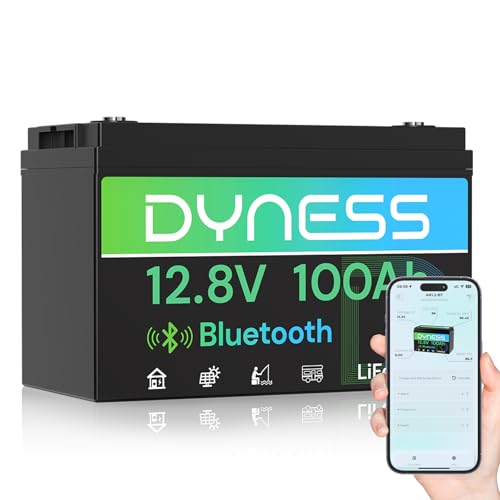
If you’re preparing for a self-sufficient lifestyle or need a dependable energy source for your RV or off-grid endeavors, the Dyness 12V 100Ah Bluetooth LiFePO4 Battery is an exceptional choice. This deep cycle battery boasts an impressive 1280Wh capacity and can last up to six times longer than conventional lead-acid batteries, making it ideal for survivalist setups. With its integrated 100A BMS, you’ll benefit from robust protection against overcharging and overheating, ensuring safety during use. Additionally, its low-temperature protection feature makes it suitable for a variety of environmental conditions. Maintenance is straightforward, and the battery can be expanded effortlessly by connecting up to 16 units. Equip yourself with reliable energy for your survival needs with this remarkable solution.
Best For: Preppers seeking a trustworthy and durable power source for RV camping, solar energy systems for home resilience, and off-grid living.
Pros:
- Integrated 100A BMS offers comprehensive safety features against overcharging and overheating.
- Exceptional lifespan of up to 10 years with over 4000 deep cycles, significantly surpassing lead-acid batteries.
- Simple maintenance with no complex operations needed, and expandable up to 20.48kWh by connecting multiple batteries for increased capacity.
Cons:
- Some users have reported challenges with charge retention, which could impact long-term reliability.
- Customer feedback indicates that return policies may not fully meet expectations.
- Initial cost is higher than traditional lead-acid batteries, necessitating a larger upfront investment for preparedness.
GOLDENMATE 12V 50Ah LiFePO4 Battery

The GOLDENMATE 12V 50Ah LiFePO4 Battery is an essential asset for survivalists and preppers looking for a dependable and enduring power source to support their energy needs, whether for solar setups, RVs, or emergency lighting solutions. Designed for long-term use, this battery boasts an impressive 10-year lifespan and more than 5000 charge cycles, delivering a maximum capacity of 640Wh. Its built-in 50A BMS provides crucial safety against overcharging and short circuits, ensuring that your power source remains reliable in critical situations. With a low self-discharge rate, it allows for hassle-free storage for up to a year, making it ideal for those who prepare for the unexpected. Furthermore, its environmentally friendly design aligns with sustainable living practices. Experience trustworthy power and performance with the GOLDENMATE battery, perfect for all your survival applications.
Best For: Preppers and survivalists seeking a durable, lightweight battery for solar applications, RVs, marine use, or emergency backup power.
Pros:
- Long lifespan of 10 years and over 5000 cycles, greatly surpassing traditional lead-acid batteries, making it a smart investment for long-term preparedness.
- Lightweight design (only 14.10 pounds) facilitates easy transportation and installation, crucial for mobile survival setups.
- Built-in 50A BMS ensures safety and reliability, protecting against various electrical issues that could compromise your energy supply.
Cons:
- Some users have reported concerns regarding durability and quality control, which could affect long-term reliability.
- Customer support experiences may vary, with some customers encountering slow response times when seeking assistance.
- Adhering to proper storage guidelines is essential to prevent potential damage during storage, ensuring the battery is ready when you need it most.
12V 100Ah Lithium Iron Phosphate Battery

For survivalists and preppers looking for a dependable power source, the Eiiev 12V 100Ah Lithium Iron Phosphate Battery is an outstanding option. With an impressive cycle life of 4,000 to 15,000 cycles, this battery provides an extended lifespan that significantly exceeds that of traditional lead-acid batteries. Weighing only 24.25 lbs and measuring 6.9D x 13.1W x 8.7H, it is not only easy to install but also highly portable, making it ideal for off-grid setups and emergency preparedness. Its built-in Battery Management System ensures safety by protecting against overcharging and short circuits, giving you peace of mind during critical situations. Additionally, with 95% discharge efficiency, it delivers reliable power for essential appliances, tools, and energy needs during extended outages.
Best For: Survivalists and preppers seeking a lightweight, long-lasting, and efficient power solution for emergency situations.
Pros:
- High cycle life of 4,000 to 15,000 cycles, significantly outlasting lead-acid batteries, ensuring long-term reliability.
- Lightweight design at only 24.25 lbs makes transportation and installation hassle-free.
- Built-in Battery Management System offers safety and dependability during operation, crucial for emergency power needs.
Cons:
- Requires a specific charger (14.6V 20A), which may not be easily accessible for all users.
- Higher initial cost compared to traditional lead-acid batteries, which may be a consideration for budget-conscious preppers.
- Limited to connecting a maximum of 4 batteries in parallel and 4 in series for expansion, which may restrict scalability for larger setups.
12V 300Ah Lithium LiFePO4 Battery for Solar Energy Storage
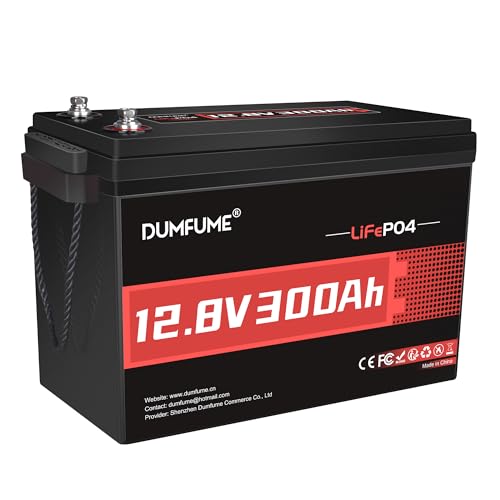
Designed specifically for solar energy storage, the Dumfume 12V 300Ah Lithium LiFePO4 Battery is an exceptional choice for survivalists and preppers seeking reliable power sources. With a robust 3840Wh capacity and a 200A BMS, this battery ensures dependable energy for your off-grid living, emergency backup, or outdoor expeditions. Weighing in at just 57 lbs, it combines compactness and lightweight design, making it significantly easier to transport and install compared to traditional lead-acid batteries. Its impressive lifespan of up to 10 years offers up to 15,000 cycles at 60% depth of discharge, providing you with long-term energy security. Additionally, built-in safety features keep you protected, making it a wise investment for sustainable preparedness.
Best For: Survivalists and preppers looking for a reliable, long-lasting energy storage solution for solar power, off-grid setups, and emergency situations.
Pros:
- Lightweight and compact design for easy transport and installation, ideal for mobile prepping needs.
- Exceptional lifespan of up to 10 years with high cycle counts, leading to long-term cost savings and reliability.
- Comprehensive safety features, including a built-in BMS to guard against various electrical issues, ensuring safe operation during critical times.
Cons:
- Initial investment cost may be higher compared to traditional lead-acid batteries, a consideration for budget-conscious preppers.
- Requires regular maintenance, such as charging/discharging every 6 months to prevent damage, which may not suit all prepper lifestyles.
- Voltage and current can deviate by 1%-5%, potentially impacting performance in specialized applications where precision is crucial.
2 Pack 12V 300Ah LiFePO4 Battery with 200A BMS

If you’re seeking a dependable and efficient power source for your deep cycle applications while preparing for any situation, the Pack 12V 300Ah LiFePO4 Battery with a 200A BMS is an outstanding choice. With a capacity of 3840Wh and over 6000 cycles at 80% depth of discharge, this battery is ideal for RVs, camping, marine use, and solar energy storage during emergencies. Its lightweight design offers a higher energy density compared to traditional lead-acid batteries, making it easier to transport and integrate into your prepping setup. Safety features such as overcharge and short circuit protection ensure you can rely on it when it matters most. Additionally, its IP67 waterproof design makes it resilient for outdoor adventures and survival situations. Enjoy excellent customer support and a 30-day return guarantee for added peace of mind.
Best For: Preppers and survivalists looking for a lightweight, high-capacity battery solution for RV, camping, marine, and solar energy storage applications.
Pros:
- Higher energy density and significantly lighter than conventional lead-acid batteries, making it easier to carry in a survival kit.
- Long lifespan with over 6000 cycles at 80% depth of discharge, ensuring reliability during extended outages.
- IP67 waterproof rating guarantees durability in extreme weather conditions, perfect for unpredictable environments.
Cons:
- Not suitable for starting gasoline engines, limiting its use for certain applications.
- Initial cost may be higher compared to lead-acid alternatives, requiring upfront investment for long-term benefits.
- Requires a compatible charger for optimal performance, so ensure you have the right equipment on hand.
12V 300Ah LiFePO4 Battery with Built-in BMS

The 12V 300Ah LiFePO4 Battery with Built-in BMS is an outstanding choice for survivalists and preppers looking for reliable, long-lasting power for off-grid setups, emergency preparedness, and recreational vehicles. With a capacity of 3840Wh and a lifespan of 15 years, it far outlasts traditional lead-acid batteries, making it a smart investment for those who prioritize self-sufficiency. The advanced 200A BMS ensures safety by protecting against overcharge, over-discharge, and short circuits, essential features for any prepper’s power supply. Weighing 56.2 pounds, it conforms to the compact Group 31 standard, making it suitable for various applications such as RVs, solar systems, and emergency backup. Additionally, you can connect up to four batteries to significantly increase your power capacity for extended off-grid living. Experience exceptional performance in diverse conditions, ensuring you are prepared for whatever comes your way!
Best For: Those seeking a high-capacity, long-lasting battery solution for off-grid systems, emergency preparedness, and recreational applications.
Pros:
- Long lifespan: Lasts up to 15 years, far exceeding the lifespan of traditional lead-acid batteries, perfect for long-term preparedness.
- Advanced safety features: Built-in 200A BMS protects against overcharges, over-discharges, and short circuits, ensuring peace of mind in critical situations.
- Versatile connectivity: Can be connected in series or parallel for expanded capacity, up to 1200Ah, allowing for greater energy independence.
Cons:
- Weight: At 56.2 pounds, it may be heavier than some other battery options, potentially complicating installation in certain settings.
- Performance issues: Some users have reported performance inconsistencies, though customer support is available for troubleshooting, which is crucial in survival scenarios.
- Higher initial cost: While competitively priced against lead-acid batteries, the upfront cost may still be a consideration for some preppers.
Lithium 12V 50Ah LiFePO4 Rechargeable Battery
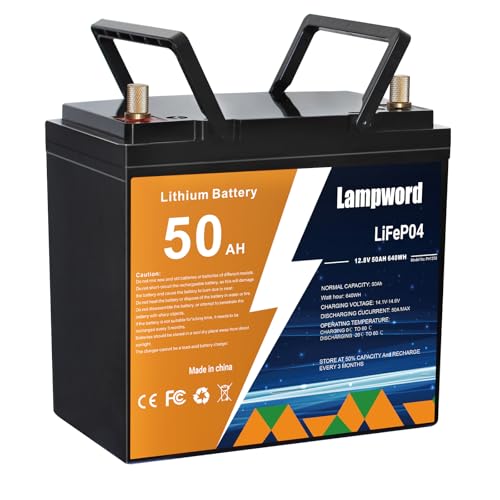
For survivalists and preppers seeking dependable power solutions, the Lithium 12V 50Ah LiFePO4 Rechargeable Battery emerges as an exceptional option. With a robust capacity of 640Wh and a lightweight design of just 11.55 lbs, it’s perfectly suited for outdoor survival scenarios, emergency preparedness, and various electrical applications. This battery features an impressive cycle life of 4,000 to 15,000 charges, guaranteeing long-lasting performance when you need it most. Its integrated Battery Management System enhances safety, while the waterproof grade IP65 ensures it can withstand harsh environmental conditions. With a 4.5-star customer rating, you’ll find its efficiency and durability invaluable for all your power requirements.
Best For: Survivalists, preppers, outdoor enthusiasts, and anyone in need of a reliable and lightweight backup power source for emergencies.
Pros:
- High cycle life of 4,000 to 15,000 charges provides long-term reliability for survival situations.
- Built-in Battery Management System offers multiple safety features, ensuring peace of mind in critical moments.
- Lightweight and compact design makes it easy to transport for various survival applications.
Cons:
- Higher initial cost compared to traditional lead-acid batteries, which may be a consideration for budget-conscious preppers.
- Requires specific charging voltage and current, potentially necessitating additional equipment for optimal use.
- Limited performance in extremely low temperatures below 32°F (0°C), which could affect reliability in cold environments.
Factors to Consider When Choosing Lithium Iron Phosphate Batteries 12V
When selecting a 12V lithium iron phosphate battery for your survival and prepping needs, it’s crucial to consider several key factors. Battery capacity and size are vital, as they determine how much energy you can store for emergencies. Lifespan is another important aspect; a longer-lasting battery ensures you have reliable power when you need it most. Weight can also impact your mobility and storage options during a crisis. Moreover, don’t ignore safety features and charging compatibility—these will help ensure that your battery can be safely integrated into your survival setup and recharged efficiently in various situations. Make informed choices to enhance your preparedness.
Battery Capacity and Size
Choosing the right battery capacity and size for your lithium iron phosphate (LiFePO4) battery is crucial for ensuring reliability in survival situations. Battery capacity, measured in amp-hours (Ah), reflects how much energy the battery can store, which is vital for powering essential equipment. For instance, a 12V 100Ah battery can supply 100 amps for one hour or 50 amps for two hours, making it important for managing power consumption during emergencies.
Size and weight are also significant considerations; LiFePO4 batteries are lighter and more compact than traditional lead-acid batteries, facilitating both installation and transport, which is essential when preparing for unpredictable scenarios. Assess your specific energy needs carefully; larger capacity batteries, such as 300Ah, provide extended runtimes but require more storage space, which could be a limiting factor in your prepping setup. It’s essential to align the battery capacity with your power requirements to ensure peak performance and avoid the pitfalls of under-sizing or incurring unnecessary costs from over-sizing. Proper planning and selection of your battery system can be a game-changer in maintaining power during critical times.
Lifespan and Cycle Count
When considering lithium iron phosphate (LiFePO4) batteries for your survival and prepping needs, understanding their lifespan and cycle count is crucial. These batteries are designed to last around 10 years, significantly outlasting traditional lead-acid batteries, which typically have a lifespan of only about 3 years. With an impressive cycle count of over 4000 cycles at 100% depth of discharge (DOD) and up to 15,000 cycles at 60% DOD, LiFePO4 batteries provide a durable and reliable power source for your preparedness plans.
This longevity translates to a more cost-effective solution in the long run, which is essential when preparing for emergencies. Additionally, the quality of the cells plays a vital role in their performance; opting for premium A+ grade cells can enhance energy density and overall efficiency. To maximize the lifespan of your batteries, make it a habit to recharge them regularly and ensure they remain within their optimal temperature range. By prioritizing these factors, you can ensure a dependable power supply for your survival needs for years to come.
Weight and Portability
Understanding the lifespan and cycle count of lithium iron phosphate (LiFePO4) batteries is just the beginning; their weight and portability also play a crucial role in prepping and survival situations. LiFePO4 batteries are considerably lighter than traditional lead-acid batteries, often weighing only one-third as much, which is essential when you need to conserve energy and resources in an emergency. For example, a 12V 50Ah LiFePO4 battery can weigh as little as 11.55 lbs, making it easier to transport and install in various survival setups. Their compact size, typically around 9.06 x 5.51 x 8.07 inches, allows for integration into tight spaces within your bug-out vehicle or emergency kits. Moreover, many models support connections in parallel or series without adding significant weight, enhancing versatility. This reduced weight not only improves efficiency but also makes LiFePO4 batteries an ideal choice for portable power solutions in prepper scenarios where mobility is paramount.
Safety Features and Protection
When choosing a lithium iron phosphate (LiFePO4) battery for your survival and prepping needs, prioritizing safety features is essential for peace of mind in any situation. Look for batteries with a built-in Battery Management System (BMS) that offers protection against overcharging, over-discharging, over-current, overheating, and short circuits, ensuring safe operation during emergencies. Additionally, consider low-temperature protection to prevent charging below 32°F (0°C) and to cut off power at -4°F (-20°C), safeguarding the cells in extreme cold conditions that may arise during a survival scenario.
Always check for certifications such as SDS, UN38.3, FCC, CE, and ROHS, which indicate compliance with safety standards and reliability for long-term use. Evaluate the self-discharge rate for hassle-free storage, as you may need the battery to be ready when you need it most. Furthermore, verify that the battery’s casing is made from high-strength, impact-resistant materials for added durability, ensuring it can withstand the rigors of a survivalist lifestyle.
Charging Requirements and Compatibility
When selecting the right lithium iron phosphate (LiFePO4) battery for your survival gear, it’s crucial to understand its charging requirements and compatibility. These batteries typically require specific charging voltages, such as 14.6V, and using standard lead-acid chargers can lead to damage, compromising your preparedness plans. To maintain battery health and prolong lifespan, it’s advisable to charge LiFePO4 batteries at a rate of 0.2C. Many of these batteries come equipped with built-in Battery Management Systems (BMS) that protect against overcharging, over-discharging, and short circuits—essential features for reliable energy storage in emergency situations. Additionally, some batteries include low-temperature protection, disconnecting charging below 32°F (0°C) to prevent damage in colder environments. If you intend to connect multiple LiFePO4 batteries in parallel or series for enhanced power storage, ensure they are of the same type and capacity to ensure consistent charging and performance throughout your survival setup.
Expansion and Connectivity Options
Expanding your lithium iron phosphate (LiFePO4) battery setup can significantly bolster your energy resources, which is crucial for off-grid living or emergency preparedness. Many LiFePO4 batteries offer various expansion options, enabling you to connect multiple batteries in series or parallel configurations. For example, you can achieve up to 20.48kWh with 16 batteries, providing a robust energy reserve for your survival needs.
Typically, you can connect up to 4 batteries in series to attain higher voltage outputs (like 51.2V), which is particularly useful for running larger appliances. Meanwhile, connecting up to 4 batteries in parallel enhances your amp-hour capacity, potentially reaching up to 1200Ah. It’s vital to use batteries of the same type and capacity to ensure balanced performance and reliability during critical situations. Moreover, many models come equipped with built-in Battery Management Systems (BMS) that ensure safe connectivity, preventing issues such as overcharging or over-discharging when linking multiple units, thus offering peace of mind as you prepare for any eventuality.
Environmental Impact Considerations
When considering your options for energy storage in a survival or prepping context, it’s crucial to evaluate the environmental impact of lithium iron phosphate (LiFePO4) batteries compared to traditional lead-acid alternatives. LiFePO4 batteries offer a longer lifespan of up to 15 years and can endure over 4000 cycles, which means less waste and reduced resource consumption in the long run. Their recycling process is more efficient as well, enabling the recovery of valuable materials without producing harmful byproducts.
One of the significant advantages of LiFePO4 batteries is that they do not contain toxic heavy metals, making them safer for the environment and human health—important considerations for any prepping scenario. Furthermore, the production of these batteries generates lower greenhouse gas emissions, which helps reduce your carbon footprint while preparing for a sustainable future. By maximizing energy density and efficiency, LiFePO4 batteries are well-suited for renewable energy applications, enhancing your self-sufficiency and decreasing reliance on fossil fuels, an essential factor for those focused on long-term preparedness.
Warranty and Technical Support
When investing in a Lithium Iron Phosphate (LiFePO4) battery for your survival and prepping needs, understanding the warranty and technical support options is crucial for ensuring a reliable energy source during emergencies. Many manufacturers offer warranties ranging from 10 to 15 years, which is a strong indicator of long-term reliability when you’re relying on these batteries for backup power. Prioritize brands that provide comprehensive warranty coverage, including replacements or refunds for defective units, as this will give you peace of mind in critical situations.
Technical support is equally important; some companies respond within 24 hours for troubleshooting and warranty claims, which can be invaluable when you need quick assistance. Look for manufacturers that emphasize lifetime technical support, as this can be crucial for installation or maintenance during a crisis. Additionally, research customer reviews to assess the effectiveness of warranty claims and the quality of technical support, ensuring you make an informed decision that will support your survival preparedness.