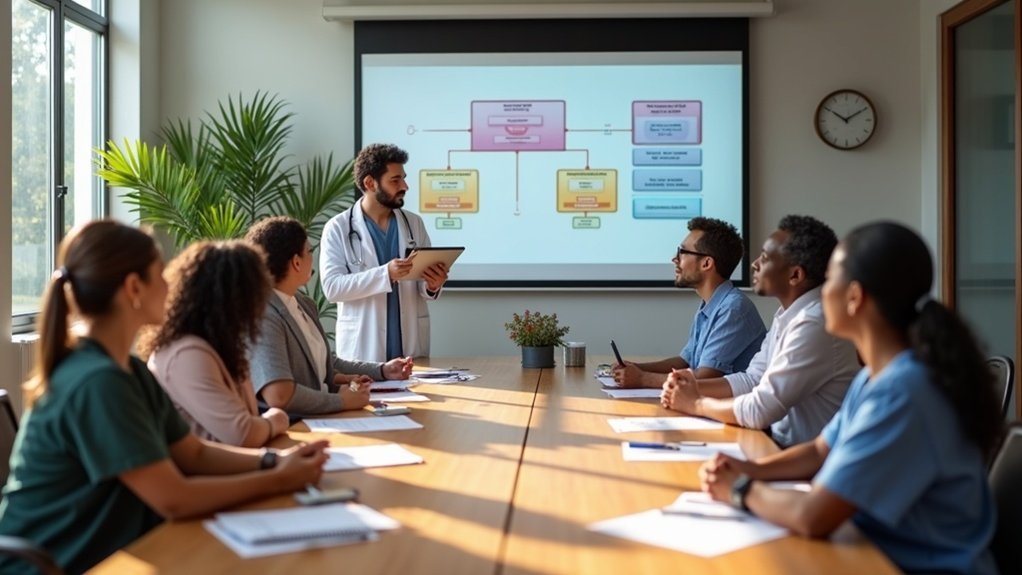
To plan effective caregiver handoffs in a survivalist context, start by sharing essential survival information such as location specifics and current threats in the environment. Utilize structured tools, like checklists or templates such as I-PASS, to ensure clarity and organization during transitions. Engage all team members in face-to-face discussions to facilitate real-time collaboration and to encourage questions about survival strategies. Ensure there is a standardized method for documentation, such as written logs that detail resources and safety protocols. Continuous training and updates based on feedback are crucial for improvement in emergency situations. Explore additional strategies for mastering handoff techniques as you advance in your preparedness journey.
Key Takeaways
- Utilize structured communication tools like I-PASS or SBAR to ensure comprehensive information transfer during survival handoffs.
- Share critical survival details such as location, available resources, potential threats, and any changes to maintain situational awareness in emergency situations.
- Engage all team members in the handoff process to promote collaboration and enhance understanding of roles and responsibilities in survival scenarios.
- Implement face-to-face briefings alongside written logs to reinforce clarity and provide real-time opportunities for questions about survival strategies and preparedness.
- Conduct regular training sessions and incorporate feedback to continuously improve handoff practices and readiness for survival situations.
Understanding the Importance of Caregiver Handoffs
When considering the daily operations of survivalism and prepping, it’s clear that effective communication during transitions is essential for maintaining preparedness.
With numerous scenarios requiring handoffs of critical information among team members, effective communication becomes crucial. Research shows that miscommunication can lead to severe consequences, underscoring the need for structured communication tools.
Implementing frameworks to ensure that vital information about supplies, strategies, and safety protocols is conveyed accurately can significantly reduce risks and enhance overall readiness.
Involving all team members in the planning process can further improve understanding and engagement, ultimately leading to better outcomes and increased confidence during situations that require rapid adaptation.
Key Elements of Effective Handoffs
Effective handoffs are crucial for successful survivalist operations, ensuring that vital information flows seamlessly between team members. To achieve effective handoffs in prepping scenarios, focus on these key elements:
Effective handoffs ensure vital information flows smoothly among team members, crucial for successful survivalist operations.
- Essential Survival Information: Share details such as location, resources available, current threats, and any changes in circumstances.
- Structured Tools: Utilize frameworks for communication, such as checklists or situational reports, to organize key information effectively.
- Standardized Communication: Implement face-to-face briefings and written logs to ensure clarity and avoid misunderstandings.
- Team Involvement: Engage all group members in the hand-off process to foster collaboration and enhance preparedness.
Always encourage team members to ask questions, reinforcing best practices for effective communication during operational exchanges.
Strategies for Implementing Standardized Handoff Templates
To ensure effective communication during critical handoffs in survival situations, implementing standardized templates like I-PASS or SBAR can significantly enhance the transfer of vital information among team members.
Customizing survival planning tools to integrate these templates streamlines the documentation process, making essential information more accessible for everyone involved.
Conduct training sessions to help team members develop proficiency and confidence in using structured handoff tools, ultimately improving safety and preparedness outcomes.
Foster collaboration among diverse roles during these handoffs to encourage accountability and thorough documentation, as varied perspectives can enhance accuracy in crisis scenarios.
Finally, prioritize continuous education and peer feedback to keep team members informed about best practices and evolving strategies for survival and preparedness exchanges.
The Role of Communication in Handoff Success
Communication plays a crucial role in ensuring successful transitions during survival situations, as miscommunication can lead to significant risks.
To enhance communication among prepper communities, consider these strategies:
- Use structured communication tools like checklists or briefings to ensure clarity.
- Engage in face-to-face discussions during planning sessions, allowing for questions and real-time clarification.
- Implement standardized templates for written plans to convey essential survival information, such as resource inventories and emergency protocols.
- Utilize a contact tree for escalations, ensuring immediate concerns are addressed collaboratively.
These practices can notably improve group cohesion and safety during critical situations.
Continuous Improvement and Training for Caregiver Handoffs
As you focus on enhancing caregiver handoffs, continuous improvement and training are essential for fostering a culture of preparedness and resilience.
Regularly update your training materials based on feedback from frontline responders to ensure they reflect best practices for survival situations.
Continuously refine training materials by integrating insights from frontline responders to maintain alignment with best survival practices.
Implement structured communication tools like I-PASS or SBAR during training sessions to enhance information transfer and reduce errors in high-pressure environments.
Incorporate ongoing education and peer feedback to keep caregivers informed about evolving survival methods and techniques.
Additionally, using digital survival checklists and customizable templates can streamline information sharing during critical handoffs.
Regularly monitor handoff processes to identify areas for improvement, ultimately enhancing outcomes and safety in emergency preparedness scenarios.