To repair gear with basic sewing in the context of survivalism and prepping, begin by assembling essential tools such as a comprehensive sewing kit, heavy-duty needles, strong, durable thread, and a seam ripper. Employ techniques like the running stitch for mending small holes and the back stitch for reinforcing seams, ensuring your gear can withstand tough conditions. Utilizing double thread can enhance strength, while properly securing knots ensures reliability during critical situations. Regular maintenance is vital—frequently inspect your gear for wear and tear to prevent unexpected failures. With practice, you’ll refine your skills, extend the lifespan of your equipment, and be better prepared for any challenges that may arise!
Key Takeaways
- Equip yourself with a comprehensive sewing kit that includes larger needles and heavy-duty thread, essential for repairing survival gear effectively.
- Utilize fundamental techniques such as the running stitch for mending holes and the back stitch for reinforcing high-stress seams, ensuring your gear can withstand the rigors of survival situations.
- Use double-threading for your needles to enhance strength and secure knots firmly to guarantee long-lasting repairs.
- Conduct regular inspections of your gear and make prompt repairs to prevent further damage, ensuring you remain prepared and functional in any scenario.
- Participate in community workshops and explore online tutorials focused on survival sewing techniques to sharpen your repair skills and increase your self-sufficiency.
Essential Tools for Gear Repair
When it comes to gear repair in the realm of survivalism and prepping, having the right tools can be crucial for maintaining your equipment.
A well-equipped sewing kit is essential for anyone preparing for the unexpected. It should include larger needles (#16 and #18) for tougher fabrics and #69 Coyote thread for durable mending.
A seam ripper is invaluable for correcting mistakes, and safety pins can hold fabric pieces securely while you stitch, ensuring your repairs are sturdy.
Additionally, a thimble is handy for pushing needles through thick materials, which is often necessary in outdoor conditions.
With these essential tools at your disposal, you’ll be well-prepared for hand sewing and effective repairs, ensuring your gear remains reliable and ready for any adventure or emergency situation.
Basic Sewing Techniques for Repairs
With your sewing kit ready, it’s time to tackle some basic sewing techniques that will help you repair your gear effectively for survival situations.
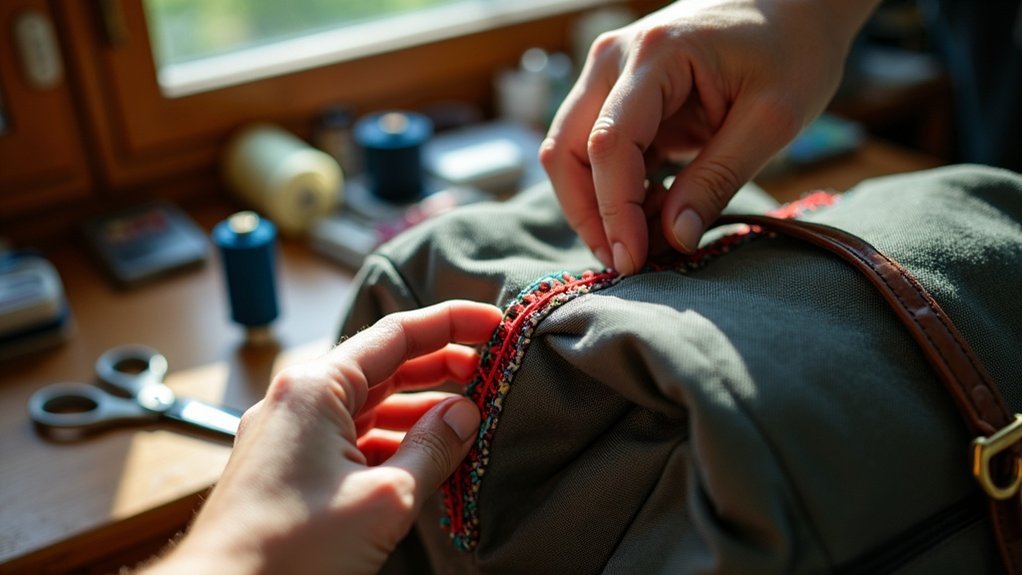
For small holes and hems, use a running stitch, ensuring stitches are evenly spaced for a clean finish. When reinforcing seams or repairing high-stress areas, opt for a back stitch for added strength, essential for gear that needs to withstand harsh conditions.
For small repairs, a running stitch offers a clean finish, while a back stitch reinforces high-stress seams for durability.
For invisible hems, the ladder stitch hides stitching, keeping your clothing discreet and functional. Remember to use a thread length about 2.5 times the tear and knot securely to ensure durability.
For tougher repairs, double threading increases durability, making it perfect for layers of fabric in high-use outdoor gear.
Being prepared with these sewing skills can make a significant difference in the field. Happy sewing!
Step-by-Step Repair Examples
Repairing gear doesn’t have to be intimidating; in fact, you can tackle common repairs with just a few straightforward techniques that are essential for survival situations.
Start by threading one needle with matching thread for a clean look, ensuring you have the right materials on hand for emergencies. For a hole in your gear, turn the fabric inside out and use a running stitch to pull the edges together securely.
When reattaching a button, wrap the thread around it for added strength, which is vital when you need reliable clothing in the field. To fix a loose hem, a blanket stitch can secure the fabric in place, preventing further damage.
For repairing socks, use a light bulb to hold it steady while creating a grid pattern, ensuring your feet remain protected during long treks.
Mastering these sewing repairs will help keep your gear in top shape and ready for any survival scenario!
Maintenance Tips for Longevity
Taking care of your gear is just as crucial as knowing how to use it in survival situations. Here are some maintenance tips to extend the life of your clothing and gear, ensuring you’re always prepared:
Proper gear maintenance is vital for survival; it ensures readiness and reliability when you need it most.
- Regularly inspect your gear for wear and tear; addressing issues early can prevent larger failures in the field.
- Clean and store your items properly; dirt and moisture can degrade fabric, potentially compromising your survival equipment.
- Make prompt repairs using the right tools—secure loose seams and cut excess thread to keep your gear in top condition.
- Reinforce high-stress areas with fabric layers or patches to enhance durability and reliability during critical moments.
Sewing is an essential skill in survivalism; it not only helps maintain your gear but also ensures that your equipment remains functional when you need it most.
Community Engagement in Repair Practices
While you can tackle gear repairs on your own, engaging with community repair practices can significantly enhance your skills and boost your confidence in survival situations.
Join local workshops focused on survival gear repairs or explore online tutorials that offer hands-on experience in DIY repairs essential for prepping. Platforms like Remake can provide a supportive space for sharing your successes and challenges in mending crucial survival gear, fostering personal growth and resilience.
By participating in initiatives like the #noNewClothes Campaign, you’ll not only promote sustainable practices but also reduce waste collectively, which is vital for long-term preparedness.
Sharing your repair projects on social media can inspire others in the survivalist community to embrace mending, creating a culture of resourcefulness and collaboration that strengthens everyone’s readiness for any situation.