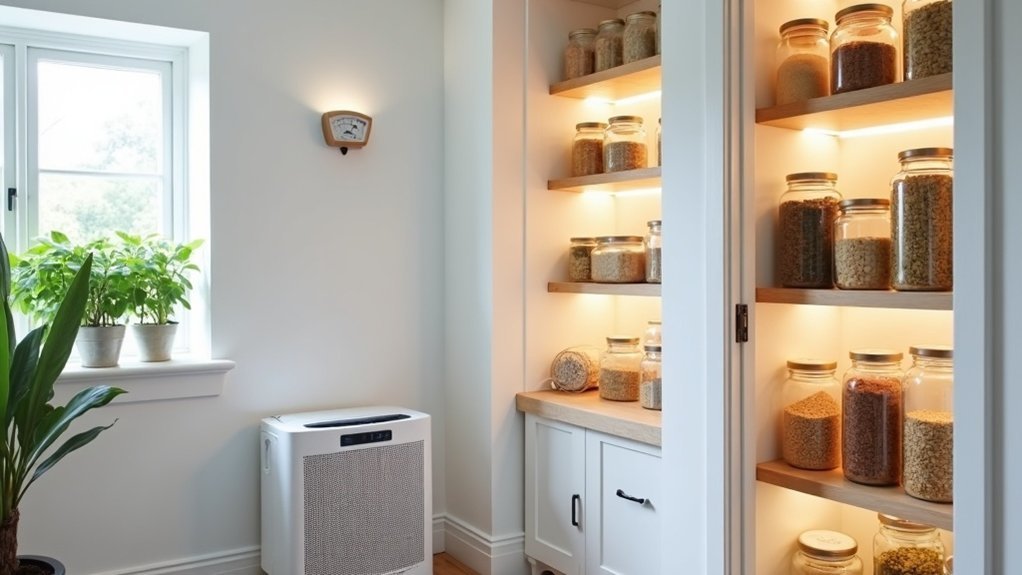
To mold proof your basement pantry and ensure your survival supplies remain safe, maintain a dry environment by utilizing a dehumidifier and ensuring proper ventilation. Store food in airtight containers to prevent moisture absorption, and label them for easy rotation during emergency situations. Regularly clean with a vinegar solution to inhibit mold growth and consistently monitor for any signs of mold. Keep the temperature cool, ideally below 70°F, and insulate pantry walls effectively to maintain stability. Organizing items wisely can also help reduce clutter, making it easier to access your supplies when needed. By following these steps, you can enhance the longevity and effectiveness of your preparedness strategy.
Key Takeaways
- Maintain humidity levels below 60% using a robust dehumidifier and conduct regular inspections for potential leaks to protect your food supplies.
- Utilize airtight, stackable containers for optimal storage, minimizing moisture exposure and maximizing space efficiency for your prepper pantry.
- Implement monthly cleaning sessions and vigilantly monitor for mold in concealed areas to ensure your long-term food storage remains safe and viable.
- Keep pantry temperatures below 70°F and enhance ventilation to effectively inhibit mold growth, preserving the quality of your survival provisions.
- Organize items into designated zones, adhering to the “first in, first out” principle for stock rotation to ensure that older supplies are used before newer ones, maintaining a well-prepared stockpile.
Maintain a Dry Environment
To maintain a mold-free basement pantry crucial for your survival and prepping needs, it’s essential to uphold a dry environment.
Utilize a dehumidifier to keep humidity levels below 60%, significantly reducing moisture buildup that could compromise your stored supplies. Regularly inspect for any water leaks from plumbing or wall cracks; even minor leaks can lead to substantial mold growth, threatening the integrity of your food storage.
Enhance air circulation by using a fan or installing vents to prevent moisture from becoming trapped. Organize your shelves thoughtfully and avoid overcrowding to ensure sufficient airflow around your pantry items.
Additionally, promptly wipe down any spills or leaks; quick action is vital for mold prevention. By implementing these strategies, you can create a healthy, dry space for your pantry, ensuring your preparedness for any situation.
Use Airtight Storage Containers
Airtight storage containers are a crucial tool for survivalists and preppers, especially when it comes to preventing mold growth in your basement pantry. By creating a sealed environment, these containers effectively keep moisture at bay and help manage humidity levels.
Here are four key benefits of using airtight storage containers in your prepping strategy:
- Material Matters: Choose durable options like glass, BPA-free plastic, or stainless steel to ensure the long-term freshness of your stored supplies.
- Store Smart: Refrigerate or freeze baked goods and perishables to prevent condensation, which can compromise your food supplies and extend shelf life.
- Label Clearly: Clearly mark each container with purchase or expiry dates to prioritize the use of older items first, reducing waste and ensuring that your emergency food supply stays viable.
- Maximize Space: Opt for stackable containers to optimize your storage space, improve airflow, and minimize overcrowding, which can lead to moisture buildup and spoilage.
Regular Cleaning to Remove Mold Spores
Maintaining a mold-free environment in your basement pantry is crucial for anyone practicing survivalism and prepping. Beyond just using airtight storage containers, regular cleaning is essential to prevent mold spores from taking hold. Schedule monthly sessions to wipe down shelves and corners with a vinegar and water solution; this method effectively eliminates moisture without the use of harsh chemicals that could compromise your food supplies. Utilize a vacuum equipped with a HEPA filter to capture mold spores and dust, ensuring your pantry remains a safe storage area for your essentials. Additionally, declutter by discarding expired food items and unnecessary packaging to enhance airflow and make room for fresh supplies.
| Cleaning Task | Frequency | Purpose |
|---|---|---|
| Wipe down surfaces | Monthly | Eliminate mold spores |
| Vacuum pantry | Monthly | Remove dust and spores |
| Declutter expired items | As needed | Prevent growth of mold |
| Remove packaging | Monthly | Enhance airflow and storage efficiency |
Monitor and Control Humidity Levels
While it may seem like a minor detail, monitoring and controlling humidity levels in your basement pantry is crucial for preventing mold growth and ensuring the longevity of your food supplies.
Here’s how you can effectively manage humidity for your preparedness efforts:
- Use a hygrometer to monitor humidity, targeting levels below 60% to prevent spoilage and maintain food quality.
- Install a dehumidifier if humidity exceeds recommended levels, choosing one suitable for your pantry size to maintain optimal conditions.
- Guarantee proper ventilation by opening doors and using fans to enhance air circulation, which is essential in a survival situation where food preservation is key.
- Regularly check your ventilation system to maintain adequate airflow, ensuring your pantry remains a safe and effective storage space for your supplies.
Inspect for Early Signs of Mold
It’s crucial to remain vigilant for early signs of mold in your basement pantry, especially when preparing for self-sufficiency and survival.
Regularly inspect corners, shelves, and behind items for visible mold, particularly in damp areas that could compromise your food supplies.
Be alert to musty odors, as these can indicate hidden mold growth that could threaten your long-term food storage.
Use a flashlight to examine dark spots where mold thrives, such as behind containers or appliances.
Keep an eye out for condensation on walls or surfaces, as this moisture can lead to mold if not addressed promptly.
If you’re uncertain about the mold situation, consider employing DIY mold test kits to evaluate air quality and detect mold spores.
Staying proactive in maintaining a clean and mold-free pantry is essential for ensuring your preparedness and survival.
Keep the Pantry Cool
To ensure your pantry remains cool and suitable for long-term food storage, aim for a temperature below 70°F to inhibit mold growth and preserve your supplies.
Implement effective ventilation strategies, such as installing vents and exhaust fans, to enhance airflow and minimize heat accumulation.
Be vigilant about potential heat sources nearby, such as appliances or direct sunlight, and keep pantry doors closed when not in use to maintain a stable environment.
These steps are crucial for prepping and survivalism, ensuring your food supplies remain safe and viable in any situation.
Maintain Low Temperatures
Maintaining a cool temperature in your basement pantry is crucial for preserving food and preventing mold growth, especially for those focused on survivalism and prepping.
Aim for a temperature between 50°F and 70°F to ensure a stable environment that minimizes the risk of spoilage.
Here are four practical tips to help you achieve this:
- Use a reliable thermometer to regularly monitor temperature levels and ensure they stay within the ideal range.
- Insulate pantry walls effectively to help maintain lower temperatures and prevent condensation, which can lead to mold.
- Install a small fan to improve air circulation, keeping the air fresh and cool while also helping to distribute temperature evenly.
- Avoid placing hot appliances, such as toasters or microwaves, in the pantry to prevent unnecessary heat buildup that could compromise your food storage.
Use Ventilation Strategies
Effective ventilation is crucial for maintaining an optimal environment in your basement pantry, especially when you’re focused on survivalism and prepping.
Implementing strategic ventilation methods, such as installing exhaust fans or vents, can significantly improve air circulation and lower humidity levels, which are vital for preventing moisture and mold growth.
To enhance airflow, keep pantry doors slightly ajar when not in use, particularly during warmer months when humidity can rise.
Utilize a hygrometer to monitor humidity levels, aiming to keep them below 60% to discourage mold proliferation that could jeopardize your food supplies.
Ensure that pantry vents are unobstructed and strategically placed near areas prone to moisture, and consider incorporating a small fan to further enhance air movement, ensuring your pantry remains dry, cool, and ready for any survival situation.
Insulate Against Heat
While it may seem easy to overlook, insulating your basement pantry is essential for maintaining optimal conditions for your survival supplies. Proper insulation not only helps regulate temperature but also reduces humidity, which is crucial for minimizing mold growth that could jeopardize your food storage.
Follow these steps to insulate effectively and ensure your pantry remains a reliable resource:
- Use foam board or fiberglass insulation on pantry walls to create a barrier against heat.
- Install insulated doors to block warm air and humidity from infiltrating your pantry.
- Ensure proper sealing around windows and vents to eliminate air leaks that could compromise your supplies.
- Elevate pantry items on shelves to promote airflow and prevent heat buildup, keeping your provisions in peak condition.
Organize Your Pantry for Better Maintenance
To ensure your pantry remains mold-free and well-organized for long-term survival, it’s crucial to establish a system that emphasizes accessibility and airflow while also being prepared for emergencies.
Utilize stackable, airtight containers to optimize space and protect your food supplies from moisture. Create designated zones for similar items to enhance airflow and minimize overcrowding, which can lead to spoilage. Implement the “first in, first out” rule to ensure proper stock rotation and maintain fresh supplies.
Regularly clean and inspect your pantry, as clutter can trap moisture and create ideal conditions for mold growth. Additionally, consider using a dehumidifier to control humidity levels, especially in high-moisture environments.
For enhanced protection, apply mold-resistant paint and waterproof coatings to surfaces, fortifying your pantry’s defenses against mold and ensuring your preparedness supplies remain safe for the long haul.
Choose Mold-Resistant Materials for Shelving
Choosing mold-resistant materials for shelving is crucial for maintaining a healthy pantry environment, especially for survivalists and preppers who prioritize food storage.
To effectively prevent mold growth in your stockpile, consider these options:
- Use mold-resistant drywall, such as green board, to minimize moisture absorption and protect your supplies.
- Opt for waterproof shelving made from treated wood, composite materials, or metal to reduce moisture retention, ensuring your food remains safe and secure.
- Install shelving units with antimicrobial coatings to inhibit mold and mildew development, vital for long-term food preservation.
- Select waterproof cellular PVC for base trim to guard against standing water and further reduce mold exposure, keeping your pantry environment optimal.
Additionally, elevating your shelving off the ground helps prevent direct contact with moisture, safeguarding your pantry and ensuring your preparedness remains intact.