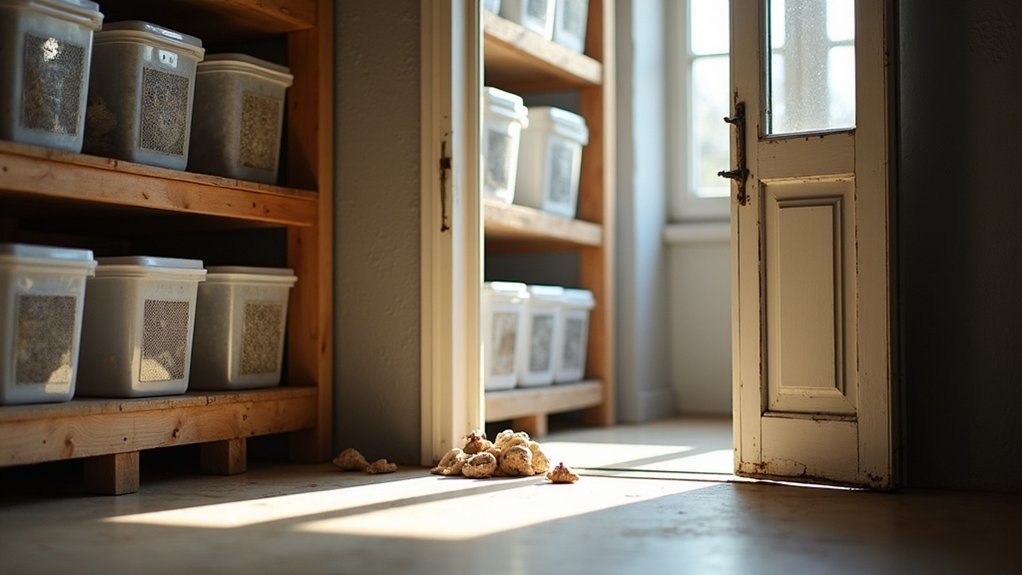
To keep rodents out of your survival and prepping storage areas, conduct regular inspections for signs of activity, such as droppings or gnaw marks. Use airtight containers to securely store your supplies and avoid cardboard boxes, which can be easily damaged. Ensure your storage unit is clean by sweeping regularly and eliminating any potential attractants. Seal any gaps with steel wool to prevent entry and consider using peppermint oil as a natural repellent. If you detect an infestation, notify management immediately to arrange for extermination. Stay tuned for more effective strategies to safeguard your supplies from rodent intrusion.
Key Takeaways
- Conduct regular inspections for signs of rodent activity, such as droppings and gnaw marks, to identify issues before they escalate and ensure your survival supplies remain uncontaminated.
- Store essential preparedness items in airtight, heavy-duty plastic containers and elevate them off the ground to limit rodent access and protect your resources.
- Seal any holes or gaps, no matter how small, with steel wool or other durable materials to prevent rodent entry and safeguard your supplies from pests.
- Avoid storing food items in your storage areas, as they attract rodents and can lead to infestations that compromise your emergency provisions.
- Maintain a high standard of cleanliness by sweeping floors and routinely inspecting for potential pest attractants in your storage spaces to ensure your survival gear is safe and ready for use.
Inspect Your Storage Unit for Mice
To effectively keep rodents at bay in your storage unit, which is crucial for your survivalist and prepping efforts, it’s essential to conduct regular inspections for signs of mouse activity.
Look for droppings, foul odors, and paw prints that may indicate potential infestations. Check for gnaw marks on boxes, as these can signify nesting areas that compromise your supplies.
Carefully examine all entry points; remember that gaps as small as 1/4 inch can allow mice to infiltrate your space.
Maintaining a clean environment is paramount; sweep the floors before securing the storage unit to eliminate any potential attractants.
Conduct routine checks for new signs of infestation or damage to ensure that your stored items remain protected from rodent activity.
This proactive approach is vital in safeguarding your essential supplies and enhancing your preparedness for any situation.
How to Store Your Belongings to Detract Mice
To effectively deter mice and protect your survival supplies, store your belongings in airtight containers instead of cardboard boxes, which can attract pests and serve as chew targets.
Elevate your stored items off the ground by utilizing shelving or pallets, as this significantly reduces the risk of rodent infestations; mice typically prefer nesting close to the floor.
Use Airtight Containers
Using airtight containers is crucial for survivalists and preppers aiming to protect their supplies from rodents and other pests.
These containers effectively seal off potential food sources and nesting materials, ensuring your resources remain safe and uncontaminated.
To ensure maximum protection, consider the following:
- Opt for heavy-duty plastic storage totes with airtight lids to effectively block rodent access.
- Choose chew-proof materials such as metal or thick plastic for long-term storage of critical supplies.
- Regularly inspect and clean your containers to maintain a sanitary environment, which is vital for successful prepping and survival efforts.
Elevate Stored Items
After securing your supplies in airtight containers, it’s crucial to consider the best methods for storing these items to prevent rodent infestations.
Elevate your stored supplies off the ground using sturdy shelving, wooden pallets, or plywood. This strategic elevation reduces rodent access and nesting opportunities while also allowing for easier inspection of potential signs of activity.
By keeping your items off the ground, you also minimize the risk of moisture damage, which can attract pests and compromise your preparedness efforts.
Ensure you utilize robust, rodent-resistant containers that can withstand gnawing, and seal all items securely.
Regularly inspect your elevated supplies for any signs of wear or damage, as these can be indicators of rodent activity and may require additional preventative measures to safeguard your survival stockpile.
Never Store Food in a Storage Unit
Storing food in a storage unit is a risky move that can jeopardize your preparedness efforts. It significantly heightens the likelihood of attracting rodents and other pests.
To safeguard your supplies and maintain a secure environment for your survival items, consider the following:
- Avoid storing food in a storage unit, as it can lead to pest infestations that compromise your preparedness.
- Recognize that even airtight containers can release odors that attract rodents, undermining your efforts to keep your supplies safe.
- Adhere to storage facility regulations, many of which explicitly prohibit food storage to prevent damage and ensure the safety of all tenants’ belongings.
How to Keep Mice Away From Your Storage Unit
Mice can easily infiltrate your storage unit if you don’t take proactive measures, making it essential for survivalists and preppers to implement effective strategies to keep them at bay. Here are some key steps to ensure the integrity of your supplies:
| Action | Purpose |
|---|---|
| Seal holes with steel wool | Prevents entry through small gaps |
| Use airtight plastic containers | Shields critical supplies from rodent damage |
| Spritz peppermint oil | Repels rodents with a strong natural scent |
| Elevate items on pallets | Reduces contact with rodents and minimizes risk |
| Regularly inspect for signs | Enables prompt pest control action to protect your stockpile |
What to Do if Your Storage Unit Is Infested by Rodents
If you’ve discovered a rodent infestation in your storage unit, it’s vital to respond quickly to reduce health risks and protect your preparedness supplies. Here’s a survivalist approach to handle the situation:
- Alert management immediately to initiate extermination procedures; swift action is essential in maintaining a safe environment.
- Equip yourself properly: Wear a HEPA face mask and rubber gloves when dealing with items that may have mouse droppings to avoid exposure to pathogens.
- Sanitize diligently: Spray disinfectant over droppings and meticulously clean affected areas with a damp cloth soaked in bleach. This will help eliminate any lingering contaminants.
Incorporate regular inspections of your storage unit into your preparedness routine. Look for signs of rodent activity, such as droppings or gnaw marks, which can indicate a larger issue.
Visit Your Unit Regularly to Protect Against Mice
Regularly visiting your storage unit is crucial for preventing rodent infestations, especially for those who prioritize survivalism and prepping. By checking your unit frequently, you can detect early signs of a rodent problem, such as droppings or gnaw marks, which could compromise your emergency supplies.
Ensure that your gear and supplies are stored in rodent-proof containers and avoid keeping any food items that may attract pests. During your visits, maintain cleanliness and eliminate potential food sources to protect your resources.
Additionally, inspect for any unsealed entry points and seal any gaps to deter rodents. Utilizing mouse traps can provide an extra layer of security.
You’ll have peace of mind knowing you’re actively managing the risks of rodents and minimizing potential damage to your valuable survival supplies.
Considerations for Choosing a Storage Company
When selecting a storage company for your survival supplies and prepping gear, it’s crucial to assess the facility’s security measures to ensure the protection of your valuable items from pests and rodents.
Look for features such as surveillance cameras and gated access, as these can significantly minimize the risk of infestations that could compromise your preparedness efforts.
Furthermore, consider the types of storage units available; opting for units with enhanced security features can provide additional peace of mind and safeguard your supplies against potential threats, both from the environment and intruders.
Security Measures Assessment
When selecting a storage company, it’s crucial to evaluate their security measures to ensure your survival gear and supplies are protected from potential rodent infestations.
Consider the following aspects of the storage facility:
- Surveillance and Access: Choose facilities equipped with surveillance cameras, secure gated access, and on-site personnel to deter intrusions and ensure your items are safe.
- Pest Management Practices: Investigate customer feedback regarding rodent issues; inquire about their pest control measures and how frequently they’re conducted to maintain a rodent-free environment.
- Unit Types: Examine the types of storage units available; indoor lockers may be more susceptible to infestations than robust, rodent-proof portable containers designed for long-term storage of essential supplies.
Implementing effective rodent deterrents and maintaining robust protocols for sealing any cracks is vital for preventing rodent access and protecting your valuable prepper items.
Storage Accessibility Options
Evaluating storage accessibility options is crucial for survivalists and preppers to ensure that your essential gear remains secure and readily accessible. Consider what you’re storing, particularly if it includes food supplies or perishable items that could attract pests, which can compromise your preparedness. Check the unit’s accessibility hours, as limited access can hinder your ability to retrieve necessary items during emergencies. Assess the duration of storage; heavy-duty options may be more suitable for long-term storage of survival supplies. Additionally, research customer reviews to identify any pest-related issues that could threaten your stockpile.
| Consideration | Details |
|---|---|
| Item Type | Food, heavy-duty, or perishable supplies |
| Access Frequency | Daily, weekly, or monthly retrieval needs |
| Storage Duration | Short-term vs. long-term preparedness plans |
| Customer Feedback | Pest management effectiveness and reliability |
Benefits of Portable Storage Containers
Portable storage containers provide essential advantages for survivalists and preppers, particularly in safeguarding crucial supplies and gear from unwanted pests like rodents.
Portable storage containers are vital for survivalists, offering protection against pests and securing essential supplies.
These rodent-proof containers ensure that your valuable items remain secure and intact. Here are a few key benefits:
- Enhanced Protection: Equipped with rubber gaskets along the doors, these containers effectively prevent rodents from infiltrating your supplies.
- Secure Solution: The Lock Box designs are resistant to bolt cutters, ensuring your essential items are well-protected from theft or damage.
- Flexible Packing: Delivered directly to your location, these containers offer easy access to your supplies while minimizing the risk of rodent exposure, keeping your survival gear safe and ready for use when needed.