You can create safe cleaning solutions at home using simple, non-toxic ingredients that are essential for survivalism and prepping. Combine white vinegar and baking soda for an effective disinfectant that can help maintain hygiene in your living space. For kitchen cleaners, mix essential oils with Castile soap in water, providing both cleanliness and pleasant scents to uplift morale during tough times. Utilize baking soda and vinegar for bathroom scrubbing, ensuring your sanitation is up to par. In your laundry, a mixture of Borax, washing soda, and dish soap can help keep your clothes fresh and clean. Always store these solutions in labeled containers and keep them out of reach of children for safety. There’s a wealth of knowledge to explore when it comes to creating effective homemade cleaning solutions that align with your preparedness goals.
Key Takeaways
- Combine ½ cup white vinegar, 2 tbsp baking soda, and essential oils in water for an effective all-purpose cleaner that can help maintain hygiene in a survival situation.
- Use ¼ cup baking soda and 1 cup vinegar to clean toilet bowls naturally, ensuring sanitation in limited-resource environments.
- Mix ½ cup Borax, ½ cup washing soda, and ½ cup Dawn dish soap with hot water for homemade laundry detergent, an essential for long-term preparedness.
- Create a dusting solution with 3 parts olive oil and 1 part white vinegar for wood surfaces, helping to preserve your supplies in a sustainable way.
- Store homemade cleaners in labeled, recycled containers away from children and pets to ensure safety while focusing on self-sufficiency in your prepping efforts.
The Importance of Non-Toxic Cleaning Products
Why should you consider using non-toxic cleaning products in your survivalist home?
These products greatly reduce the risk of accidental ingestion, especially for young children, as cleaning solutions rank second in common household ingestions.
Homemade cleaners, made from safe alternatives like vinegar and baking soda, are effective at cleaning while being budget-friendly and easy to prepare, which is essential for preppers.
By choosing non-toxic options, you promote an environmentally friendly approach that minimizes chemical waste and protects aquatic life, crucial for long-term sustainability.
Ultimately, adopting these practices fosters a healthier living environment, reducing exposure to harmful substances found in traditional cleaners.
Your choice can lead to both safety and sustainability for your family during uncertain times.
Essential Ingredients for Homemade Cleaners
To craft effective homemade cleaners ideal for survival situations, it’s crucial to gather a few essential ingredients that combine cleaning power with safety for long-term storage.
Baking soda serves as a mild alkali, perfect for neutralizing odors and tackling stains on various surfaces, making it a versatile option for cleaning in off-grid scenarios.
Baking soda is a versatile cleaner, effectively neutralizing odors and tackling stains in off-grid situations.
White vinegar acts as a natural disinfectant, effective in breaking down mineral deposits and enhancing the potency of other components, ensuring sanitation in times of need.
Castile soap, made from vegetable oils, provides gentle yet effective cleaning for countertops, dishes, and even personal hygiene.
Incorporating essential oils like tea tree and lemon not only infuses your cleaners with fragrance but also imparts valuable antibacterial properties, which are vital in maintaining health during emergencies.
For more robust cleaning solutions, consider adding washing soda or hydrogen peroxide, both of which can significantly enhance the effectiveness of your homemade cleaning concoctions, ensuring you’re well-prepared for any situation.
Kitchen Cleaning Solutions
Creating effective kitchen cleaning solutions at home can be both practical and cost-efficient for those who embrace survivalism and prepping.
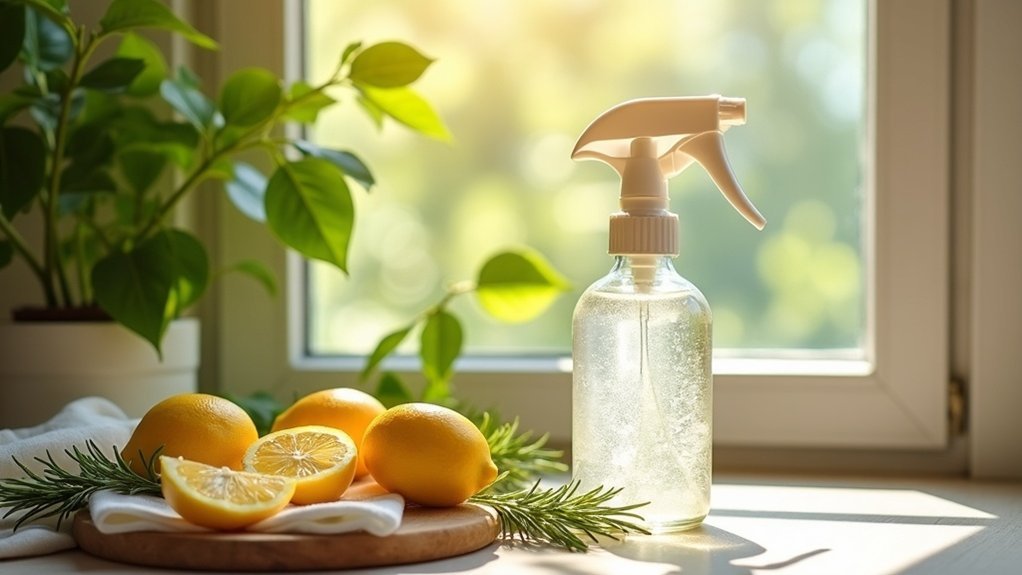
For an all-purpose cleaner, mix ½ cup of white vinegar, 2 tablespoons of baking soda, and 10 drops of your preferred essential oil in a glass spray bottle filled with water. This versatile cleaner is great for maintaining hygiene in a self-sustained living environment.
For stubborn oven grime, make a paste using ½ cup of baking soda, 2-3 tablespoons of water, and ½ cup of vinegar; apply it overnight to allow it to penetrate and break down tough residues.
You can also create a homemade liquid dish soap with ½ cup of warm distilled water, 2 teaspoons of kosher salt, and ½ cup of vinegar, ensuring you have effective cleaning solutions without relying on commercial products.
Lastly, for homemade disinfectant wipes, soak cloth squares in a mixture of water, vinegar, and essential oils. This preparation not only aids in cleanliness but also supports your self-reliance and preparedness goals.
Bathroom Cleaning Recipes
In your journey towards self-sufficiency and preparedness, maintaining a clean and functional bathroom is essential. You can create effective cleaning solutions using common ingredients that can also be stored for long-term use.
For example, baking soda and vinegar can be utilized to combat toilet bowl stains, shower scum, and sink grime. These homemade cleaners not only ensure a hygienic environment but also align with your survivalist principles by reducing reliance on commercial products.
A well-maintained bathroom is a key component of a sustainable living space, promoting both health and readiness in challenging times.
Toilet Bowl Cleaning Method
When it comes to maintaining a clean toilet bowl in a survival or prepping scenario, using safe and effective cleaning solutions can be essential for hygiene and health. Here’s a simple method to keep your toilet fresh while ensuring you’re well-prepared:
- Baking Soda & Vinegar: In a survival situation, basic ingredients like baking soda and vinegar can be invaluable. Pour 1/4 cup of baking soda followed by 1 cup of vinegar into the bowl. Let it fizz for 30 minutes to disinfect and remove stains—a technique that requires no special supplies and can be done with items you likely have on hand.
- Kool-Aid: If you have lemonade Kool-Aid in your prep supplies, sprinkle it around the bowl for a citric acid boost. Let it sit for a while before scrubbing to help dissolve any buildup—this is a great use of what might otherwise be a treat.
- Weekly Maintenance: Consistency is key in any survival plan. Repeat the baking soda and vinegar mix weekly to prevent hard water stains and mineral deposits.
Also, remember to sanitize your brush after each use to keep your cleaning supplies effective and ready for future use!
Shower and Tile Solutions
Maintaining a clean and hygienic environment is crucial for any survivalist or prepper, especially in your living space.
A simple yet powerful combination of ½ cup baking soda and ½ cup white vinegar can create an effective cleaning paste for scrubbing surfaces, including shower tiles and grout.
For tough stains that may arise during extended periods of living off the grid, soak paper towels in white vinegar and apply them to the affected areas for an hour before scrubbing.
To prevent buildup and maintain a clean area, mix ¼ cup dish soap, ¼ cup white vinegar, and 1 cup warm water in a spray bottle for regular use.
For added antibacterial benefits and a pleasant scent, enhance your homemade cleaning solution with 10 drops of essential oil, such as tea tree oil, which can also serve as a natural disinfectant.
Keeping your living space clean isn’t just about aesthetics; it’s about ensuring a healthy and safe environment for you and your family during challenging times.
Sink and Faucet Care
To ensure your sinks and faucets remain functional and hygienic in a survival or prepping scenario, regular maintenance is crucial.
Here’s how to create effective homemade cleaning solutions that can also be useful in emergency situations:
- Mineral Deposit Remover: In a spray bottle, mix equal parts of white vinegar and water. This solution is effective for dissolving hard water deposits and disinfecting surfaces, which is vital when resources are limited.
- Stain Paste: For tougher stains, combine baking soda and water to create a paste. Apply this paste to the affected areas, let it sit for 10-15 minutes, and then scrub gently. Keeping your equipment clean helps prevent the buildup of harmful bacteria.
- Natural Deodorizer: Use a cut lemon to rub over surfaces, which will help remove stains and leave a fresh scent. This is particularly useful when you want to maintain a pleasant environment in your living space.
Consider enhancing your cleaning solutions with essential oils like tea tree, which offer additional antimicrobial properties and can help keep your tools and fixtures sanitized in a self-sufficient lifestyle.
Laundry Room Cleaning Essentials
Creating a clean and efficient laundry room is crucial for maintaining the longevity of your gear and clothing, especially in a survivalist or prepping scenario.
You can make a homemade non-toxic liquid laundry detergent using ½ cup Borax, ½ cup washing soda, and ½ cup Dawn dish soap mixed with 4 cups of hot water. Use ¼ cup per load to effectively clean your survival clothing and gear.
For tackling tough stains, apply a paste made of baking soda and white vinegar, allowing it to sit for 20 minutes before washing.
To keep your laundry fresh, add ½ cup of white vinegar during the rinse cycle.
Lastly, you can create homemade dryer sheets with 1 cup of water and ¼ cup of vinegar, providing a pleasant scent and reducing static cling—essential for maintaining the integrity of your fabrics in a prepping environment.
Living Area Cleaning Hacks
After ensuring your laundry room is equipped with effective cleaning solutions, it’s time to focus on maintaining a clean and organized living area, essential for a survivalist lifestyle.
Here are three practical hacks to keep your space in top condition:
- Dusting: Combine 3 parts olive oil with 1 part white vinegar in a spray bottle. This natural cleaner not only nourishes wood surfaces but also effectively removes dust, ensuring your environment is free from allergens and debris.
- Carpets: To keep carpets fresh and odor-free, sprinkle baking soda generously, let it sit for 15 minutes, then vacuum thoroughly. This not only eliminates odors but can also help in maintaining a clean space crucial for long-term living.
- Upholstery: For tackling stains on upholstery, mix baking soda and water to form a paste. Apply it to the stained areas and allow it to dry before vacuuming. This method effectively lifts dirt and odors, ensuring your living areas remain hygienic and comfortable.
Tips for Using and Storing Homemade Cleaners
While maintaining a clean and safe living environment is crucial for survivalism, knowing how to effectively use and store your homemade cleaners is equally vital.
Always store homemade cleaners in clearly labeled, recycled containers, keeping them securely out of reach of children and pets. Before each use, shake the cleaners gently to mix the ingredients thoroughly, ensuring maximum effectiveness during critical situations.
Use a funnel to fill your spray bottle, minimizing mess and waste during transfer. For optimal longevity, keep homemade cleaners in a cool, dark place, away from direct sunlight and extreme temperatures.
Regularly check the freshness of your cleaning solutions, preparing small batches to maintain their potency and avoid degradation of active ingredients, especially when preparing for extended periods of self-sufficiency.
Experimenting With Custom Cleaning Solutions
As you delve into the realm of homemade cleaning solutions, experimenting with various ingredient ratios can yield effective, customized formulas tailored to your survival and prepping needs.
Here are three ideas to help you get started:
- Combine 1 cup of white vinegar with 1/2 cup of baking soda for a powerful stain remover that can also serve as a versatile cleaner in emergency situations.
- Infuse your DIY cleaners with essential oils like lemon or tea tree to enhance disinfectant properties, which can be vital for maintaining hygiene in a survival scenario.
- Test a mix of castile soap and washing soda for an effective laundry solution, ensuring your clothing remains clean and free from contaminants.
Always conduct a patch test to guarantee your new mixture won’t damage surfaces, avoiding harsh chemicals in your cleaning routine, especially when preparing for long-term sustainability.