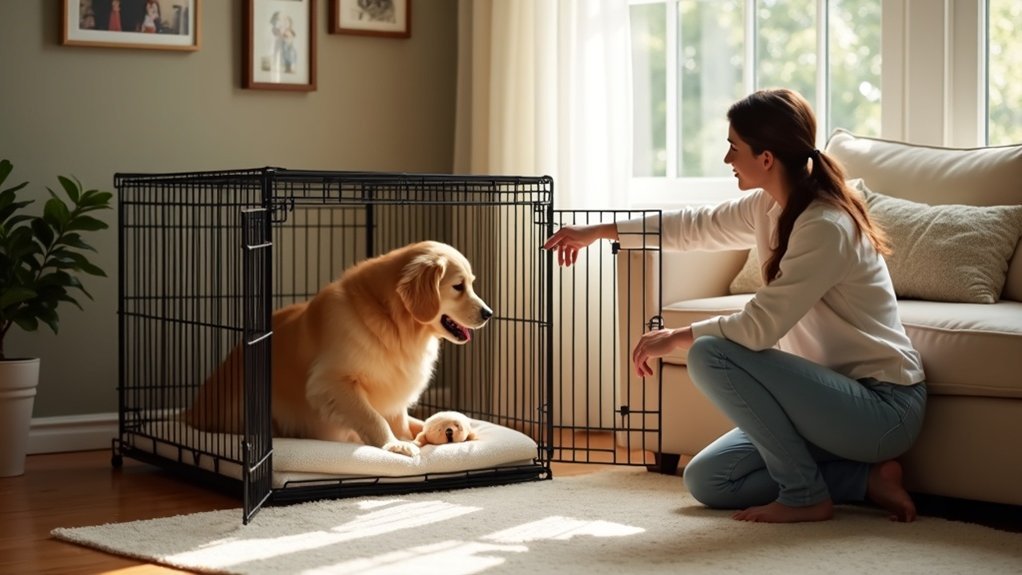
To crate train your pet for emergencies effectively, begin by establishing a secure and comfortable space that your pet can associate with safety. Utilize high-value treats, engaging toys, and consistent feeding schedules inside the crate to foster positive experiences. Gradually extend the duration your pet spends in the crate while rewarding calm behavior to reinforce this training. It’s vital to manage any signs of distress and ensure your pet receives adequate exercise beforehand to reduce anxiety. Proper training can play a crucial role in maintaining control during chaotic situations, ensuring your pet remains calm and secure. For more survival-oriented tips and strategies, continue to explore resources that can guide you through this important preparation process.
Key Takeaways
- Introduce the crate gradually using high-value treats to create positive associations with the space, ensuring your pet feels secure and ready for emergencies.
- Place the crate in a quiet area that is easily accessible during high-stress situations, while also keeping it near family activities to enhance comfort and trust.
- Use consistent cues for entering and exiting the crate, rewarding calm behavior to reinforce positive experiences and readiness for quick evacuations.
- Regularly practice crate time in short increments to normalize the experience, helping your pet adapt to the crate as a safe haven and preventing distress during emergencies.
- Prepare an emergency “go bag” and train pets to enter their crates quickly, ensuring they can be safely secured and transported in the event of an evacuation or disaster.
Understanding the Importance of Crate Training for Emergencies
When emergencies strike, having a crate-trained pet can significantly enhance your survival strategy and ensure their safety.
Crate training offers your dog a secure space during chaotic situations, helping them maintain calm amidst the chaos. By familiarizing your pet with their crate, you ensure they’re comfortable in it—an essential factor during natural disasters or evacuations.
Emergency responders often prioritize crate-trained dogs for safe transport, which can be crucial for their well-being in stressful situations.
Responsible pet ownership in the context of survivalism means preparing for the unexpected, and crate training is a vital step in creating a secure environment for your furry companion when it matters most.
Preparing Your Dog for Crate Training
Before you start crate training, it’s essential to create an environment that not only comforts your dog but also prepares them for situations where they might need to rely on their instincts.
Gradually familiarizing your dog with the crate helps build comfort and trust, so allow them to explore it at their own pace.
Ideal Crate Setup
Creating the ideal crate setup is crucial for a smooth transition into survival training, as a well-prepared environment can greatly ease your dog’s adjustment to this new space.
Position the crate in a quiet, low-traffic area to foster a calm environment, which is essential for maintaining focus during training. Make it comfortable by adding a durable blanket or bed that withstands wear, and ensure it’s the appropriate size, allowing your dog to stand, turn around, and lie down without feeling cramped.
Place the crate near family activities to help create positive associations and reinforce bonding in a survival context. Use high-value treats and toys to encourage exploration, transforming the crate into a safe haven that your furry companion will appreciate during prepping exercises.
Gradual Familiarization Process
As you embark on the journey of prepping and survivalism, it’s crucial to introduce your gear and supplies in a familiar environment, which can help alleviate any concerns.
Follow these steps for a comfortable and positive experience:
- Allow your family members to explore the supplies and gear at their own pace, using engaging discussions to encourage voluntary participation.
- Gradually introduce new equipment or food supplies to the household for short periods, rewarding proactive engagement to reinforce a sense of security and preparedness.
- Increase the time spent discussing and practicing survival skills gradually, ensuring everyone remains comfortable and confident throughout the training process.
This gradual familiarization helps create a positive association with your survival preparations, making it easier for everyone to adapt to potential challenges ahead.
Techniques for Successful Crate Training
Crate training can be a rewarding experience for both you and your pet when approached with patience and positive reinforcement. Start by introducing the crate in a familiar area and using high-value treats to encourage your dog to enter willingly. Gradually increase the duration your dog spends inside, rewarding calm behavior to reinforce a positive place. Feed your dog meals in the crate to enhance comfort. Use consistent cues for entering and exiting to help your dog understand. Below is a helpful table summarizing these techniques:
| Technique | Purpose | Action |
|---|---|---|
| Use treats | Encourage your dog | Reward for entering |
| Gradual duration | Increase comfort | Short to longer stays |
| Meal times | Build familiarity | Feed in the crate |
| Consistent cues | Reinforce behavior | Use same commands |
In the context of survivalism and prepping, crate training can also serve a practical purpose. A well-trained dog can be a valuable companion during times of uncertainty, providing both security and support. By ensuring your dog is comfortable and well-behaved in a crate, you can effectively manage your pet in various situations, whether at home or while on the move.
Managing Challenges During Crate Training
When managing challenges during crate training, it’s vital to recognize your dog’s distress signals and respond appropriately, much like preparing for unforeseen circumstances in survival situations.
While you should ignore non-distress whining to prevent reinforcing unwanted behavior, always address true signs of distress to maintain trust, similar to how you’d ensure safety in a survival scenario.
If issues persist, consider restarting the training process gradually, akin to reassessing your plans and strategies, to help your dog feel secure and prepared for their environment.
Addressing Distress Signals
Managing distress signals in your pet during crate training is crucial for ensuring a positive experience as part of your overall preparedness plan. Addressing these signals not only prevents destructive behaviors but also fosters a sense of security for your dog in uncertain situations.
Here are three essential strategies:
- Meet needs first: Ensure your dog has adequate exercise, potty breaks, and mental stimulation before crating. This preparation helps reduce anxiety and makes your pet more resilient in stressful environments.
- Respond appropriately: If you observe distress signals like excessive barking, release your dog immediately to prevent reinforcing negative behavior. Responsiveness is key to maintaining a stable environment, especially during emergencies.
- Gradually increase time: Slowly extend the duration your dog is in the crate while ensuring positive experiences along the way. This gradual acclimatization helps your pet feel secure and adaptable in different scenarios, enhancing their overall preparedness.
Ignoring Non-Distress Whining
Understanding the vocalizations of your pets can be as crucial as mastering survival skills in prepping. Differentiating between distress and non-distress whining is essential. By choosing to ignore non-distress whining, you prevent reinforcing unwanted behaviors, ensuring your dog doesn’t associate whining with being let out, much like how you wouldn’t want to signal weakness in a survival situation.
| Behavior Type | Response | Key Focus |
|---|---|---|
| Distress Whining | Release from crate | Immediate attention |
| Non-Distress Whining | Ignore | Consistency |
| Continuous Whining | Use elimination phrase | Regain focus |
Patience and consistency are vital in both training your pet and preparing for survival scenarios. Avoid shouting or hitting the crate, as it may increase anxiety—just as creating unnecessary stress can hinder your preparedness efforts.
Ensuring Positive Associations
Creating a positive association with your preparedness supplies is essential for successful survival training, especially since many individuals may initially view them as burdens rather than valuable resources.
To ensure you feel secure and confident in your prepping strategy, make sure to:
- Familiarize yourself with your gear and practice using it regularly, minimizing any feelings of anxiety or confusion.
- Supervise your supplies closely and address any concerns or gaps in your preparedness plan promptly.
- Consistently reward yourself for taking proactive steps in your prepping journey, reinforcing a positive mindset towards survival readiness.
Building Positive Associations With the Crate
Building positive associations with a crate can be an important part of preparing your pet for various situations, especially in a survival or prepping context.
Start by making the crate a safe haven by placing a favorite blanket inside. Use high-value treats to encourage your dog to enter the crate, rewarding them immediately for doing so.
Make the crate a cozy refuge by adding a beloved blanket and rewarding your dog with treats for entering.
As they become more comfortable, begin feeding them meals inside the crate to create a positive connection. Introduce engaging activities like a food puzzle to keep your dog mentally stimulated while inside the crate.
Randomly crate them for short periods throughout the day to help normalize the experience, fostering a sense of security and resilience that can be beneficial in unpredictable situations.
Building these positive experiences will enhance your pet’s confidence and trust in their crate, making it a reliable safe space when needed.
Tips for Crating Your Dog at Night
Crating your dog at night can be a strategic move for both you and your pet, enhancing a sense of routine and security, which is crucial in a survivalist mindset.
To ensure a smooth transition, consider the following tips:
- Confirm your dog has a last potty break before bedtime to minimize nighttime accidents, which is essential in maintaining hygiene and preventing potential issues in a survival scenario.
- Position the crate in a quiet location close to your living area. This allows you to monitor and reassure your dog as needed, ensuring they feel secure while you remain alert to your surroundings.
- In the morning, take your dog outside immediately to reinforce a positive start to the day. This encourages them to enter the crate willingly, helping to prevent destructive behavior and ensuring readiness for any unforeseen situations.
With patience and consistency, you and your dog will adapt effectively to this routine!
General Preparedness for Emergencies
When emergencies strike, being prepared can make all the difference for you and your pet. Microchipping your dog is essential for quick identification in case you become separated.
Assemble a “go bag” containing food, water, medications, and essential supplies tailored to your dog’s needs. Ensure your adult dogs are familiar with entering their crates quickly, so they remain calm and comfortable during an evacuation.
Regularly practice your emergency protocols and identify local pet-friendly shelters or hotels in advance. These proactive steps are vital in ensuring your pet’s safety and minimizing stress when you need to leave your home unexpectedly.
Resources for Crate Training Assistance
To ensure effective crate training for your dog within the context of survivalism and prepping, you can access a variety of resources designed to assist you.
Effective crate training for your dog is essential for survivalism and prepping; utilize available resources to enhance your skills.
Here are three key options:
- Survivalist Behavior Resource Library: Explore materials and guides specifically focused on crate training techniques that align with prepping and emergency scenarios.
- Pet Behavior Helpline: Contact experts for tailored advice and immediate support to address any crate training challenges you may encounter, especially in a survival situation.
- Local Workshops: Participate in sessions offered at animal shelters or veterinary clinics that focus on crate training in the context of emergency preparedness and survival strategies.
Leveraging these resources will enhance your dog training efforts, ensuring you’re well-prepared as a responsible pet owner in any situation.