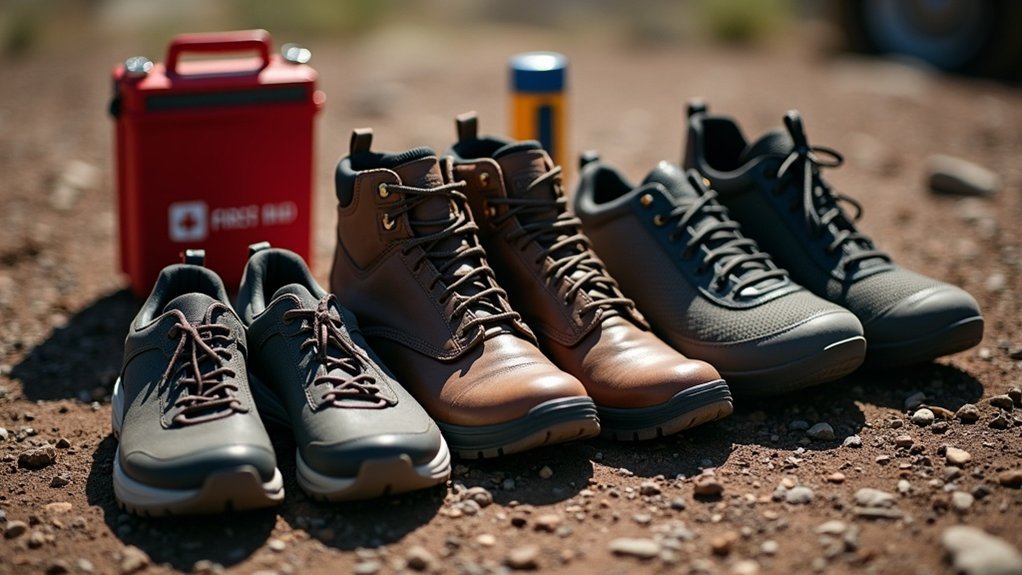
When selecting footwear for evacuations, prioritize comfort and fit to prevent injuries during high-stress situations. Opt for lightweight, slip-resistant shoes with closed-toe designs to ensure safety in unpredictable environments. Waterproof materials are crucial for wet conditions, while durable construction guarantees longevity across various terrains you may encounter. Ensure that the footwear provides adequate ankle support and cushioning to minimize fatigue during prolonged movement. Additionally, consider personal preferences, such as style, as this can encourage consistent wear. Being well-equipped with the right footwear is a vital part of your overall preparedness plan for any emergency scenario.
Key Takeaways
- Ensure a secure fit with adjustable closures to prevent movement and blisters during urgent evacuations, allowing for quick maneuverability.
- Choose lightweight, slip-resistant shoes with deep lugs for enhanced stability on wet or uneven terrain, crucial for survival in unpredictable environments.
- Select waterproof footwear to keep feet dry in wet conditions and protect against hazardous liquids, essential for maintaining health and safety during emergencies.
- Look for closed-toe designs with reinforced toe caps for protection against falling debris and sharp objects, providing added security in chaotic situations.
- Prioritize comfort and breathability to reduce fatigue and maintain mobility during extended evacuations, ensuring you can travel long distances when necessary.
Importance of Comfort and Fit
When you’re preparing for an evacuation, the comfort and fit of your footwear aren’t just preferences—they’re essential for survival. A proper fit helps to prevent discomfort and blisters, allowing for swift movement in emergencies.
Shoes that are too tight can cause pain and hinder circulation, while loose footwear can lead to instability and increases the risk of falls. Look for tactical footwear that offers cushioning and flexibility to help maintain your stamina during prolonged evacuations.
Adjustable closures, such as laces or Velcro, ensure a secure fit that can adapt to swelling from physical exertion. Testing various sizes and models in advance is crucial to finding the right fit, ensuring you can perform at your best when it truly matters.
Selecting Lightweight and Slip-Resistant Shoes
Selecting the right shoes for an evacuation is crucial for any survivalist or prepper. It’s essential to consider lightweight and slip-resistant options that enhance your mobility in emergencies.
Choose shoes that are lightweight to facilitate swift movement, which is vital when every second counts. Look for slip-resistant soles with deep lugs to ensure stability on wet or uneven terrain, reducing the risk of slips and falls in uncertain conditions.
Select lightweight shoes with slip-resistant soles for swift movement and stability in emergencies.
Opt for breathable materials that keep your feet comfortable and cool, even under stress. Cushioned insoles are a must, as they help minimize fatigue during extended periods of walking or running, allowing you to maintain your endurance when it matters most.
Additionally, ensure your shoes fit well, providing ample toe space to prevent discomfort or injury while navigating through potentially hazardous environments.
In survival situations, having the right footwear can mean the difference between safety and disaster. Always choose wisely, and consider keeping a reliable pair of evacuation shoes in your preparedness kit.
Closed-Toe Designs for Safety
In the realm of survivalism and prepping, closed-toe designs play a crucial role in ensuring foot protection during evacuations.
These shoes safeguard against falling debris and sharp objects, which can be prevalent in emergency situations. Additionally, they enhance stability and traction, significantly lowering the risk of slips on uneven or slippery terrain.
Selecting the right closed-toe footwear is vital for maximizing your safety and comfort in unpredictable environments, making it an essential component of your emergency preparedness gear.
Enhanced Foot Protection
Choosing closed-toe footwear is a crucial aspect of survival preparedness, especially during evacuations. These designs provide essential protection against falling debris and sharp objects that you may encounter in emergency situations.
Look for options that feature reinforced toe caps made from steel or composite materials, as they maximize your safety when every second counts. Slip-resistant outsoles are vital for maintaining stability on wet or uneven surfaces, significantly reducing the risk of slips and falls when you need to move quickly.
Additionally, consider water-resistant materials to safeguard your feet from hazardous liquids you might encounter during an evacuation. Cushioned insoles can help minimize fatigue, ensuring that you remain comfortable and agile as you navigate challenging environments.
Improved Stability and Traction
Closed-toe footwear is an essential component of any survivalist’s gear, providing enhanced foot protection and significantly improving stability and traction during emergency evacuations.
These shoes are typically designed with a slip-resistant outsole, allowing you to maintain your footing on a variety of surfaces, which is crucial in unpredictable and chaotic situations.
With reinforced toe caps, closed-toe designs offer extra protection against impacts and sharp objects you may encounter in the wild or during an evacuation.
Choosing a snug fit not only ensures comfort but also minimizes the risk of slipping off, enabling you to navigate hazardous environments with confidence.
Durability in Diverse Terrains
When navigating unpredictable terrains during evacuations, choosing durable footwear is crucial for ensuring your safety and agility.
In the realm of survivalism and prepping, the right shoes can make all the difference. Here are key features to consider in your footwear selection:
- Rugged outsole: Look for shoes that provide excellent grip on mud and gravel to maintain stability in challenging conditions.
- Slip-resistant outsoles: Opt for shoes with lugs designed to prevent slips, especially in wet or uneven environments.
- Durable materials: Select footwear made from robust materials like rubber and reinforced fabrics to withstand wear and tear.
- Waterproof designs: Choose shoes with sealed seams to keep your feet dry and protected from the elements.
- Lightweight and breathable options: Prioritize comfort with shoes that allow for breathability while still offering the necessary support for long treks.
Investing in the right footwear can enhance your preparedness and ensure you’re ready for any situation that may arise.
Waterproof Options for Wet Conditions
When navigating wet conditions during an evacuation, having waterproof footwear is essential for survival.
Opt for shoes equipped with slip-resistant outsoles to ensure stability on slick surfaces, which is crucial in emergency scenarios.
Additionally, select options made from breathable materials to keep your feet comfortable during prolonged use.
These features not only shield you from water but also contribute to your overall safety and comfort as you traverse challenging environments, helping you remain prepared and ready for any situation.
Essential Waterproof Features
Choosing the right waterproof footwear is crucial for survival and safety during evacuations in wet conditions.
Look for features that ensure comfort and protection while navigating challenging environments:
- Sealed seams to block water entry
- Fully waterproof design suitable for flooded areas
- BBP waterproofing materials to protect against hazardous contamination
- Moisture-wicking linings to keep your feet dry and comfortable
- Slip-resistant soles for enhanced traction on slippery surfaces
These vital waterproof features will help you maintain stability and comfort, reducing the risk of slips and falls while ensuring your feet are shielded from standing water, mud, and debris.
Make informed choices to enhance your safety during emergency evacuations and preparedness situations.
Slip-Resistant Outsole Importance
Ensuring your survival footwear has a slip-resistant outsole is crucial for maintaining stability during emergency evacuations, particularly on wet or uneven terrains. Slip-resistant outsoles provide superior traction, significantly lowering the risk of slips and falls in critical situations.
When you opt for survival boots with waterproof features, you ensure your feet remain dry while navigating through flooded areas or challenging landscapes. Look for designs that maximize surface contact for improved balance, which is vital for avoiding ankle injuries in unpredictable environments.
This type of footwear isn’t only functional but also comfortable for extended wear, offering essential protection in hazardous scenarios—making it a smart choice for any preparedness strategy.
Breathability for Comfort
Breathable waterproof footwear is essential for survival situations, especially during evacuations, as it keeps your feet dry while allowing moisture to escape. This is crucial for preventing discomfort and blisters when traversing wet environments.
When selecting footwear for prepping or survival scenarios, look for the following features to enhance your comfort and performance:
- Breathable waterproof membranes, such as Gore-Tex, to ensure your feet stay dry without overheating
- Moisture-wicking linings to effectively manage sweat during strenuous activities
- Cushioned footbeds to absorb impact and provide support during long treks
- Slip-resistant outsoles for stability on varying terrains
- Lightweight designs that facilitate quick movement and agility
By prioritizing these qualities, you can ensure your footwear will keep you comfortable and protected as you navigate urgent situations.
Evaluating Support and Grip
When evaluating support and grip in footwear for evacuations, especially in the context of survivalism and prepping, it’s crucial to prioritize features that enhance stability and mobility in challenging environments.
Choose shoes with slip-resistant outsoles to prevent falls on wet or uneven surfaces, which can be critical during an emergency. Ankle support is essential; higher-cut designs provide added protection against injuries during rapid movements or rough terrain.
Opt for lightweight and cushioned footwear to minimize fatigue, allowing for quicker mobility when every second counts. Ensure a secure fit to prevent movement within the shoe, which can lead to blisters and injuries that could hinder your ability to react swiftly.
Finally, consider breathable, waterproof materials to keep your feet dry and comfortable, especially in wet or contaminated conditions where staying agile is vital for survival.
Assessing Potential Hazards
As you prepare for an evacuation, it’s crucial to assess potential hazards that could impact your safety and mobility in a survival scenario. Consider the following risks:
- Sharp objects that can cause injury
- Slippery surfaces such as wet pavement or mud
- The necessity for waterproof footwear in flood-prone areas
- Exposure to toxic substances or extreme weather conditions
- The duration and intensity of your evacuation
Selecting the right survival footwear is essential for ensuring comfort and support, preventing fatigue while navigating through challenging environments.
Choosing suitable survival footwear is vital for comfort and support, helping to reduce fatigue in difficult conditions.
By thoroughly evaluating these hazards, you can choose appropriate shoes that enhance your safety and efficiency during an emergency evacuation.
Personal Preferences and Aesthetic Considerations
Evaluating potential hazards is just the first step in preparing for an evacuation; personal preferences and aesthetic considerations also play a role in your footwear choice.
While style can be a factor, it’s crucial not to let it compromise safety and mobility. Seek out footwear that balances comfort and functionality, prioritizing features like slip resistance and waterproofing.
Familiar designs can encourage you to keep your shoes on during a crisis, enhancing your confidence as you navigate challenging situations. Choosing footwear that maintains a rugged yet professional appearance can bolster morale and provide psychological reassurance in high-stress environments.
Always prioritize footwear that looks good, but never at the expense of essential safety features, as your survival depends on being prepared and ready for action.