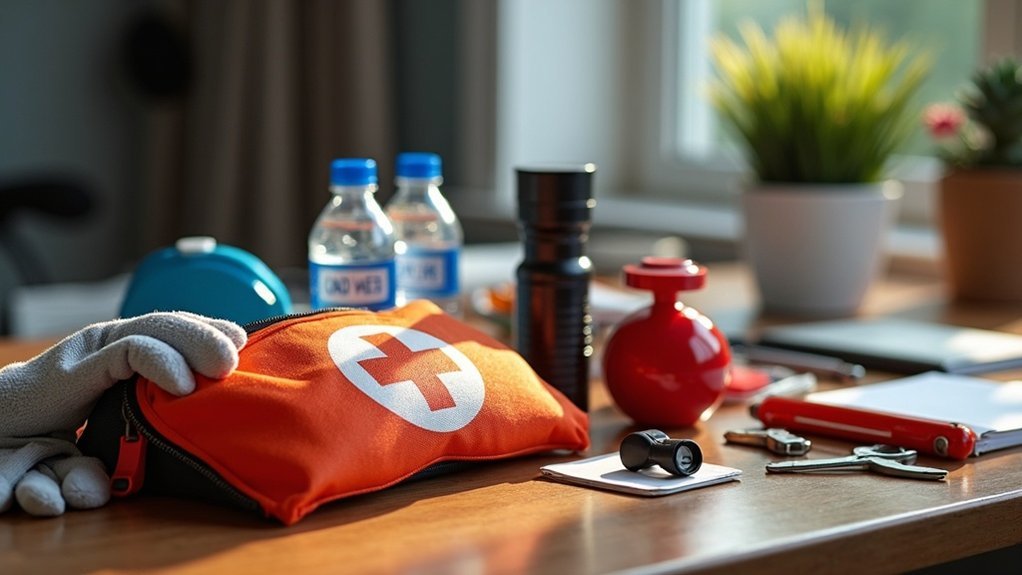
To assemble a work emergency kit, begin by gathering crucial survival supplies such as water, non-perishable food, and a comprehensive first aid kit. Incorporate essential safety items like a reliable flashlight, a versatile multi-tool, and hygiene products such as hand sanitizer. Choose a rugged, portable container for easy transport and access. It’s vital to establish a crisis communication plan and designate roles among team members to ensure efficient response during emergencies. Regularly inspect and replenish your supplies to keep everything in optimal readiness. For more advanced strategies on maintaining an effective survival kit, explore additional resources available on this site.
Key Takeaways
- Assemble vital supplies such as clean water, non-perishable food, and a well-stocked first aid kit to ensure your team’s survival during emergencies.
- Opt for a rugged, weatherproof container that is easy to carry and provides quick access to essential items when every second counts.
- Incorporate reliable communication tools like tactical flashlights, survival whistles, and a versatile multi-tool to aid in signaling for help and managing various emergency tasks.
- Conduct regular inspections and maintenance of your emergency kit, updating supplies, medications, and food at least once a year to ensure optimal preparedness.
- Secure important documents in a cloud-based backup system and maintain an updated list of emergency contacts for swift reference in times of crisis.
Importance of Emergency Preparedness in the Workplace
When unexpected disasters strike, being prepared in the workplace isn’t merely advantageous; it’s essential for safeguarding everyone’s well-being. Emergency preparedness is a fundamental aspect of survivalism that helps minimize risks and facilitates a rapid response.
By assembling a comprehensive survival kit tailored to your workforce’s unique needs, you ensure access to vital emergency supplies, such as non-perishable food, clean water, and first aid equipment. Regularly updating these supplies is crucial to maintain their effectiveness and accessibility, whether facing natural disasters, health emergencies, or other crises.
Assembling a tailored survival kit ensures your workforce has essential supplies ready for any emergency.
Furthermore, establishing a robust crisis communication plan delineates responsibilities and accelerates information dissemination, significantly reducing confusion during emergencies.
Training employees on survival procedures fosters a culture of preparedness, equipping everyone with the knowledge and skills necessary to respond effectively in critical situations.
Essential Supplies for Your Emergency Kit
An effective emergency kit is a crucial component of any survivalist or prepper’s strategy. It should contain at least five essential supplies to ensure you’re fully prepared for various situations. Consider including these key items in your kit:
| Item | Quantity |
|---|---|
| Water | 1 gallon per person per day for at least 3 days |
| First Aid Kit | Comprehensive with essential supplies |
| Non-perishable Food | Sufficient for at least 3 days |
| Safety Items (e.g., flashlight, whistle) | Critical for signaling and communication |
| Multi-tool or Knife | Versatile for various tasks |
Regularly inspect and replenish your emergency kit supplies to make sure food, batteries, and medications are within their expiration dates. An easily accessible kit can make a significant difference in survival situations, allowing you to respond effectively when it matters most. Stay prepared, stay safe!
Selecting the Right Container for Storage
When selecting a container for your emergency kit, it’s essential to prioritize durability and weather resistance to safeguard your critical supplies.
Opt for a size that’s easy to transport, such as a robust backpack or a medium-sized storage tote, ensuring you can mobilize quickly in an emergency.
Additionally, choose a container that allows for easy access, enabling you to retrieve essential items without hesitation during a crisis.
This careful selection is crucial for effective survivalism and prepping.
Size and Portability Considerations
Selecting the right container for your emergency survival kit is crucial, as it significantly influences your ability to respond effectively in a crisis.
Opt for a lightweight yet durable option, such as a tactical backpack or sturdy plastic storage tote, which allows for easy transport during emergencies. The container should be spacious enough to accommodate all essential supplies, including a comprehensive first aid kit, while remaining compact for rapid access when needed.
Look for containers with multiple compartments to keep your gear organized and prevent items from shifting during movement. Additionally, ensure that your container is waterproof or water-resistant to safeguard its contents from the elements.
Regularly inspect and maintain its condition to ensure you’re always prepared for any survival situation.
Durability and Weather Resistance
Choosing a container with durability and weather resistance is paramount for effective emergency preparedness in the survivalist and prepping community.
Opt for heavy-duty plastic or metal materials designed to withstand the rigors of emergencies. Ensure the container is waterproof or weather-resistant to safeguard your supplies from water and moisture, thus guaranteeing their reliability when you need them most.
Look for airtight seals to prevent contamination and deterioration of food, medical supplies, and other critical items that could be vital for your survival.
Additionally, select a lightweight container for easy transport and consider options with multiple compartments to keep your supplies organized and accessible.
This approach ensures your emergency kit remains functional and ready for any situation that may arise.
Easy Access Features
To ensure you can quickly access your emergency supplies when the situation demands, it’s vital to choose a container that emphasizes easy access features.
Select a lightweight backpack or a durable plastic storage tote that’s easy to transport. Make sure it’s waterproof or water-resistant to safeguard your supplies from moisture.
Opt for a clear or clearly labeled container to facilitate quick identification of contents, and consider one with compartments or pockets to effectively organize various items.
Additionally, store your emergency kit in a designated, easily accessible location within your prepper space to ensure that everyone can swiftly retrieve essential supplies, such as water (one gallon per person per day), during emergencies.
Safety and Hygiene Items to Include
When assembling your work emergency kit, make sure to prioritize essential hygiene supplies and safety gear that are crucial for survival situations.
Include items such as hand sanitizer, moist towelettes, and a selection of non-prescription medications to help maintain your health and hygiene during emergencies.
Additionally, pack protective gloves and hand warmers to ensure your safety and comfort in challenging environments.
Essential Hygiene Supplies
A well-stocked emergency kit is crucial for survivalists and preppers, as it includes essential hygiene supplies that help maintain cleanliness and prevent the spread of germs during crises.
Start by including items that are vital for personal care and sanitation. Consider adding:
- Hand sanitizer to quickly eliminate germs when soap and water aren’t available, ensuring you can maintain hygiene on the go.
- Moist towelettes for convenient cleaning of hands and surfaces, making it easier to stay clean in austere conditions.
- Plastic garbage bags for waste disposal, which are essential for keeping your living area hygienic and reducing health risks.
These essential hygiene supplies not only ensure a clean environment but also promote health and safety for everyone involved in emergency situations, reinforcing your preparedness and survival strategies.
Safety Gear Essentials
Including safety gear essentials in your emergency kit is crucial for ensuring your well-being in crisis situations.
Start by adding hand sanitizer and moist towelettes to maintain hygiene and limit germ spread, especially during prolonged emergencies. Stock plastic garbage bags for waste disposal, keeping your living space organized and free of hazards.
Don’t forget to include non-prescription medications like pain relievers and allergy meds to address minor health issues that may arise. Work gloves are vital for protecting your hands while handling debris or engaging in self-reliant tasks.
Finally, equip yourself with respiratory protection, such as dust masks or surgical masks, to filter contaminated air during emergencies. These safety gear essentials will significantly enhance your preparedness for any survival scenario.
Emergency Communication Tools
Effective emergency communication tools are crucial for survivalists and preppers to maintain operations during a crisis.
To enhance your preparedness, consider these key items:
- Spare chargers for personal devices to ensure you remain connected with your group and access vital information.
- A crisis communications plan that designates a spokesperson and outlines a clear communication chain to facilitate coordination during emergencies.
- Reliable contact information for local emergency services, fellow preppers, and key decision-makers to ensure quick access to support when needed.
Regular Maintenance and Updates for Your Kit
Maintaining and updating your emergency survival kit is crucial to ensure it remains effective when you need it most. Conduct regular maintenance at least once a year to check supplies such as non-perishable food, batteries, and medications.
Designate a responsible member of your prepping group, ideally someone with consistent access to the kit, to oversee this vital process. Utilize a detailed checklist for easy inventory checks and promptly replace any expired items.
Schedule periodic drills to ensure everyone is familiar with the kit’s location and contents, so you’re ready when the unexpected strikes. Confirm that fire extinguishers are included and in working order.
Finally, document the date of the last maintenance check to effectively track your kit’s upkeep and readiness for any emergency situation.
Designating Responsibilities for Emergency Preparedness
Designating clear responsibilities for emergency preparedness is crucial for ensuring that your workplace is equipped to respond effectively in a crisis. Assign a staff member to oversee the maintenance and updates of your emergency supplies, and make sure these responsibilities are reflected in their job descriptions to highlight their significance.
Clear responsibilities for emergency preparedness ensure effective crisis response and highlight the importance of designated roles in your workplace.
Consider implementing these key actions:
- Identify a spokesperson and develop a crisis communication plan tailored for survival situations.
- Ensure that every team member is aware of their specific roles and contacts during emergencies, especially in the context of self-reliance and preparedness.
- Schedule regular training sessions and drills focused on survival skills and emergency response to keep everyone informed and ready.
This comprehensive list of responsibilities won’t only enhance your workplace’s readiness but also foster a culture of preparedness and survivalism.
Storing Important Documents and Records
Once you’ve assigned responsibilities for emergency preparedness, it’s crucial to ensure that all vital documents and records are stored securely. Regularly back them up online using trustworthy cloud services designed for survivalists. Confirm they’re accessible via any internet-connected device, enabling swift retrieval during crises. Maintain an updated list of on-site visitors to bolster safety and accountability; consider implementing visitor check-in apps for secure access to records. Schedule regular reviews of your document storage practices to keep them aligned with your survival strategies.
| Documents | Action Required |
|---|---|
| Important Records | Backup online |
| Visitor Logs | Update regularly |
| Emergency Protocols | Review and revise |
| Safety Procedures | Store digitally |
| Contact Information | Verify accessibility |