To store fuel safely for your survival and prepping needs, use approved containers specifically designed for flammable liquids, with steel or aluminum being the preferred materials. Always keep your fuel in a well-ventilated area, ensuring it is at least 50 feet away from any ignition sources, and maintain a temperature between 60°F and 70°F to prevent volatility. Fill containers to 80% capacity to allow for expansion, and label them clearly to avoid confusion. Regularly inspect your fuel storage for leaks or signs of degradation to ensure safety. By applying these precautions, you minimize risks and enhance your preparedness for any situation. Explore additional tips for safe fuel storage to bolster your survival strategy.
Key Takeaways
- Store fuel in approved containers made of durable materials, avoiding glass to prevent breakage and leaks, which is crucial for survival scenarios where reliability is key.
- Keep gasoline at least 50 feet away from ignition sources and in well-ventilated areas to significantly reduce fire risks, especially in emergency situations where quick access may be needed.
- Fill containers to a maximum of 80% capacity to allow for thermal expansion and prevent pressure buildup, ensuring that your fuel remains safe and usable during unexpected temperature fluctuations.
- Regularly inspect containers for leaks or signs of degradation, and replace gasoline annually to maintain quality, as stale fuel can be detrimental in survival situations when every resource counts.
- Dispose of expired or unused fuel properly at designated hazardous waste facilities to prevent environmental contamination, which is vital for maintaining a sustainable survival environment.
Importance of Safe Fuel Storage
When you store fuel as part of your survival preparations, it’s essential to understand the significant dangers associated with gasoline and diesel. These substances are highly flammable and can ignite from even the slightest spark, making proper storage paramount for minimizing fire risk.
Always use approved containers and ensure they’re tightly sealed to prevent leaks. To enhance your preparedness, limit your gasoline storage to no more than 25 gallons, and store it in a well-ventilated area, at least 50 feet away from any ignition sources.
Adhering to local guidelines not only boosts your safety but also helps prevent environmental contamination that can result from improper disposal. By being vigilant in your fuel storage practices, you can safeguard both your health and your environment, ensuring you’re ready for any situation that may arise.
Recommended Containers for Gasoline
Choosing the right container for storing gasoline is essential for guaranteeing safety and maintaining fuel integrity, especially for survivalists and preppers.
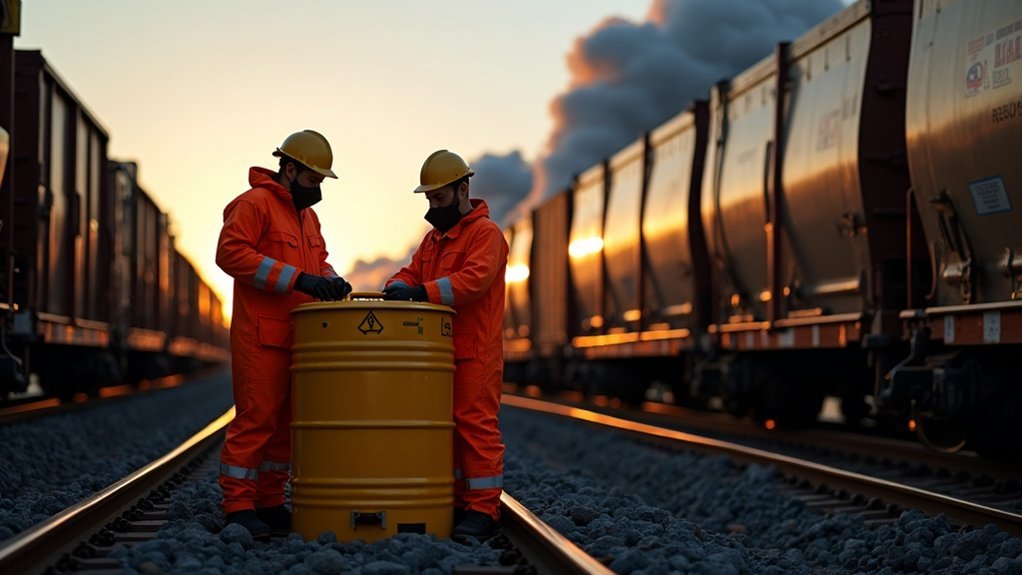
Use approved fuel containers specifically designed for flammable liquids, such as those made from durable steel or aluminum, to ensure reliability in emergency situations. Avoid glass due to its fragility, and verify that any plastic containers are compatible with gasoline to prevent leaks.
Use approved steel or aluminum containers for gasoline storage; avoid glass and ensure plastic is compatible to prevent leaks.
Fill containers to about 80% of their capacity to allow for thermal expansion, leaving room for air. Store them in a cool, dry place away from heat sources, as gasoline vapors can ignite and pose serious risks.
Always clearly label your containers as “Gasoline” and include a warning like “NOT FOR FOOD” to prevent misuse and ensure safety in your prepping supplies.
Ideal Storage Conditions
To store gasoline safely for survival and prepping purposes, it’s crucial to control the temperature and ensure proper ventilation.
Aim for a storage temperature between 60°F and 70°F, keeping the fuel away from any heat sources that could ignite vapors.
Additionally, ensure that the area is well-ventilated to allow any accumulated fumes to dissipate, significantly reducing fire hazards.
Proper storage practices are essential for long-term fuel preparedness in any survival situation.
Temperature Control
Storing gasoline safely is crucial for survivalists and preppers, as improper temperature control can lead to vaporization and degradation, compromising your fuel supply. Ideally, keep gasoline containers at room temperature, between 60°F and 80°F (15°C to 27°C). Always store them away from ignition sources and direct sunlight to minimize the risk of fire. To accommodate for thermal expansion, fill containers to 80% capacity. Regularly check your storage conditions to ensure stability and readiness for emergencies.
| Temperature Range | Risks | Best Practices |
|---|---|---|
| Below 60°F (15°C) | Increased viscosity, difficult to use in cold conditions | Avoid freezing conditions |
| 60°F – 80°F | Ideal for long-term storage | Maintain this range |
| Above 100°F (38°C) | Pressure buildup, potential leaks, and hazards | Keep containers cool and dry |
Ventilation Requirements
While proper temperature control is essential, ensuring adequate ventilation is equally critical for safe gasoline storage in a survivalist context.
Store gasoline in a well-ventilated area, such as a dedicated shed or garage, to prevent the accumulation of flammable vapors, which can be particularly dangerous in emergency situations.
Maintain the storage site at room temperature and at least 50 feet away from potential heat sources and ignition sources, such as furnaces or electrical panels, to minimize risks.
Regularly inspect containers for leaks and deterioration, as proper ventilation is key to mitigating fire hazards.
Avoid sealing containers airtight; allowing vapors to escape prevents pressure buildup, ensuring safer gasoline storage and facilitating proper disposal practices, which are crucial for long-term preparedness.
Safety Precautions When Handling Fuel
When managing fuel in the context of survivalism and prepping, following stringent safety precautions is crucial to prevent accidents and ensure your safety.
Always store gasoline in approved containers with a capacity of 5 gallons or less, ensuring they’re tightly sealed to minimize the release of gasoline vapors. Keep these containers at least 50 feet away from any potential ignition sources to mitigate the risk of fire.
Whenever feasible, handle fuel outdoors in well-ventilated areas, while wearing protective gloves and goggles to safeguard against spills. Refrain from smoking or creating any sparks near fuel storage areas.
Regularly inspect your fuel containers for leaks and store them in a cool, dry place to prolong their usability. For proper disposal, utilize an approved disposal center to effectively reduce risks and maintain a safe environment.
Monitoring and Maintenance of Stored Gasoline
Effective monitoring and maintenance of stored gasoline is crucial for ensuring both safety and fuel quality, especially for survivalists and preppers.
To achieve this, follow these key practices:
- Regularly inspect for color or odor changes, which can indicate degradation and potentially hazardous conditions.
- Check containers for leaks and ensure they’re tightly sealed to prevent contamination and loss of fuel.
- Monitor the temperature and storage environment, keeping gasoline cool and dry to maintain its efficacy.
- Use fuel stabilizers to extend shelf life and replace older gasoline annually, ensuring you always have reliable fuel for emergencies.
Disposal Guidelines for Unused Gasoline
When disposing of unused gasoline, it’s essential to follow local regulations to ensure compliance and avoid penalties.
Safe disposal methods are crucial; never pour gasoline down drains or throw it in the trash, as this can harm the environment and pose risks in a survival situation.
For those preparing for emergencies, check with your local government for designated hazardous waste disposal sites that accept old gasoline and adhere to their guidelines for safe transport.
Proper disposal not only protects the environment but also ensures that you’re prepared for any unforeseen circumstances.
Local Disposal Regulations
Understanding local disposal regulations is crucial for survivalists and preppers when it comes to safely disposing of unused gasoline.
Always check with your local government or waste management agencies for specific guidelines, as they can vary significantly. It’s essential to avoid harmful disposal methods that could jeopardize health and the environment.
Consider these key points for effective gasoline disposal:
- Many local hazardous waste disposal sites accept unused gasoline, which can be vital for maintaining safety in your prepping efforts.
- Use properly labeled containers for safe transport to ensure you can easily identify contents in case of emergencies.
- Store gasoline containers tightly in approved locations to prevent leaks and maintain safety in your storage areas.
- Explore recycling options for processing old gasoline, which not only helps the environment but can also be a resourceful way to manage fuel supplies.
Safe Disposal Methods
Properly disposing of unused gasoline is critical for survivalists and preppers who prioritize environmental safety and public health. Improper disposal methods can create significant contamination hazards that can affect your preparedness efforts.
Always consult local regulations for proper disposal methods, as many areas prohibit disposal in regular trash or drains. It’s wise to take expired gasoline to a hazardous waste disposal center, where it can be handled according to environmental regulations, ensuring that your prepping activities remain sustainable.
Never pour gasoline on the ground or into water sources, as this can compromise the environment and your ability to source clean water in the future. For minor spills, use absorbent materials like sawdust or rags, and place them in approved containers for proper disposal to maintain a clean and safe environment.
Additionally, consider recycling options if available, as some facilities accept gasoline for recycling into new products, keeping your resources as efficient as possible for your preparedness plans.
Tips for Extending Gasoline Shelf Life
To ensure your gasoline remains viable for your survival needs, it’s essential to extend its shelf life effectively. Utilizing a fuel stabilizer is a key step in this process. A 10-ounce bottle can keep 25 gallons fresh for up to a year.
Here are some tips to enhance your fuel storage strategy:
- Store fuel in approved, durable containers that are tightly sealed to prevent contamination.
- Position your gasoline away from heat sources, maintaining a stable room temperature to avoid degradation.
- Regularly rotate your supply every six months to a year, which helps prevent varnish buildup and maintains fuel quality.
- Fill your containers to about 80% capacity to allow for thermal expansion, reducing the risk of spills or leaks.
Additionally, keep a vigilant eye on your fuel for any changes in color or odor, as these can indicate degradation.
Properly dispose of any expired fuel to ensure safety and protect the environment, which is crucial for long-term survival preparedness.