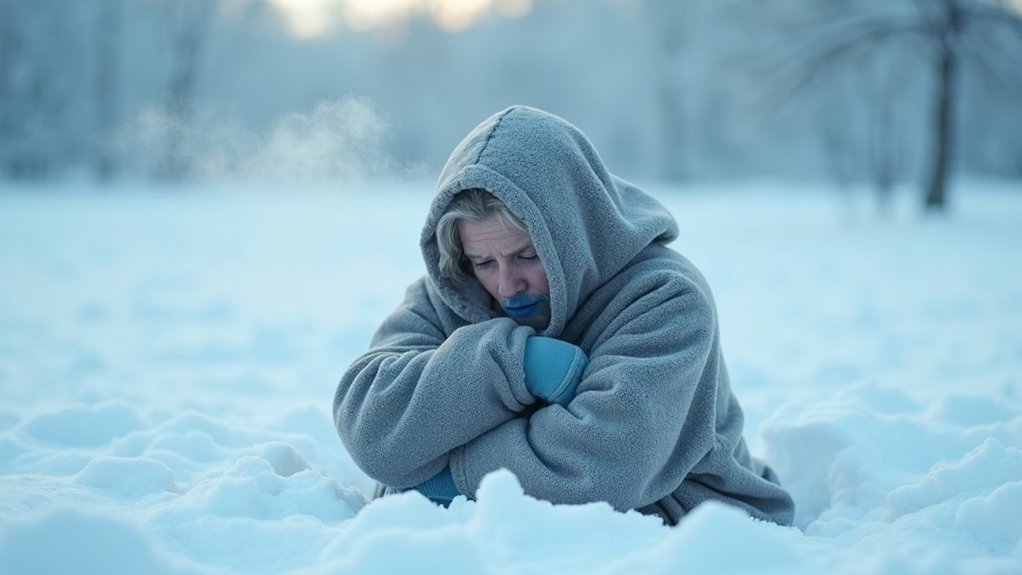
To recognize hypothermia in survival situations, be vigilant for symptoms such as shivering, confusion, and extreme fatigue when body temperature drops below 95°F (35°C). As hypothermia progresses, you may observe slow or labored breathing, slurred speech, and bluish skin. In severe cases, shivering may stop entirely, which is a critical warning sign and can lead to cardiac arrest. It’s important to note that young children and older adults are particularly vulnerable in cold environments. Quick action is essential for survival; familiarize yourself with the symptoms, causes, and effective response strategies to enhance your preparedness in the face of cold weather emergencies.
Key Takeaways
- Keep track of your body temperature; hypothermia sets in when it falls below 95°F (35°C).
- Be alert for early signs such as shivering, confusion, and fatigue, which can indicate the onset of hypothermia.
- Identify moderate symptoms including slow breathing, slurred speech, and bluish skin as the condition progresses.
- Understand that severe hypothermia can lead to the cessation of shivering and a heightened risk of cardiac arrest.
- Pay special attention to vulnerable individuals, such as older adults and young children, for early warning signs of hypothermia in survival situations.
Overview of Hypothermia
Hypothermia occurs when your body temperature drops below 95°F (35°C), posing a serious risk in survival situations. It can happen even in temperatures above 40°F (4.4°C) if you’re exposed to cold conditions, especially when wearing wet clothing.
Hypothermia can occur even in mild temperatures, especially when wet, posing serious risks in survival situations.
Understanding the risk factors is crucial—older adults and young children are particularly vulnerable, as well as individuals under the influence of substances.
In survival scenarios, heat loss accelerates in low temperatures, making it essential to recognize the signs of hypothermia early to ensure your safety and the safety of others.
Immediate action is crucial; if you suspect someone is experiencing severe symptoms, calling for emergency assistance is vital. Ignoring these signs can lead to severe complications, including cardiac arrest and death, which is why being prepared and knowledgeable about hypothermia is a key aspect of prepping for adverse conditions.
Symptoms and Severity Levels
Recognizing the symptoms and severity levels of hypothermia is crucial for survival in cold environments.
Mild hypothermia occurs when your body temperature drops between 95°F and 89.6°F, leading to symptoms such as shivering, confusion, and fatigue.
As the condition progresses to moderate hypothermia (89.6°F to 82.4°F), individuals may experience slow breathing, slurred speech, and a bluish tint to the skin.
Severe hypothermia, characterized by a body temperature below 82.4°F, can result in the cessation of shivering, dangerously low blood pressure, and potentially cardiac arrest.
It’s vital to remember that if shivering stops, it often indicates a worsening state.
Stay vigilant for these signs, especially when engaging in outdoor activities during cold weather, to ensure you can take the necessary precautions and prevent severe outcomes.
Always be prepared with the right gear and knowledge to handle hypothermia effectively.
Causes and Risk Factors
When preparing for cold weather survival, it’s crucial to understand the causes and risk factors that can lead to hypothermia. Here are some key contributors to be aware of:
- Prolonged exposure to cold, wet conditions, or strong winds can rapidly deplete your body heat.
- Young children are particularly vulnerable, as they lose heat faster than adults.
- Older adults may have diminished body temperature regulation, making them more susceptible to hypothermia.
- Alcohol or drug use can impair your judgment and hinder your ability to retain heat.
- Living in poorly heated environments or lacking proper shelter can expose you to dangerous cold conditions, especially if you find yourself homeless.
By recognizing these risk factors and preparing accordingly, you can enhance your safety during cold weather and reduce the risk of dangerous drops in body temperature.
Stay informed, equipped, and ready to tackle the elements!
Emergency Response and Treatment
Being aware of the signs and risk factors associated with hypothermia is just one part of the survival equation; knowing how to respond effectively in an emergency situation is equally crucial.
| Action | Purpose |
|---|---|
| Call for emergency medical assistance | Ensure professional help is on the way |
| Move to a sheltered, warm location | Minimize heat loss |
| Remove wet clothing | Prevent further heat loss |
| Offer warm, non-alcoholic beverages | Gradually raise core temperature |
| Monitor closely | Keep an eye on changes in condition |
| Be prepared to administer CPR | Respond to unresponsiveness |
Act swiftly to warm the individual and seek help to effectively mitigate the effects of hypothermia, ensuring you are always ready for any emergency situation.
Prevention Strategies
To prevent hypothermia, it’s crucial for survivalists and preppers to dress appropriately for cold conditions. Layering with water-resistant and windproof outer layers will help you stay warm and minimize heat loss.
Here are some essential strategies for staying safe in extreme cold:
- Wear a tactical hat and insulated mittens to prevent heat loss from your extremities.
- Change out of wet clothing immediately to maintain body temperature and stay dry.
- Ensure your living environment is maintained at a minimum temperature of 68°F (20°C) to provide a safe haven during harsh weather.
- Always inform a trusted contact of your travel plans during winter expeditions.
- Keep a well-stocked emergency supply kit in your vehicle, including blankets, warm clothing, and other survival essentials.