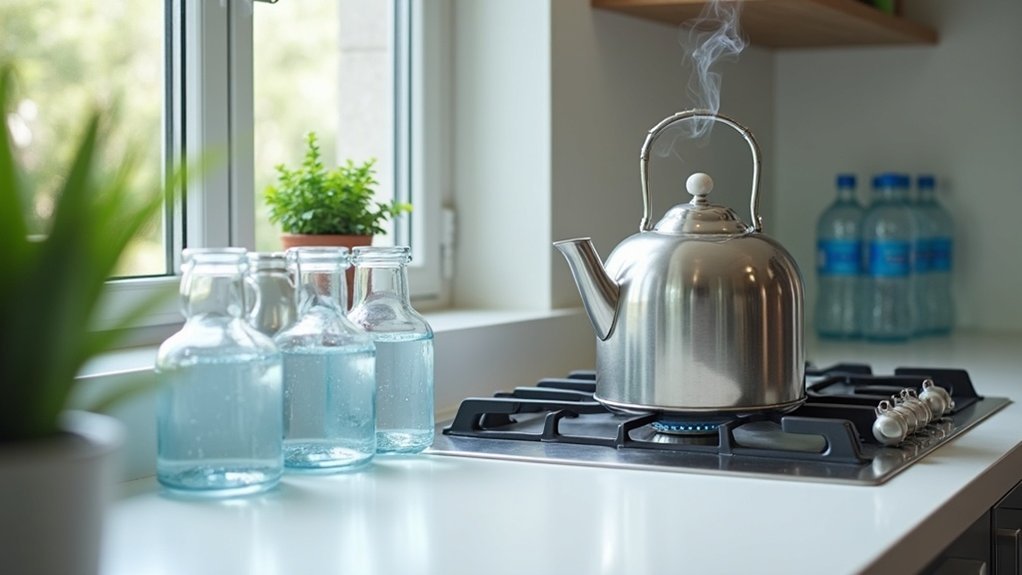
To store water at home for survival and prepping, select food-grade containers made from HDPE plastic or stainless steel, ensuring you have at least 1 gallon per person per day. Thoroughly clean your containers with soap and a bleach solution before filling them with potable water. Seal them tightly and store in a cool, dark place to maintain freshness and prevent contamination. It’s crucial to replace your water supply every 6-12 months to ensure safety and reliability in an emergency situation. To further enhance your water storage strategy, consider exploring advanced techniques and methods tailored for long-term preparedness.
Key Takeaways
- Use food-grade containers like HDPE plastic or stainless steel, ensuring they are thoroughly cleaned and free from contaminants before storage to maintain water purity.
- Fill containers with potable water and add 1/8 teaspoon of unscented bleach per gallon for untreated water to enhance preservation against bacterial growth.
- Store water in a cool, dark place, away from direct sunlight, and regularly inspect for leaks or wear on containers to ensure reliability during emergencies.
- Clearly label each container with the fill date and replace stored water every 6-12 months to ensure it remains fresh and ready for use when needed.
- Maximize storage space by utilizing underutilized areas, such as basements or closets, and varying container sizes for ease of access during emergencies or survival situations.
Importance of Water Storage and Emergency Preparedness
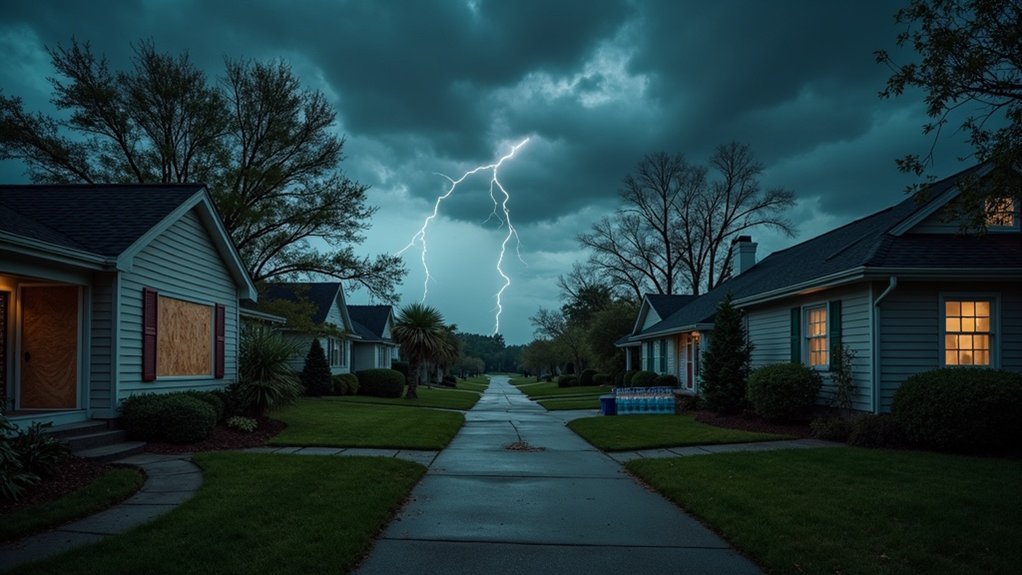
When emergencies strike, having a reliable water supply can mean the difference between survival and chaos. Effective water storage is crucial, particularly in flood-prone areas where local sources may become compromised.
Survival experts recommend storing at least 1 gallon of water per person per day, ideally for 14 days, to ensure you have sufficient resources for hydration, cooking, and sanitation needs.
Utilizing clean, durable containers is essential for maintaining the integrity of your emergency water supply and preventing contamination.
While a minimum three-day reserve is vital, extending your storage capacity to two weeks significantly bolsters your preparedness.
Recommended Amount of Water for Storage
To ensure your water storage effectively supports your household during emergencies, it’s vital to understand the recommended amounts. The Department of Defense advises a minimum of 1 quart per person per day, though 1 gallon is preferable for adequate hydration.
For a family of four, you should aim to store at least 12 gallons for three days, or ideally up to 56 gallons for a two-week period. Each individual needs between 0.5 to 1 gallon for drinking and food preparation, in addition to another 0.5 to 1 gallon dedicated to hygiene.
Don’t overlook your pets—include an extra quart per pet daily in your calculations to ensure that every member of your household is well taken care of during emergencies. Being prepared means having sufficient resources for all.
Types of Containers for Water Storage
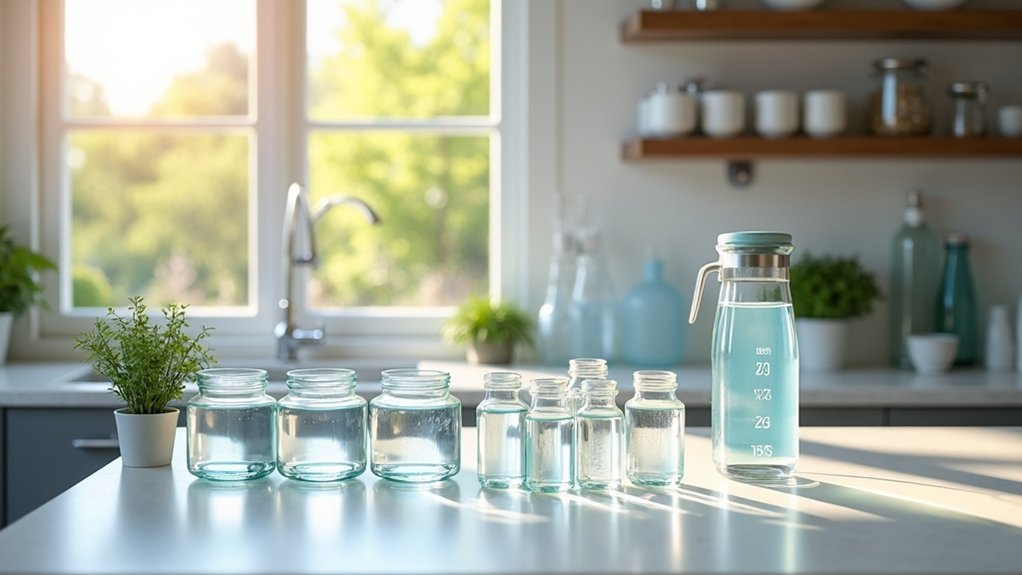
When selecting containers for water storage in your survival and prepping endeavors, it’s crucial to prioritize food-grade materials such as high-density polyethylene (HDPE) plastic or stainless steel to ensure safety and prevent chemical leaching.
Consider the size of the containers carefully; larger containers are ideal for long-term storage needs, while smaller options can be more manageable during emergencies or when transporting water.
Always verify that lids are tightly sealed to prevent contamination and keep your water supply clean and safe for consumption.
Food-Grade Materials Importance
Choosing the right type of container for water storage is crucial for survivalists and preppers, as it directly impacts the safety and quality of your drinking water in emergency situations.
To ensure your water remains uncontaminated and safe for consumption, consider these vital points:
- Use containers labeled as food grade to prevent harmful chemical leaching that could jeopardize your health.
- Opt for durable plastic bottles or stainless steel containers; remember that glass can shatter, posing a risk in a survival scenario.
- Make sure containers have secure lids and spouts to minimize the risk of contamination from external sources.
- Regularly inspect your storage containers for wear and tear; degraded containers can compromise your water safety when you need it most.
Container Sizing Considerations
Selecting the right container size for water storage is crucial for effective survival and prepping strategies. Ensure you opt for food-grade plastic or stainless steel to ensure the safety of your water supply. Sanitized containers with secure lids and spouts are essential for long-term storage. For each household member, a minimum of 1 gallon of water per day is recommended, making larger containers, such as 5-gallon jugs, ideal for extended storage needs during emergencies.
| Container Type | Capacity | Advantages |
|---|---|---|
| Food-Grade Plastic | 5 gallons | Lightweight, easy to handle, stackable for efficient storage |
| Stainless Steel | 2 gallons | Durable, non-leaching, resistant to rust and corrosion |
| Glass | 1 gallon | Non-permeable, safe, but heavy and breakable |
In prepping for unforeseen situations, it’s important to have a reliable water storage plan that considers both quantity and container materials.
Cleaning and Sanitizing Water Containers
Properly cleaning and sanitizing water containers is crucial for ensuring safe drinking water in any survival situation. Follow these steps to effectively clean and sanitize your containers for long-term storage:
- Begin by washing the container thoroughly with dish soap and warm water to remove any contaminants.
- Rinse completely to eliminate all soap residue, ensuring a clean surface for sanitization.
- Prepare a bleach water solution by mixing 1 teaspoon of unscented liquid bleach with 1 quart of water.
- Shake the solution in the container for 30 seconds to ensure all surfaces are sanitized, then allow it to air-dry completely before use.
Always label and date your sanitized containers.
It’s advisable to replace stored water every 6-12 months to maintain its quality.
This practice ensures that you’re prepared with safe, clean drinking water in any emergency or survival scenario.
Filling Your Storage Container With Water
When filling your storage container with water for preparedness, always select a reliable and safe source to ensure the water is potable.
If you’re utilizing untreated water, it’s essential to add 1/8 teaspoon of unscented liquid bleach per gallon for effective disinfection.
After filling, securely seal each container, label it with the date, and store it in a cool, dark place to preserve its quality.
This strategy is crucial for ensuring you have a dependable water supply in case of emergencies.
Source Selection Guidelines
To ensure your water storage is safe and reliable for survival situations, it’s crucial to choose a trustworthy source for filling your containers. Follow these source selection guidelines:
- Utilize tap water from a known, safe municipal supply for drinking water whenever possible.
- If you choose untreated sources, such as rivers or lakes, add 1/8 teaspoon of unscented liquid bleach per gallon to disinfect the water.
- Always tightly seal filled containers to prevent contamination—be careful not to touch the inside of the cap.
- Clearly label and date each container to monitor storage periods, and replace the water every 6-12 months to maintain freshness.
Consider additional sources, such as draining your hot water heater, which can provide 30-80 gallons of potable water when properly sanitized, making it a valuable resource in an emergency.
Proper Filling Techniques
Ensuring your water storage containers are filled correctly is crucial for survival preparedness and maintaining the safety and quality of your water supply.
Begin by using sanitized containers; thoroughly clean them with soap, rinse them well, and disinfect using a bleach solution. If you’re sourcing water from untreated locations, it’s vital to add 1/8 teaspoon of unscented liquid bleach per gallon of water to ensure its safety.
When filling from hot water heaters, remember to turn off the heat, drain the tank, and add 8 drops of bleach per gallon to purify the water.
After filling, securely seal the containers to prevent contamination, and label each with the date to monitor freshness.
To maintain an effective emergency water supply, regularly replace stored water within 6-12 months. Being proactive about your water storage can make a significant difference in a survival situation.
Where to Store Your Emergency Water Supply
Selecting the right location for your emergency water supply is crucial for ensuring both its quality and accessibility in times of need. Here are some survival-focused tips to consider:
Choosing the proper location for your emergency water supply is vital for maintaining its quality and accessibility when it matters most.
- Store water in a cool, dark place to prevent degradation of bottled water containers, which can compromise your supply during an emergency.
- Utilize creative spaces such as under beds, in closets, or even in your basement for maximum storage efficiency—every inch counts when prepping.
- Ensure all caps are tightly sealed to prevent leaks and avoid any contamination around the containers, which could render your supply unsafe.
- Regularly inspect your plastic containers for any signs of wear and tear, replacing them every 6-12 months to maintain a reliable source of fresh water.
Additionally, label and date your water storage to facilitate tracking and ensure that you have access to fresh water when you need it the most.
Being prepared is key to survival, and a well-maintained water supply is a critical component of your emergency preparedness plan.
When to Replace Your Emergency Water Supply
While you might believe your emergency water supply can last indefinitely, regular replacement is essential for ensuring safety and quality in any survival situation.
It’s advisable to replace stored water every 6-12 months to ensure freshness and readiness. Although bottled water itself doesn’t expire, rotating it before the best-by date is smart for optimal taste and hydration during an emergency.
If water has been stored for longer, it can still be utilized as a last resort, provided you treat it with proper disinfectants to eliminate potential contaminants.
Always inspect plastic containers for any signs of wear and tear, as damaged containers can compromise water quality and safety.
To maintain an effective preparedness plan, label and date each container to track their age and ensure timely replacement, keeping your water supply ready for when it’s needed most.