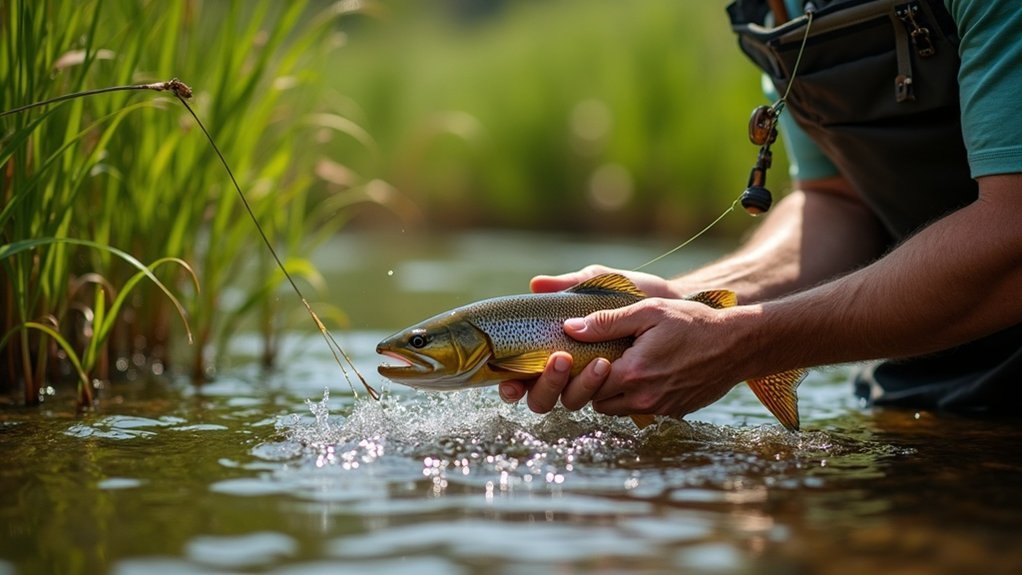
You can effectively catch fish without a rod using survival techniques such as hand lining, spearing, or trapping. For hand lining, secure a hook to a durable line, bait it with natural offerings, and drop it into the water. Spearing requires crafting a robust spear and patiently targeting visible fish, which can be crucial when food sources are scarce. Traps can be constructed from repurposed materials like plastic bottles or nets and strategically placed in narrow currents to maximize your catch. Additionally, consider using natural poisons to stun fish, but ensure you’re knowledgeable about local regulations and safety. Keep honing your skills and learn more about successful catch methods and post-catch processing to enhance your survival preparedness!
Key Takeaways
- Utilize a hand line by securely tying a hook to a strong line, adding appropriate bait, and reeling in your catch by hand when you feel bites. This method is effective for quick fishing without the need for a rod.
- Craft a spear from a sturdy, straight branch to target fish in shallow waters. Move with stealth and precision to increase your chances of a successful catch, which is vital in survival situations.
- Create a simple fish trap using a plastic bottle. Invert the top half, place bait inside, and submerge it in the water for 1-2 hours to attract and catch fish. This method can provide a sustainable food source when resources are scarce.
- Employ nets or repurposed plastic bags in narrow water flows. Create disturbances upstream to guide fish into your trap, ensuring you maximize your catch during critical times.
- Research and utilize fish-stupefying plants, ensuring they are safe and legal to use in your area. This technique can incapacitate fish, making them easier to capture—a useful skill in survival scenarios where food sources are limited.
Using a Hand Line
If you’re looking to catch fish without a rod as part of your survival strategy, using a hand line is a straightforward and effective method.
Start by tying a strong hook onto a fishing line, or even an improvised line if you’re in a pinch. In survival situations, you can craft hooks from everyday items like paper clips or soda can tabs, which can be invaluable when resources are limited.
Next, bait your hook with live worms or small fish to attract your target, ensuring you utilize available resources wisely.
Drop the line into the water, letting it sink to the desired depth, which can be crucial for targeting specific fish species.
When you feel a bite, tug the line to set the hook, and reel in your catch hand-over-hand, maximizing your chances of securing food in a survival scenario.
Making a Trap Out of a Plastic Bottle
Creating a fish trap out of a plastic bottle can be an invaluable skill for survival situations, allowing you to catch fish without the need for traditional fishing gear. Here’s a step-by-step guide to construct your own bottle trap:
Crafting a fish trap from a plastic bottle is a vital survival skill, enabling you to catch fish with ease.
- Begin by cutting the top off a 2-liter plastic bottle. Invert this top section into the bottom half to create a funnel, which will help guide fish into the trap.
- Add bait to the trap, using food scraps or insects, to effectively attract fish. This is crucial for ensuring your trap is successful.
- To stabilize the trap, weigh it down with small stones and attach a line for easy retrieval.
Once your trap is ready, submerge it in water and check it after 1-2 hours. For improved success, consider using multiple traps in different locations.
This technique not only enhances your chances of catching fish but also demonstrates resourcefulness in a survival scenario.
Spearing Fish
To effectively spear fish as part of your survival strategy, you’ll need a sturdy spear crafted from a strong, straight branch, such as green willow.
Once your spear is ready, focus on shallow waters where fish are visible and easier to target.
Mastering your technique and timing is crucial for a successful catch, so observe the fish’s movements carefully.
This skill can be vital for sourcing food in a survival situation, ensuring you can sustain yourself when traditional resources are scarce.
Best Spear Materials
Selecting the right materials for your spear is crucial for survival situations, especially when it comes to spearfishing for food. For catching fish in shallow water, consider these materials that align with your prepping and survivalist needs:
- Green Willow: Lightweight yet durable, this material allows for easy maneuverability, making it an excellent choice for quick strikes.
- Bamboo: Known for its strength and flexibility, bamboo provides the necessary rigidity while maintaining a low weight, which is vital when crafting survival tools.
- Hardwood Saplings: These are sturdy and reliable, offering the strength needed for a sharp tip, which is essential for effective fishing.
Ensure your spear is free of knots or splinters to maintain accuracy during use. A sharpened tip, whether crafted from wood or enhanced with metal, significantly increases your chances of securing food.
With the right spear made from these materials, you’ll be better equipped to meet your survival needs efficiently and effectively.
Effective Spearing Techniques
While it may seem intimidating, mastering effective spearing techniques is an essential survival skill that can greatly enhance your chances of obtaining food in a wilderness scenario.
Start by selecting a strong, straight branch, such as green willow, to craft your spear. Seek out shallow water where fish are easily visible; this not only improves your aim but also allows you to conserve energy.
Approach quietly, ensuring you cast no shadows to maintain stealth and avoid alarming your target. When you’re ready to strike, aim for the base of the fish’s head for a secure catch, maximizing your chances of success.
Remember, patience is crucial; sudden movements can scare fish away and lead to missed opportunities. Wait for the right moment, and your steady hands will reward you with a successful catch.
This skill isn’t just about fishing—it’s about self-reliance and resourcefulness in a survival situation.
Happy spearing, and stay prepared!
Building a Net-in-the-Gap Trap
Building a net-in-the-gap trap can be an effective survival technique for catching fish without the need for traditional fishing gear. Follow these steps to create your trap:
- Identify a narrow water flow area, such as a stream or channel, where fish are likely to swim through. This is essential for maximizing your catch.
- Use natural materials like rocks to shape a “V” in the water, leaving a gap smaller than your net to prevent fish from escaping.
- Securely place a net or a sturdy plastic bag across the gap downstream to trap the fish. To enhance your chances, create commotion upstream to direct fish into your trap.
Make sure to check your trap after a few minutes; you’ll likely catch smaller fish more frequently, which is crucial for increasing your chances of securing a reliable food source in a survival situation!
How to Make a Fishing Hook in the Wild
Creating a fishing hook in the wild can be an essential survival skill, especially when you’re in need of sustenance. You can craft a functional hook using items you might’ve on hand, such as safety pins: simply unfasten and straighten one, then sharpen one end to create a point.
Secure a fishing line made from natural materials like tree roots or durable grass to enhance your chances of success.
Alternatively, if you have access to a paper clip, you can bend it into a hook shape, ensuring it has a sharp point for effective fishing.
When fishing without a rod, it’s crucial to add bait to your hook; worms or small bits of food work well for attracting fish.
Always test your homemade hooks for sturdiness, as they need to withstand the weight of your catch.
Remember, in a survival situation, your ability to adapt and utilize available resources is key.
Happy fishing, and may your efforts yield a fruitful catch!
Fishing With Fish Stupefying Plants and Poisons
When you’re delving into alternative fishing methods for survival situations, fish stupefying plants can be a crucial asset.
Identifying the appropriate toxic plants, preparing them safely, and applying them correctly is essential not only for your success but also for maintaining the health of the ecosystem.
Always be aware of local regulations to ensure that you’re fishing responsibly while utilizing these powerful natural resources.
Toxic Plant Identification
How can you effectively identify toxic plants that can assist you in catching fish without a traditional rod? Start by familiarizing yourself with local flora, especially in a survival situation.
Here are three key tips for identification:
- Research: Investigate plants like Barringtonia Asiatica, known for their ability to stun fish, which can be crucial in a survival scenario.
- Observe: Pay close attention to plant characteristics—leaf shape, flower color, and preferred habitat to ensure accurate identification.
- Caution: Always verify a plant’s safety before use; improper identification can harm both fish and the delicate balance of aquatic ecosystems.
Mastering toxic plant identification is essential for survivalists, allowing you to catch fish effectively while also protecting the environment.
Embrace the challenge of sustainable fishing techniques that can support your prepping lifestyle!
Preparation and Application
Using fish stupefying plants can significantly enhance your survival fishing skills, especially when conventional gear is unavailable.
To effectively catch fish without a rod, you can prepare a pulp from plants like Barringtonia Asiatica and introduce it into contained water areas such as creeks or ponds. The natural toxins in these plants temporarily incapacitate fish by constricting their gills, making them easier to capture in a survival situation.
However, it’s crucial to ensure that this method is legal in your area, as regulations on fishing techniques can vary widely.
Always prioritize responsible fishing practices, avoiding harm to local ecosystems and non-target species, to maintain environmental balance while honing your survival skills.
Safety and Regulations
Employing fish stupefying plants can be an effective survival tactic for those experienced in survivalism and prepping, but it comes with significant responsibilities.
To ensure safety and compliance with regulations, keep in mind the following key points:
- Know Local Laws: Always check with local wildlife authorities for specific regulations regarding the use of fish-stupefying plants in your area. Understanding the legal framework is crucial for responsible survival practices.
- Use Responsibly: Limit the application of these plants to contained or flowing water sources to protect non-target species and maintain the balance of the ecosystem. Responsible usage is vital for sustainable survival strategies.
- Dispose Properly: After utilizing these plants, ensure that any leftover materials are disposed of correctly to prevent harm to other wildlife. Proper disposal is an essential aspect of ethical survivalism.
Adhering to these guidelines allows you to engage in fishing responsibly while respecting environmental laws and safeguarding local wildlife, ultimately enhancing your prepping skills and survival knowledge.
What to Do After You Catch a Fish?
Once you’ve successfully caught a fish, the next steps are crucial for ensuring its quality, taste, and your survival. Carefully remove the fish from the hook, making sure to avoid injury. Rinse it in clean, potable water to eliminate any slime and contaminants. If you’re planning to keep the fish for food, immediately place it on ice or in a cooler to maintain its freshness and prevent spoilage.
Next, clean the fish by removing scales and guts using appropriate tools such as a knife and a scaler. This is an important step to ensure the fish is safe to eat. Finally, make sure to cook or freeze the fish within a few hours to guarantee optimal taste and safety, especially in a survival situation where food resources may be limited.
| Step | Action |
|---|---|
| Catching Catfish | Carefully remove the fish from the hook |
| Rinse the Fish | Clean with potable water |
| Preserve its Freshness | Store on ice or in a cooler |