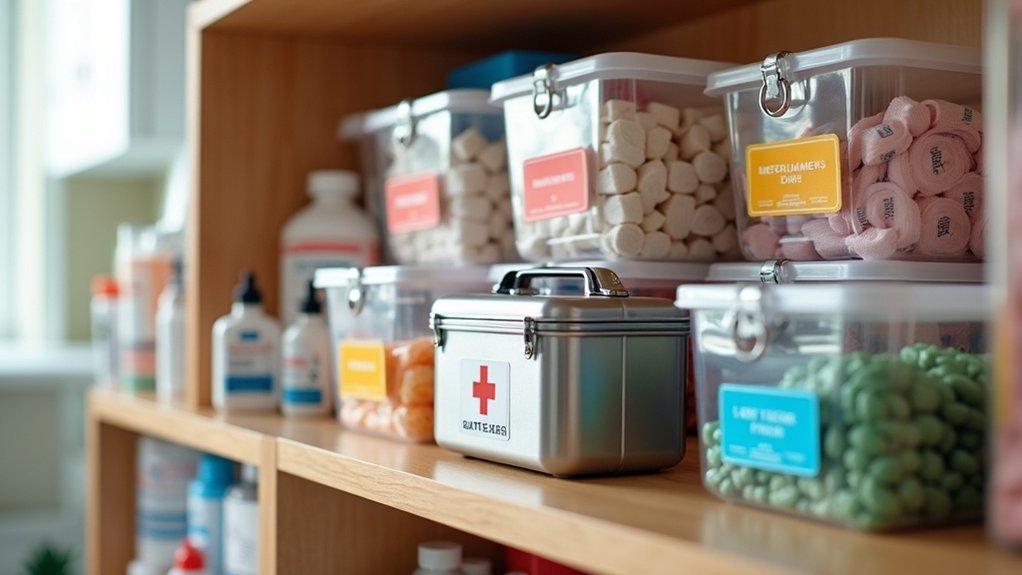
To organize your medical supplies effectively for survival situations, start by conducting a thorough inventory audit to understand what you have and where it’s stored. Use sturdy, clear plastic bins to categorize essential items like medications, first aid kits, and survival tools, labeling each container clearly for easy identification. Implement a color-coding system for faster retrieval during emergencies, and regularly check expiration dates to ensure all supplies are viable when needed. Maintaining cleanliness and organization of your medical supplies will guarantee quick access in critical moments. Additionally, stay informed about other essential strategies for effective inventory management to enhance your preparedness for unforeseen circumstances.
Key Takeaways
- Conduct a thorough inventory audit to assess current stock levels and identify essential medical supplies needed for survival situations and emergencies.
- Use clear plastic bins and label them by category to enhance visibility and enable quick retrieval of medical items during high-stress scenarios.
- Implement a color-coding system to differentiate between everyday items, critical survival supplies, and long-term storage items for easier organization and access.
- Regularly check expiration dates and dispose of expired medications properly to ensure safety and maintain readiness for any crisis.
- Schedule monthly decluttering sessions to sustain an organized and efficient storage space for medical supplies, ensuring you are always prepared for unforeseen circumstances.
Importance of Organizing Medical Supplies
Organizing survival supplies is crucial not only for efficiency but also for ensuring preparedness in emergencies. Effective inventory management can significantly reduce the time spent searching for essential items, allowing for quicker access when it matters most.
A well-structured supply inventory minimizes the risk of running out of critical resources and ensures you have what you need during a crisis. By implementing best practices like clear labeling and categorization, you can greatly improve your workflow and reduce the chances of misplacing items.
Regular organization leads to accurate stock levels, helping you avoid costly overstock or shortages. Ultimately, a systematic approach to organizing your supplies fosters a safer, more prepared environment for any situation you may encounter.
Assessing Your Current Inventory
To effectively manage your survival supplies, start by conducting a thorough inventory audit. This process helps you understand your current stock levels and storage capacity.
Begin managing your survival supplies by conducting a comprehensive inventory audit to assess stock levels and storage capacity.
Follow these steps:
- Count all survival supplies, including food, water, medical kits, and gear, and record quantities to establish a baseline.
- Review past usage data to identify patterns and predict future needs, ensuring you’re prepared for any situation and avoiding shortages.
- Consult with fellow preppers for insights on frequently used items and any challenges faced in sourcing supplies.
Regularly track consumption rates and consider using a digital inventory management tool to maintain up-to-date records, ensuring you’re always prepared and organized for emergencies or survival scenarios.
Effective Storage Solutions
Effective storage solutions are crucial for managing your survival supplies efficiently.
To store your prepper essentials effectively, use clear plastic bins for visibility and easy access, organizing items by category such as food, medical supplies, and gear.
Implement stackable containers to maximize vertical space in your storage areas or shelves. Incorporate drawer dividers for smaller items, ensuring quick retrieval during emergencies or when you need to grab items on the go.
A labeling system, including color-coded tags, helps you identify contents swiftly, minimizing search time when every second counts.
Additionally, consider a lazy Susan turntable or tiered shelving to optimize your storage space, making all items easily accessible without clutter.
These supply storage ideas are vital for organizing your survival gear and ensuring you’re always prepared.
Categorization and Labeling Strategies
To effectively organize your survival gear, start by grouping items into logical categories such as food supplies, medical kits, and survival tools.
Implementing a color-coding system will enhance visibility and speed up retrieval during critical situations.
Regularly review and adjust these categories to keep your system efficient and relevant for any emergency scenario.
Logical Grouping Techniques
Organizing survival supplies efficiently hinges on logical grouping techniques that simplify access and retrieval.
To effectively categorize your prepping gear and emergency supplies, consider these steps:
- Group by Type: Divide supplies into food, water, medical gear, shelter, and tools.
- Separate Usage: Differentiate between everyday items and long-term storage supplies for quicker access when needed.
- Implement Labels: Use clear, readable fonts and color-coded tags to enhance visibility in your storage areas.
Regularly update your categories based on inventory levels, and ensure that all members of your household are trained on these protocols to maintain consistency in your organization methods.
This guarantees a streamlined, efficient storage system for all your survival needs.
Color-Coding Systems
A well-implemented color-coding system can significantly optimize the organization of survival supplies, making it easier to locate essential items quickly.
Assign specific colors for different categories in your prepper storage area; for instance, use blue for first aid items, red for emergency gear, and green for food supplies.
Apply color-coded labels on storage bins and shelves to clearly communicate contents to family members or fellow preppers, reducing search time during critical moments.
Consistently enforce the color-coding system throughout all storage areas and educate everyone involved on its importance for preparedness and efficiency.
Regularly review and update your system to ensure it remains relevant and effective for optimal organization in your survival strategy.
Inventory Management Techniques
Effective inventory management techniques are crucial for ensuring that essential supplies are readily available in survival situations, particularly during emergencies or high-demand scenarios.
To optimize your inventory for prepping:
- Maintain a comprehensive inventory list to keep track of all supplies, ensuring that every item is accounted for and monitoring expiration dates where applicable.
- Schedule regular audits, ideally monthly, to verify stock levels and identify any expired items that need to be disposed of or replaced.
- Utilize inventory management software or tools to streamline tracking and access real-time data, allowing for timely restocking of crucial items.
Implementing these strategies helps you minimize waste and maintain preparedness for any unforeseen circumstances.
Safe Disposal Practices
When it comes to safe disposal practices in the context of survivalism and prepping, it’s crucial to prioritize the proper handling of sharps and medications.
Always use designated sharps containers for needles and sharp objects to ensure safety during emergencies.
Follow local guidelines for disposing of medications, as this can be vital for maintaining a sustainable and self-reliant lifestyle.
Regularly check for expired supplies in your stockpile and ensure you dispose of them correctly to protect yourself, your community, and the environment.
Being prepared means considering every aspect, including how to safely handle waste.
Proper Sharps Disposal
How can you ensure the safe disposal of sharps in your survivalist or prepping community? Implementing proper disposal practices is crucial to maintaining safety and hygiene. Here’s how:
- Utilize designated sharps containers: Ensure they’re puncture-proof, leak-proof, and clearly labeled for safe disposal. This is important for managing waste in off-grid or emergency situations.
- Avoid recapping needles: Recapping increases the risk of accidental injuries, which can be detrimental when medical supplies are limited.
- Seal containers securely: To prevent spillage, seal full sharps containers before disposal and make sure to follow any relevant local guidelines.
Regularly inspect and replace sharps containers to prevent overflow.
Medication Disposal Guidelines
Why is it crucial to dispose of medications properly in a survivalist context? Disposing of expired or unused medication is vital to prevent accidental ingestion, which can be detrimental in a survival situation. It also protects the environment, especially in remote areas where waste management may be limited.
Always adhere to local regulations; in a prepping mindset, consider returning medications to pharmacies with take-back programs or participating in community disposal events, as this ensures a responsible approach to waste.
For household disposal, mix solid medications with unpalatable substances like dirt or cat litter, seal them in a container, and throw them in the trash to minimize the risk of accidental ingestion by others, including pets.
Never flush medications unless the label instructs you to, as this can contaminate water sources. Use designated sharps containers for needles to avoid injury.
Regularly check your supplies and dispose of expired medications every six months to maintain safety and preparedness in any situation.
Continuous Maintenance and Review
To ensure your survival and prepping supplies are well-managed and effective, regular maintenance and review are essential. Here’s how to keep your inventory and storage in optimal condition:
- Schedule monthly inventory checks to assess stock levels and identify expired items, preventing waste and ensuring you have necessary supplies in emergencies.
- Conduct a decluttering session each month to remove outdated supplies, improving the organization of your storage space.
- Utilize digital inventory management tools for alerts on low stock and expiration dates, enhancing your preparedness and decision-making.
Maintain a detailed log of your inventory activities and train family members or team members on best practices, fostering continuous improvement and accountability in your survival planning.