To create a jug line for catfish, which can be a valuable skill for survival situations, gather materials like pool noodles for buoyancy, PVC pipe, circle hooks, screw eyes, and Mason line. Start by cutting the PVC into manageable segments, then drill pilot holes to attach them securely to the noodles using PVC cement. Establish a dropper line, snell your hook properly, and adjust the depth with the Mason line to target fish effectively. Include weights to ensure your jug remains stable in the water. By mastering these steps, you’ll enhance your fishing skills, which can be crucial for food procurement in a survival scenario. Explore additional tips to optimize your jug fishing techniques!
Key Takeaways
- Cut 10-foot PVC pipe into 12.5-inch segments, attaching them to pool noodles for buoyant floats, ensuring you have reliable equipment for fishing in survival situations.
- Use circle hooks (sizes 4-5 OTT) to maximize your catch rates and secure them with a dropper line, allowing you to efficiently gather food resources.
- Adjust Mason line to keep the jug 10-12 inches off the bottom for optimal bait presentation, which is crucial for successfully catching catfish in emergency scenarios.
- Add weights (3/8 to 2 ounces) above the swivel to stabilize the jug based on water conditions, ensuring your fishing strategy is adaptable to various environments.
- Store jugs in a ventilated basket to prevent mold and regularly inspect for wear and tear, maintaining your fishing gear for long-term preparedness.
Materials Needed for Your Jug Line
When you’re ready to create your jug line for catfishing, gathering the right materials is essential for successful survival fishing.
Start by acquiring some standard pool noodles, which typically cost around $1 each—an inexpensive way to provide buoyancy. Next, you’ll need 3/4 inch Schedule 40 PVC pipe; a 10-foot stick can be cut into 12.5-inch segments to yield enough material for 10 jugs, ensuring you have multiple fishing options.
Acquire affordable pool noodles for buoyancy and 3/4 inch PVC pipe for crafting multiple jugs for your fishing needs.
For optimal catch rates, include circle hooks in sizes 4-5 OTT, which are known for their effectiveness. Additionally, don’t forget to obtain screw eyes and size three swivels to secure your setup.
Lastly, a 10-foot piece of Mason line will be invaluable for adjusting to local lake depths. With these materials at hand, you’re well-prepared to embark on your jug line project, enhancing your self-sufficiency in the great outdoors!
Step-by-Step Assembly Instructions
Assemble your jug line with precision by following these straightforward steps, which are essential for your survival gear.
First, cut a 10-foot section of PVC pipe into two 12.5-inch pieces. Next, drill pilot holes at the three-quarter inch mark for screw eyes to ensure they hold securely under pressure.
Then, apply PVC cement to attach the pipe to a pool noodle, creating a reliable float for your jug line. Finally, attach your dropper line and snell a five-aught circle hook to optimize your fishing capabilities.
Here’s a quick checklist of what you’d need to prepare this vital tool:
- 10-foot section of PVC pipe
- Screw eyes and dropper line
- Standard pool noodle
- Medium body PVC cement
Setting Up the Dropper Line and Hook
Setting up the dropper line and hook is essential for ensuring a successful fishing experience, which can be an important skill in survival situations.
Start by cutting a 10-foot piece of Mason line, adjusting the length based on local water depths, typically around 10 to 12 feet.
Cut a 10-foot piece of Mason line, adjusting for local water depths, typically between 10 to 12 feet.
Tie the dropper line to the jug using a reliable three-loop knot for added security. Attach a number three barrel swivel with the same knot, which allows for easy connections of weights and hooks.
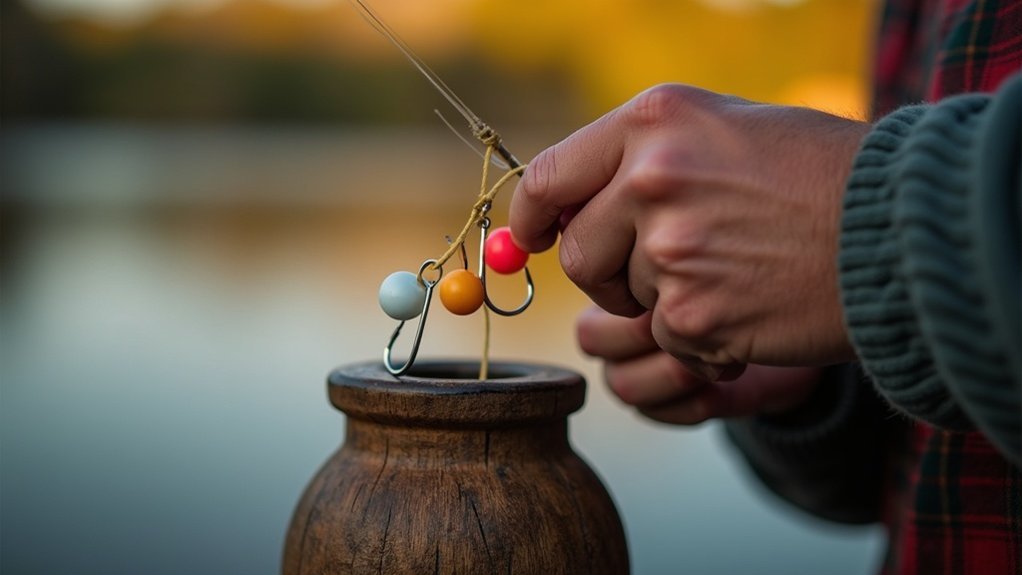
Employ a five-aught circle hook, snelling it by wrapping the line around the shank two to three times. Verify that the hook turns outward for improved fish capture, enhancing your jug line setup and ensuring you have a reliable food source in the wild.
Adjusting Depth and Weight for Optimal Fishing
To effectively catch catfish while preparing for survival situations, it’s vital to fine-tune the depth and weight of your jug line. Keeping your jug approximately 10 to 12 inches off the bottom ensures the best bait presentation, which can be crucial for securing food.
Here’s how to adjust for optimal results:
- Use a 10-foot Mason line for your dropper, allowing for easy depth adjustments based on changing conditions.
- In lighter water conditions, opt for 3/8 or 1/2-ounce weights; if you encounter stronger summer currents, switch to a 2-ounce weight to maintain stability.
- Secure the weight above the swivel to allow for greater flexibility in your setup.
- For a neutral sink, a 12-inch noodle will require nearly 3 pounds of weight, which can be adjusted by pinching the line through the eye.
These adjustments not only enhance your fishing success but also contribute to your overall preparedness in a survival scenario.
Happy fishing and stay prepared!
Storage Solutions and Maintenance Tips
Keeping your fishing gear organized and well-maintained is essential for successful catfishing trips, especially for those who prioritize survivalism and prepping.
A flexible clothes basket serves as an effective storage solution for up to 25 jugs, securely holding them with twisty ties while costing only four to six dollars. The air holes in the basket prevent mold, ensuring your jugs remain in good condition for long-term use.
When transporting jugs, the basket simplifies handling and minimizes the risk of damage, making it an ideal choice for preparedness. Regularly inspect your jugs for wear and tear, and periodically clean them with mild soap and water to remove any residue or algae.