To recondition dead batteries for survival preparedness, start by prioritizing safety—wear gloves and goggles to protect yourself. Next, prepare a warm Epsom salt solution, which is essential for reviving old batteries. Carefully drain the existing acid from the battery to avoid spills and contamination. Clean the terminals thoroughly to ensure good electrical contact, then refill the battery with the prepared Epsom salt solution. Charge the battery slowly at 2 amps overnight, keeping a close eye on the voltage; your target should be around 12 volts. Finally, keep track of the voltage changes as this will help you assess the effectiveness of your reconditioning efforts. For those interested in more detailed techniques and tips, there is much more to explore in the realm of battery maintenance for your prepper toolkit.
Key Takeaways
- Before beginning the reconditioning process, ensure that battery terminals and connectors are thoroughly cleaned to maintain optimal contact, which is essential for reliable energy storage in survival situations.
- Create a concentrated Epsom salt solution by mixing four pounds of Epsom salt into one gallon of warm distilled water. This solution can serve as a valuable resource for reconditioning batteries, which are crucial in prepping scenarios.
- When draining the old battery acid, always wear gloves and goggles to protect yourself from potential chemical burns, as safety is paramount during any reconditioning task.
- Charge the battery with a trickle charge at 2 amps overnight, closely monitoring the voltage. Aim for optimal levels around 12 volts to ensure the battery is ready for use in emergency situations.
- Keep a detailed record of voltage changes throughout the charging process to evaluate the battery’s health and its potential for revival, ensuring you have dependable power sources when needed.
Understanding Battery Degradation
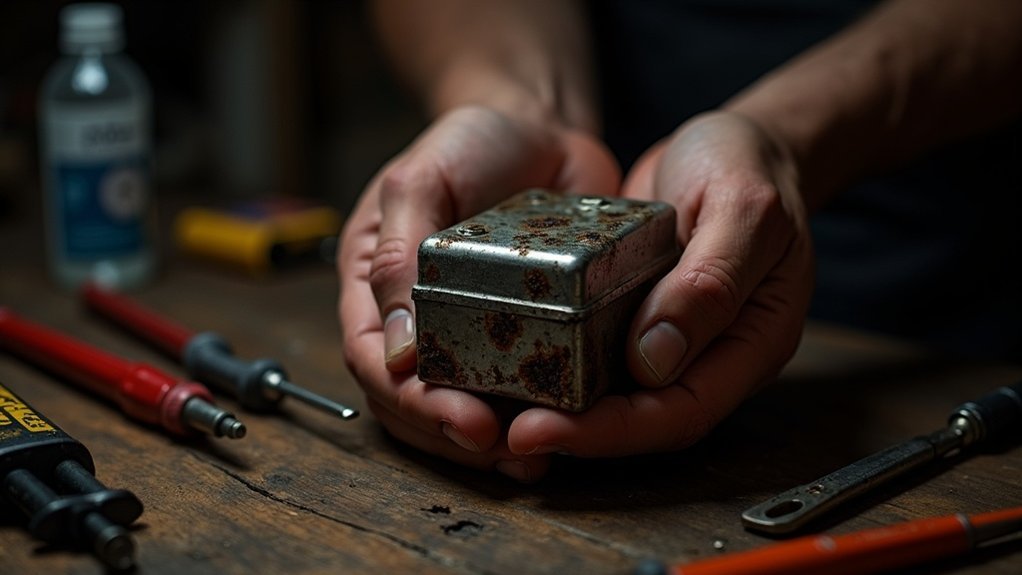
Battery degradation is a significant concern for survivalists and preppers, as it directly impacts the reliability of critical equipment. One of the main contributors to battery degradation is sulfation, where lead sulfate crystals build up on battery plates, diminishing their capacity.
In survival scenarios, factors such as prolonged inactivity, deep discharging during emergencies, and exposure to extreme temperatures can accelerate this degradation process.
Typically, a lead-acid battery has a lifespan of 3 to 5 years under optimal conditions. However, neglecting maintenance can drastically reduce this timeframe, leaving you vulnerable in critical situations.
It’s vital to regularly clean battery terminals and maintain proper electrolyte levels to ensure your power sources remain dependable.
Being vigilant about warning signs, such as reduced cranking power and inconsistent voltage, allows you to take timely action—whether that means restoring the battery’s functionality or replacing it altogether—to ensure your preparedness remains intact.
Safety First: Precautions to Take
When reconditioning dead batteries in a survivalist or prepping context, it’s essential to prioritize safety to avoid accidents and injuries. Here are some precautions to take:
Prioritize safety when reconditioning dead batteries to prevent accidents and injuries.
- Always wear eye protection and gloves to prevent chemical burns and ensure your safety.
- Use long sleeves to reduce skin contact with potentially hazardous materials.
- Ensure proper ventilation by opening doors or utilizing a fan to disperse harmful fumes.
- Keep battery caps off during charging to prevent dangerous pressure build-up.
- Exercise extreme caution when draining battery acid, as it can cause severe damage to skin and surfaces.
Preparing the Epsom Salt Solution
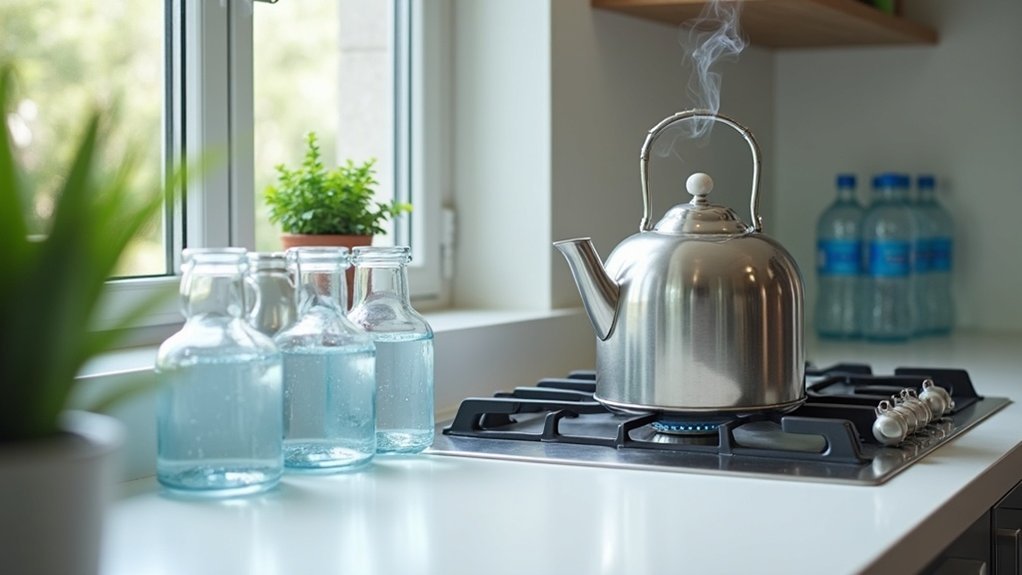
To prepare the Epsom salt solution, begin by heating one gallon of distilled water until it’s warm but not boiling.
Next, dissolve four pounds of Epsom salt in the heated water, ensuring it’s fully mixed for a concentrated solution.
This solution is crucial for restoring the electrolyte balance in your batteries, a key component in maintaining your preparedness and self-sufficiency during emergencies.
Keeping your batteries in optimal condition can ensure your survival gear operates effectively when you need it most.
Heating Distilled Water
Heating one gallon of distilled water is a crucial step in preparing the Epsom salt solution for reviving batteries, especially in a survival or prepping scenario.
Warm water ensures effective salt dissolution, which is essential for the chemical reactions needed to restore battery functionality.
Take care to avoid boiling, as excessive heat could destabilize the solution or damage battery components.
Always perform this task in a well-ventilated area to prevent inhaling any harmful fumes.
- Ensures optimal chemical reactions for battery restoration
- Prevents impurities from compromising performance
- Maintains a safe working environment
- Increases your chances of successfully reviving batteries
- Revitalizes the energy source you may depend on in emergencies
Adhering to these precautions is vital for achieving the best results in your battery revival efforts.
Dissolving Epsom Salt
Preparing an Epsom salt solution is an essential skill for survivalists and preppers looking to recondition batteries and ensure their equipment remains functional.
To create this solution, start by heating one gallon of distilled water in a large, sturdy container—this will help the Epsom salt dissolve more efficiently. Gradually add four pounds of Epsom salt to the water while stirring continuously until it’s fully dissolved.
This concentrated solution can be a game-changer in extending the life of batteries, which is crucial during emergencies when reliable power sources are limited.
Always prioritize safety by wearing eye protection and gloves to prevent skin irritation and exposure to chemicals.
Once your solution is prepared, be sure to label the container clearly to avoid any mix-ups with other supplies.
Mixing Concentrated Solution
After successfully dissolving Epsom salt in distilled water, it’s crucial to ensure that this concentrated solution is mixed properly for effective battery revival—a key skill in survivalism and prepping.
Start by heating one gallon of distilled water in a large container over a heat source. Gradually add four pounds of Epsom salt, stirring continuously until it’s fully dissolved. This step enhances solubility, making your battery treatment more effective and reliable in times of need.
When combining this solution with used battery acid before refilling your batteries, remember these essential safety precautions:
- Always wear protective gloves to shield your hands.
- Avoid direct skin contact with the solution to prevent irritation.
- Use corrosion-resistant containers to hold your materials securely.
- Clearly label any remaining solution for future reference.
- Store the solution safely, away from children and pets, to ensure a secure environment.
Being prepared for any situation is vital; mastering battery revival techniques can provide you with the power you need when it matters most.
Cleaning and Draining the Battery
Before you attempt to recondition a dead battery, it’s essential to clean and drain it properly to ensure effective restoration, especially in survival situations where reliable power is critical.
Start by cautiously draining the acid into a suitable container, donning gloves and safety goggles to protect yourself from corrosive exposure. Rinse the battery with distilled water, positioning it upside down to remove any residual acid.
Keep an eye on the draining process; if it takes longer than expected, it may signal internal issues that could affect your battery’s viability during emergencies.
After rinsing, make sure to clean the battery terminals and connectors thoroughly to ensure optimal electrical contact during the reconditioning process.
This meticulous cleaning and draining procedure lays the groundwork for successful battery restoration, enhancing your preparedness for any situation.
Refilling the Battery With Solution
Refilling a battery with the correct solution is crucial for restoring its capacity, especially in a survival situation where reliable power is essential.
Begin by safely draining the old acid and rinsing the battery, making sure it’s upside down to eliminate any contaminants.
Prepare a new Epsom salt solution by dissolving four pounds of Epsom salt in one gallon of heated distilled water.
Carefully fill the battery cells with this solution, taking precautions to avoid contact with skin and surfaces.
After refilling, monitor the voltage; it may be low initially, but aim for around 12 volts after charging to ensure dependable energy for your needs.
- Revive your battery’s life for critical situations
- Save money on replacements, allowing better resource allocation
- Reduce waste, promoting sustainability
- Feel empowered with self-sufficiency skills
- Enjoy reliable power when it matters most
Charging Techniques for Optimized Results
Once you’ve successfully refilled your battery with the Epsom salt solution, the next step is to employ effective charging techniques to ensure your power source is optimized for survival scenarios. Use a trickle charge at 2 amps overnight, aiming for an ideal voltage of around 12 volts, which is crucial for reliable performance in emergencies. Always monitor the battery voltage during this process to prevent overcharging, which could lead to damage and leave you without power when you need it most. Keep in mind that different battery designs may require adjustments in your charging approach.
Ensure battery caps are off to allow gases to escape safely, and adjust the charging amperage based on the battery’s condition to avoid overheating, which could compromise its longevity and reliability.
| Battery Type | Charging Amperage | Duration |
|---|---|---|
| Traditional | 2 amps | Overnight |
| Sealed | 1 amp | 12-24 hours |
| Deteriorated | 0.5 amps | 24-48 hours |
| New/Healthy | 2-4 amps | 6-8 hours |
| Hybrid | 1.5 amps | 10-12 hours |
Monitoring Battery Voltage
As you navigate the battery revival process in your preparedness efforts, monitoring the voltage is crucial for assessing the effectiveness of your Epsom salt solution and charging techniques.
Utilize a multimeter to check voltage levels before, during, and after charging. Voltage readings below 12 volts typically indicate that the battery isn’t holding a charge, while readings around 12 volts or higher signify progress.
Check voltage levels with a multimeter throughout the charging process to assess battery health and progress effectively.
Regular checks at various stages of charging will help you evaluate response times. Documenting these changes can offer valuable insights into the battery’s health, which is essential for ensuring your gear remains operational during emergencies.
- Embrace the thrill of revival.
- Witness the transformation of your resources.
- Save money on replacements and invest in preparedness.
- Gain empowerment through knowledge and self-sufficiency.
- Enjoy the satisfaction of successfully maintaining your equipment.
Evaluating Success and Cost Savings
When assessing the success of your battery revival efforts in the context of survivalism and prepping, it’s essential to recognize the substantial cost savings that can be achieved.
By reviving batteries instead of replacing them, you could save approximately $90 per battery, a significant reduction compared to standard replacement costs.
Furthermore, the high success rate in reaching usable charge levels highlights the practicality and effectiveness of this DIY approach, making it a valuable skill in ensuring your preparedness for any situation.
Cost-Effective Battery Revival
While many assume that dead batteries are simply meant for disposal, reconditioning them can be a valuable and cost-effective skill for any survivalist or prepper.
By utilizing Epsom salt, you can potentially save between $50 and over $100 on new batteries, ensuring you’re always prepared for any situation.
Here’s what you can expect from the battery revival process:
- Significant financial savings for your survival stockpile
- Increased battery longevity, keeping your essential devices powered
- Environmentally friendly practices, reducing waste in your survival plan
- Enhanced DIY skills, making you more self-sufficient
- Empowerment through knowledge, preparing you for unforeseen challenges
Success Rate Overview
Reconditioning batteries not only sharpens your survival skills but also provides valuable insights into their success rates and potential savings, crucial for prepping enthusiasts.
The recent battery revival project achieved a remarkable success rate, successfully reconditioning four batteries using Epsom salt and new acid solutions. By avoiding costly replacements, which can range from $50 to over $100, this method proves to be a smart investment, saving a total of $90 on just one battery.
With diligent maintenance, even batteries with initially low voltage readings can be revitalized, ensuring they perform at their best when needed most. Engaging in this process fosters a community dedicated to effective battery maintenance solutions, an essential aspect of preparedness.