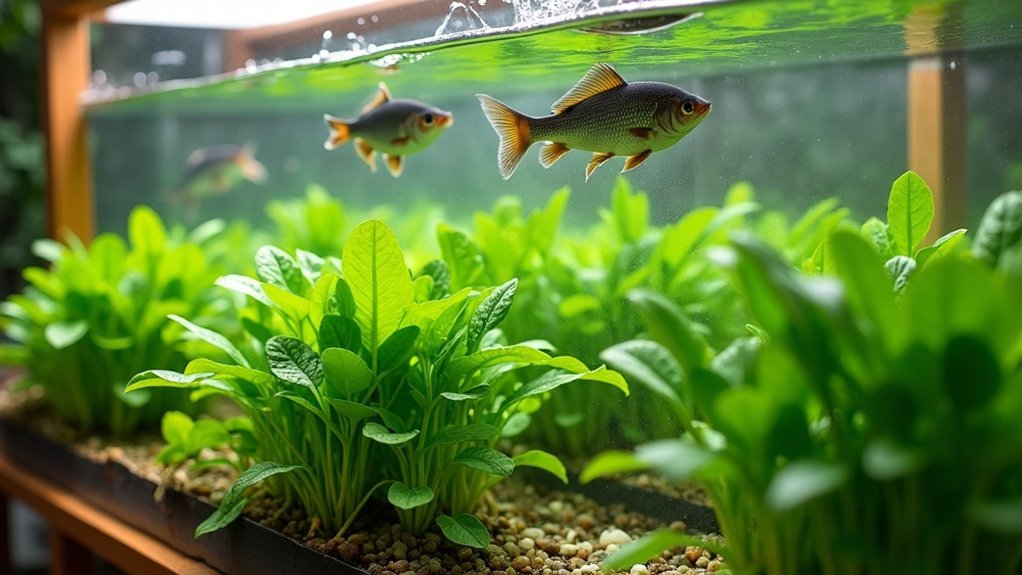
To build an aquaponics system for survival and prepping, begin by selecting a well-lit area with a stable temperature, ideally indoors or sheltered from harsh weather. Choose a fish tank that can hold between 50-100 gallons to ensure a sustainable fish population. Use non-toxic materials for the grow bed to prevent contamination of your food source. Set up a reliable water pump for circulation and an aeration system to maintain optimal oxygen levels for both fish and plants. Regularly feed the fish with a sustainable diet, monitor water quality meticulously for ammonia and nitrite levels, and vigilantly check plants for pests or diseases. This foundational knowledge will equip you for self-sufficiency and resilience in challenging times, guiding you as you delve deeper into advanced techniques and best practices for aquaponic gardening.
Key Takeaways
- Choose a sunny location with stable temperatures between 68-78°F to ensure optimal growth for both fish and plants, vital for a self-sustaining food source.
- Design a layout that includes a fish tank, grow bed, and water pump to facilitate efficient water circulation, crucial for maintaining an emergency food supply.
- Select a fish tank with a capacity of 50-100 gallons, and ensure that the materials used for the grow bed media are non-toxic to promote a safe and healthy environment for food production.
- Regularly monitor water quality parameters such as ammonia, nitrite, nitrate levels, and pH to sustain a balanced ecosystem, essential for survival situations.
- Feed fish daily, check the functionality of the system regularly, and perform monthly water siphoning and cleaning to ensure the aquaponics system remains operational and productive.
Planning Your DIY Aquaponics System
When planning your DIY aquaponics system for survivalism and prepping, it’s essential to choose a strategic location that aligns with your self-sufficiency goals.
Look for an area that receives 6-8 hours of direct sunlight and maintains a stable temperature of 68-78°F (20-25°C) to optimize plant growth and fish health.
Clearly define your objectives for food production—whether it’s for personal consumption or food security during emergencies—to decide on the scale and type of system, such as Media Bed or NFT.
Design a comprehensive layout sketch that efficiently positions the fish tank, grow bed, and water pump to ensure optimal water flow and ease of maintenance.
Lastly, plan your budget for the initial setup costs, which should be around $150-200 CAD, focusing on non-toxic materials like plumbing components and growing media that support sustainable practices.
This investment can significantly enhance your food resilience in uncertain times.
Components of an Aquaponics System
With your aquaponics system planned, understanding its components is essential for successful implementation, especially in a survival situation.
A robust fish tank, typically ranging from 50-100 gallons, is crucial for housing fish and maintaining optimal water quality, which is vital for self-sufficiency.
A sturdy fish tank of 50-100 gallons is essential for optimal water quality and self-sufficiency in your aquaponics system.
The grow bed serves as a media bed, where you can cultivate plants using non-toxic media like lava rock, which encourages the growth of beneficial bacteria essential for nutrient cycling.
A reliable water pump is necessary to circulate nutrient-rich water between the fish tank and grow bed, ensuring effective flow rates to maximize plant growth.
Additionally, an aeration system, comprising air pumps and stones, is important for maintaining adequate oxygen levels for both fish and plants.
Each component plays a significant role in optimizing your aquaponics system for sustainable food production and resilience in challenging situations.
Setting Up Your Aquaponics System
To successfully set up your aquaponics system for a survivalist approach, start by selecting a strategic location that receives at least 6-8 hours of direct sunlight and maintains a stable temperature between 68-78°F (20-25°C). Ensure easy access to water and electricity, as these are critical for your system’s sustainability. Position a sturdy fish tank (50-100 gallons) on a stable surface, fill it with dechlorinated water, and install the grow bed above it to facilitate effective drainage. Incorporate a reliable water pump to circulate water, ensuring proper oxygenation for both fish and plants. Establish a colony of nitrifying bacteria to promote fish health and support plant growth. Regularly monitor water quality to maintain a balanced ecosystem, vital for self-sufficiency in a prepping scenario.
| Component | Function | Notes |
|---|---|---|
| Fish Tank | Holds fish | 50-100 gallons recommended for sustainable food source |
| Grow Bed | Supports plant growth | Media bed, NFT, or raft for various crops |
| Water Pump | Circulates water | Critical for oxygenation and nutrient distribution |
This aquaponics setup can serve as a reliable food production system in times of need, enhancing your preparedness for any situation.
Maintaining Your Aquaponics System
Establishing your aquaponics system is just the beginning; maintaining it’s crucial for long-term sustainability and preparedness. Daily maintenance should include feeding your fish 1-2 times to ensure they remain healthy and productive.
It’s also vital to check water levels regularly and ensure the grow bed and pump are functioning properly, as these are essential for a self-sufficient system.
Weekly tasks should involve testing water for ammonia and nitrite levels to prevent any toxic buildup that could jeopardize your food source. Inspect your fish for diseases and check plants for pests, as both can threaten your self-reliant food supply.
On a monthly basis, siphon out 10-15% of the tank water to keep it fresh and perform a deep cleaning of system components to promote efficiency.
Regularly monitor and adjust pH levels—aiming for a range of 6.8 to 7.4 is ideal for creating a stable environment for both fish and plants.
Incorporating a variety of plants not only provides food but also helps balance nutrients; they absorb nitrates produced by bacteria that convert fish waste.
This creates a symbiotic relationship that enhances your aquaponics system’s resilience, making it an excellent asset in your survival and prepping strategy.
Monitoring Water Quality
Monitoring water quality is crucial for the survival and health of your aquatic systems, especially in a prepping or survival scenario.
Regularly test for:
- Ammonia and nitrite levels, aiming for zero to ensure a safe environment for aquatic life.
- Nitrate levels around 10-20 ppm to promote ideal plant growth, which is essential for sustainable food sources.
- pH levels between 6.5 and 7.5 to maintain fish health and prevent potential disasters.
- Water levels to avoid stress from evaporation, which can compromise your supply.
In addition, utilize a water conditioner to remove chlorine, as it can be detrimental to fish and beneficial bacteria crucial for a balanced ecosystem.
Ensure oxygen levels remain high, ideally above 5 mg/L, by implementing aeration systems like air pumps and stones.
This proactive approach guarantees a resilient and thriving ecosystem in your survival prepping efforts.