To prevent battery corrosion in your survival gear, regularly inspect terminals and cables for any deposits, and clean them using a wire brush to ensure optimal connectivity. Apply dielectric grease or battery terminal spray to create a protective barrier against moisture, which can be crucial in outdoor conditions. Always verify that your battery is the correct size for your equipment and secure it properly to avoid damage during transport. Be mindful of overcharging, and store batteries in cool, dry locations to prolong their lifespan. By adhering to these practices, you’ll enhance your battery performance and ensure that your survival gear remains reliable when you need it most.
Key Takeaways
- Regularly inspect battery terminals and cables for corrosion, as maintaining your power supply is crucial in survival situations. Clean any corrosion using a wire brush to ensure optimal performance.
- Apply dielectric grease to battery terminals to create a moisture barrier, helping to prevent corrosion that could leave you without power when you need it most.
- Store batteries in a cool, dry environment to minimize humidity and moisture exposure, which can lead to corrosion and compromise your energy supplies.
- Ensure that your batteries are the correct size and type for your devices to avoid issues like overcharging and overheating, which can be detrimental in critical situations.
- Schedule maintenance checks every 3-6 months to identify and address potential corrosion early, ensuring your equipment is always ready for any survival scenario.
Understanding Battery Corrosion
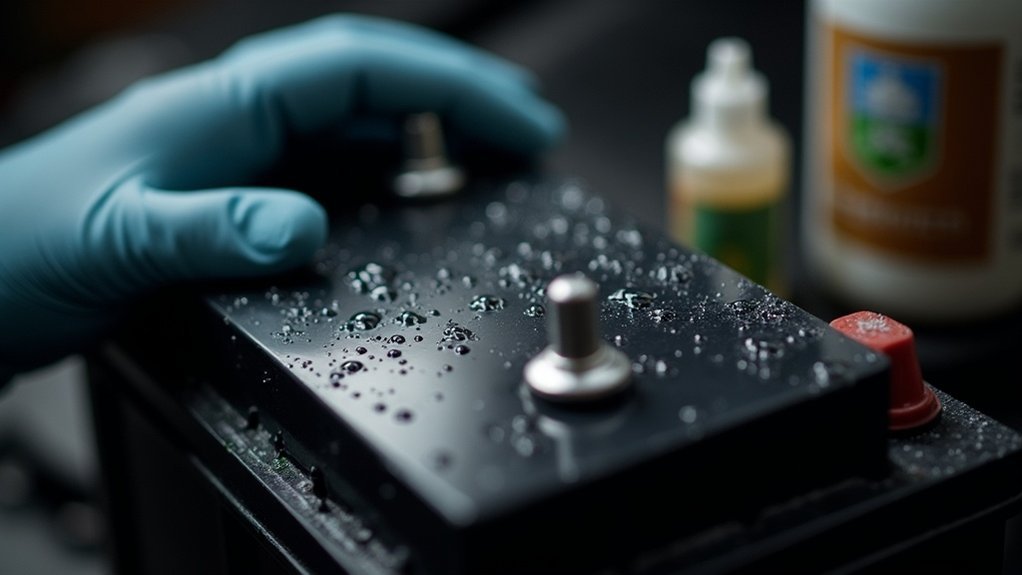
Battery corrosion can significantly impact the performance and longevity of your vehicle’s or device’s battery, which is crucial in survival situations. This corrosion primarily results from a chemical reaction involving sulfuric acid and moisture in the air, leading to white, blue, or greenish deposits on battery terminals.
Such corrosion acts as a barrier, hindering electrical conductivity and potentially shortening your battery’s lifespan, which can be detrimental when you rely on your equipment for survival.
Corrosion obstructs electrical flow, jeopardizing battery life—critical for survival when you depend on your gear.
To mitigate this risk, regularly inspect your batteries and clean any corrosive buildup you find. In preparedness scenarios, having a reliable power source is essential.
After cleaning, applying dielectric grease can further safeguard the terminals from moisture and future corrosion, ensuring optimal performance and extending your battery’s life.
Prioritize this maintenance to ensure your equipment remains functional when it matters most.
Common Causes of Battery Corrosion
While various factors contribute to battery corrosion, age is a significant concern for survivalists and preppers. Car batteries typically last 3-5 years, and older batteries are more susceptible to terminal corrosion, which can jeopardize your preparedness efforts.
Overcharging or overheating can lead to electrolyte leakage, increasing the risk of corrosion, especially in warm climates where you may need reliable power sources. Environmental factors like high humidity and saline conditions can accelerate chemical reactions, promoting corrosion that could compromise your equipment.
Additionally, leaking fluid from damaged battery casings exposes terminals to acid, fostering corrosive deposits that can hinder your ability to maintain essential gear. Poor maintenance practices, such as neglecting regular inspections and overlooking electrical issues, heighten the likelihood of corrosion.
Using a battery terminal protector is a proactive step that can help prevent battery issues and ensure you’re always ready for any situation.
Regular Maintenance Practices
To ensure reliable performance and longevity of your battery in survival situations, regular maintenance practices are crucial. Frequently inspect the battery terminals and cables for signs of corrosion, ensuring that connections remain clean and free from buildup, as this is essential for maintaining power during critical times.
Schedule routine maintenance checks every 3-6 months to assess your battery’s health, especially in environments with fluctuating temperatures or high humidity, which can affect performance. Use a wire brush to clean the battery terminals and apply dielectric grease afterward to create a protective barrier against moisture and corrosion.
Additionally, be mindful of your driving habits; avoid short trips that can lead to undercharging, which could leave you without power when you need it most. Lastly, confirm that your battery is securely mounted to prevent damage and potential leaks, which could compromise your survival equipment.
Protective Coatings and Treatments
Applying protective coatings and treatments to your battery terminals is crucial for survivalists and preppers, as it helps prevent corrosion and ensures reliable performance in critical situations. Utilizing dielectric grease or battery terminal protectors can effectively keep moisture and corrosion at bay, maintaining optimal conductivity when you need it most. Regular applications of CorrosionX not only lift existing corrosion but also prevent future buildup, which is vital for maintaining equipment in emergency scenarios. Technical Vaseline serves as a protective treatment but requires periodic reapplication to remain effective. Additionally, consider using corrosion-resistant materials for connections, such as copper or coated connectors, to significantly extend battery life and reliability in challenging environments.
| Treatment Type | Benefits |
|---|---|
| Dielectric Grease | Insulates, prevents corrosion |
| Battery Terminal Spray | Visible protection indicator |
| CorrosionX | Lifts corrosion, protects |
| Technical Vaseline | Moisture barrier, reapply often |
| Copper Connectors | Durable, corrosion-resistant |
Tips for Proper Battery Usage
Maintaining proper battery usage is crucial for survival situations, just as applying protective coatings to prevent corrosion is essential for long-term preparedness.
Always ensure you have the correct size and type of battery for your emergency gear to guarantee optimal performance when it matters most. Regular maintenance checks are vital; inspect your battery terminals and connections for signs of corrosion, and clean any corrosion promptly to maintain good conductivity.
Pay special attention to the negative battery terminal, as it’s often more prone to corrosion. Avoid overcharging your batteries by confirming that your charging system is functioning properly.
Additionally, store batteries in cool, dry places to prevent moisture buildup, which can accelerate corrosion on battery cables and compromise your survival equipment. Being proactive about battery maintenance can make a significant difference in your preparedness plan.
When to Seek Professional Help
When should you consider reaching out to a professional for battery issues in the context of survivalism and prepping?
If you notice significant corrosion that’s difficult to clean, it’s crucial to seek professional assistance. An older battery, especially one over three years old, showing recurring corrosion may indicate reduced battery life and should be inspected to ensure your emergency power supply remains reliable.
If your battery terminal appears cracked or damaged, a professional assessment is vital to avoid failure during critical times.
Additionally, electrical issues such as intermittent starting or slow charging often stem from corrosion, which can hinder your preparedness efforts; thus, expert diagnosis is warranted.
Lastly, if you suspect a leaking battery, it’s essential to contact a professional for safe removal and disposal, preventing hazardous conditions that could compromise your survival supplies.