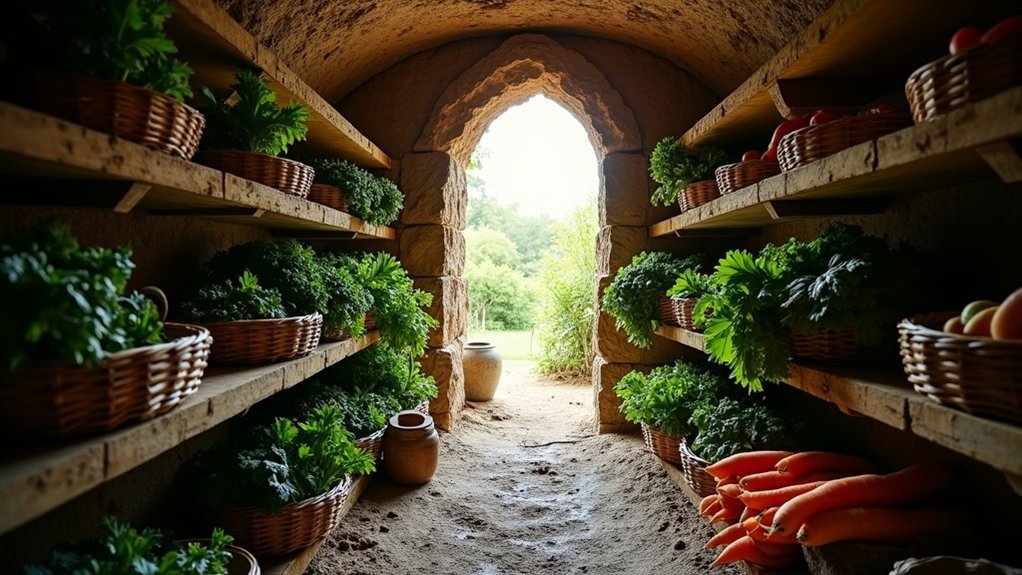
A root cellar is a crucial underground structure for survivalists and preppers, designed to store food, particularly root vegetables and fruits, for extended periods. It effectively preserves your produce by maintaining a cool temperature (32-40°F) and high humidity (90-95%), making it an essential component of any self-sufficient food storage strategy. This age-old method carries significant historical value, illustrating how communities preserved food before the advent of modern refrigeration. Various construction styles, such as basement or hole-in-the-ground cellars, can be tailored to meet regional needs, ultimately enhancing your food security and resilience. Explore the numerous benefits and maintenance tips to maximize your root cellar’s potential and ensure your preparedness for any situation.
Key Takeaways
A root cellar is a crucial structure for survivalists and preppers, designed to preserve fruits and vegetables by harnessing the earth’s natural cooling properties. It maintains optimal temperatures between 32-40°F (0-4.5°C) and high humidity levels of 90-95%, making it an effective solution for long-term food storage. Root cellars hold historical significance, showcasing agricultural practices that promote self-sufficiency and food preservation, essential for any prepping strategy.
There are various designs, including basement, hole-in-the-ground, and hybrid cellars, each tailored to specific environmental conditions, ensuring that food remains viable even in challenging circumstances. Regular maintenance and diligent monitoring of temperature and humidity are critical to preventing spoilage and guaranteeing effective storage, making root cellars a valuable asset in any survivalist’s toolkit.
Definition and Purpose
A root cellar is an essential underground structure for survivalists and preppers, specifically designed for preserving food, especially root vegetables and fruits. Its primary purpose is to create a reliable food storage solution that maintains optimal conditions for long-term preservation.
Typically, temperatures in a root cellar range between 32-40°F (0-4.5°C), preventing produce from freezing while also avoiding spoilage. By harnessing the earth’s natural cooling properties, root cellars stay below frost level, making them ideal for storing vegetables and fruit throughout harsh winters.
Their robust construction, often accessed through doors or hatches, can vary in size and design based on regional practices, ensuring that seasonal crops remain secure and available when fresh produce is scarce.
For those preparing for emergencies or seeking self-sufficiency, a root cellar is a vital asset for maintaining a sustainable food supply.
Historical Significance
Root cellars are more than just storage spaces; they embody vital survivalist practices that have supported agricultural communities for generations.
By employing these structures, families ensured food preservation and enhanced self-sufficiency, demonstrating a profound connection to their land and resources.
Recognizing their historical significance allows you to appreciate not only the ingenuity behind these techniques but also the collective effort involved in maintaining food supplies during challenging seasons.
In the context of prepping and survivalism, understanding the role of root cellars can inspire modern strategies for food storage and self-reliance in an uncertain world.
Cultural Heritage Practices
While many modern food preservation methods rely on technology, root cellars have played a crucial role in survivalism and prepping throughout history, particularly in regions facing harsh winters.
Root cellars were built using local materials, showcasing cultural heritage and regional adaptation to ensure food security. In Newfoundland and Labrador, families constructed sturdy structures to store food for months, making them an essential resource for self-sufficiency.
This communal effort in agricultural practices fostered strong family dynamics, with everyone participating in the harvest and storage process.
Additionally, enslaved Africans ingeniously used potato holes for both food preservation and hiding valuables, illustrating the resourcefulness and resilience of their communities in the face of adversity.
Embracing these traditional methods can enhance modern prepping strategies, ensuring readiness for any situation.
Agricultural Preservation Techniques
While modern technology has revolutionized food preservation methods, the historical significance of agricultural preservation techniques, such as root cellaring, remains vital for survivalists and preppers.
Root cellars, utilized since the 18th century, harness the earth’s natural cooling properties to store vegetables throughout long winters, making them an essential resource for those looking to sustain their food supply. These structures were prevalent in rural areas, particularly in Pennsylvania, and reflect the ingenuity of local agricultural practices and food availability.
Families often collaborated to construct and maintain these cellars, demonstrating a strong sense of community and preparedness. Women played pivotal roles in gardening and food processing, highlighting traditional gender roles that contributed to family sustenance.
Ultimately, root cellars not only symbolize ingenuity but also provide a reliable means of ensuring food security and preserving cultural heritage, especially in an era where self-sufficiency is increasingly important.
Ideal Conditions for Storage
To effectively preserve your fruits and vegetables in a root cellar, it’s crucial to maintain a temperature between 32°F and 40°F (0°C to 4.5°C).
These ideal conditions for storage also necessitate humidity levels of 90% to 95%, which helps keep leafy vegetables and root crops fresh for long-term survival.
Good ventilation is essential, as it circulates air and reduces the risk of mold by removing ethylene gas emitted from ripening produce.
Always remember, specific storage requirements can differ by type, so be prepared to adjust conditions as necessary.
Even if you can’t achieve perfect conditions, maintaining average optimal storage parameters will enable your vegetables to last for months, minimizing spoilage and enhancing your preparedness efforts.
Construction Methods
When considering construction methods for a root cellar, there are several effective options that cater to survivalism and prepping needs. You can dig into the ground with a sturdy shed above, excavate into a hillside for improved water drainage, or construct at ground level, covering it with rocks, earth, or sod for camouflage and insulation.
Traditional materials like stone and wood not only provide a rustic charm but also blend with the natural environment, while modern concrete offers increased durability and security. Access through trap doors helps maintain consistent temperature regulation, crucial for food preservation in a survival situation.
Additionally, regional designs may incorporate features such as double door airlocks and hatched entrances to optimize humidity levels, reflecting local agricultural practices and enhancing the efficiency of your root cellar garden. This will ensure you’re well-prepared for any scenario.
Types of Root Cellars
After exploring various construction methods for root cellars, it’s crucial to understand the different types available to effectively meet your survival and storage needs.
A basement root cellar leverages your home’s foundation, requiring proper insulation and ventilation to store vegetables without spoilage—ideal for those preparing for long-term self-sufficiency.
Alternatively, a hole-in-the-ground cellar, dug directly into the earth, benefits from natural insulation and drainage, making it a reliable option for off-grid storage.
You might also consider outdoor designs tailored to your specific location and soil type, which can enhance your preparedness strategy.
Finally, hybrid designs combine elements of both basement and external structures, optimizing conditions by utilizing the earth’s insulating properties.
Each type offers unique advantages for effective produce storage, essential for any serious prepper.
Advantages of Using a Root Cellar
Using a root cellar can significantly bolster your food preservation strategies, ensuring a reliable supply of fresh vegetables throughout the year—an essential aspect of self-sufficiency for survivalists and preppers.
Here are three key advantages:
- Enhanced Food Security: By storing seasonal produce, you can reduce your dependence on grocery stores and ensure you have access to vital nutrients during emergencies.
- Cost Efficiency: Utilizing natural cooling methods lowers electricity expenses, allowing you to allocate resources towards other preparedness needs.
- Prolonged Freshness: Maintaining ideal humidity levels of 85 to 95% helps preserve the taste and nutritional value of your food, reducing waste and ensuring you have quality provisions when it matters most.
Regional Variations
In Newfoundland and Labrador, you’ll find root cellars constructed with heavy timber and birch bark shingles, essential for combating moisture in a survival context.
Conversely, in southern climates, designs are adapted for warmer weather, utilizing alternative materials and construction techniques that enhance resilience.
Furthermore, historical practices like potato holes exemplify how various regions have innovatively addressed food storage and security needs, crucial for effective prepping and self-sufficiency in any environment.
Newfoundland and Labrador Styles
While exploring the unique styles of root cellars in Newfoundland and Labrador, you’ll discover that their construction reflects both practicality and resilience, essential traits for survivalists and preppers facing harsh climates.
Here are three key features that make these root cellars invaluable:
- Heavy Timber and Gable Roofs: These materials enhance durability and reduce moisture, ensuring that your stored food remains safe from the elements.
- Double Door Airlock Systems: They help regulate temperature, creating ideal conditions for food preservation and extending your supply of essential goods.
- Natural Insulation: The earth’s properties are utilized for effective storage of vegetables, allowing for long-term storage without the need for modern refrigeration.
This unique architecture not only serves practical purposes but also illustrates the ingenuity of local communities in adapting to their environment—an important lesson for anyone interested in self-sufficiency and preparedness.
Southern Climate Adaptations
When you consider root cellars in southern climates from a survivalist perspective, you’ll find they adapt considerably to the challenges posed by warmer temperatures and high humidity.
Often built above ground to avoid high water tables, these cellars incorporate ventilation systems to effectively manage moisture levels, which is crucial for long-term food storage.
Utilizing durable materials like concrete or insulated panels enhances temperature control, making them essential in hotter regions where heat can spoil supplies.
Additionally, strategic placement under the shade of trees or nearby structures is used to keep cellars cooler and prevent direct sunlight exposure, further protecting valuable food stores.
These adaptations focus on storing crops that thrive in the climate, such as sweet potatoes, squash, and beans, rather than traditional northern root vegetables, ensuring you have the right food sources to sustain you during emergencies or challenging times.
Historical Cultural Practices
Root cellars have been a vital component of survivalism and prepping, serving as effective food preservation systems adapted to various climates and cultural practices. Here’s how they reflect historical significance and regional variations in the context of preparing for self-sufficiency:
- In Newfoundland and Labrador, root cellars are constructed with heavy timber to combat moisture, ensuring long-term storage of essential food supplies.
- In rural Pennsylvania, agricultural practices highlight the importance of root cellars as crucial food storage during harsh winters, allowing individuals to stockpile provisions for survival.
- Potato holes, utilized by enslaved Africans, served dual purposes as both food storage and hiding places, illustrating the necessity of secure and strategic food management in times of crisis.
These designs exemplify the adaptability of root cellars, with materials like birch bark shingles providing effective insulation and moisture control tailored to environmental conditions.
This makes them an invaluable asset for anyone committed to prepping and self-reliance.
Maintenance and Monitoring
To ensure your root cellar serves as a reliable storage solution for your survival needs, regular maintenance and monitoring are crucial. Vigilantly monitor temperature and humidity levels, aiming to maintain a range of 32 to 40°F with 85 to 95% humidity.
Utilize a digital thermometer with a hygrometer to accurately track these conditions and adjust as necessary. Keep your root cellar clean by routinely checking for spoilage; promptly remove any affected produce to prevent contamination and preserve your food supply.
Ensure proper ventilation to avoid mold and the accumulation of ethylene gas, which can hasten spoilage. Lastly, conduct periodic inspections for moisture damage or pests, addressing any issues immediately to safeguard your root cellar’s integrity and enhance your prepping efforts.